
The Roof Framing Solutions method not only helps Framers build structurally Superior Roof Systems but can also help the Building Industry and the Environment. The following is a list of Who and How the Roof Framing Solutions Method can help with Smarter Cost Control and Material Management with Roof construction.
Having Smarter Cost Control and Material Management is critical when building houses. This is an example of how using the Roof Framing Solutions Method can save Money and help with controlling Material for the Roof System. This is a Material Quote for a 4,575 square foot Custom Contract House that the Roof was Structurally Designed with the Floor Systems by the Lumber Supplier. They supplied a basic plan with the outline of the Roof showing beams and Rafter Material recommended. After a review by Roof Framing Solutions the following mistakes and Roof omissions were found:
Using the recommended Material List from the Lumber Supplier a Roof Framing Material List, including the missed Roofs, was completed and then priced. With that Materials List and Price used as a Base for comparison (4) more separate lists were provided and were priced by the same Lumber Supplier and are shown with a description.
Roof Framing Solutions was able to save $4.62 per square foot for a total of $21,161.85 on the Roof Framing Material from the original recommended quote. With that cost savings and having an Open Attic the Homeowners prepared the Attic Level with an additional set of Stairs and a Floor system for 1,255 square feet of Future Finish and Storage.
| roof framing material cost comparison | total cost | cost per sq.ft |
|---|---|---|
| Lumber suppliers original recommended list 2×12, 2×10 Rafter mix with beams and roof bracing |
$58,941.10 | $12.88 |
| The same list with downsized Rafters #1 2×10, 2×8 Rafter mix with beams and roof bracing |
$50,673.11 | $11.08 |
| The same list with downsized Rafters #2 2×8, 2×6 Rafter mix with beams and roof bracing |
$50,163.11 | $10.96 |
| The same list with downsized Rafters #3 2×6 Rafters with beams and Roof bracing |
$ 43,805.86 | $9.57 |
Roof Framing Solutions Material ListStructurally Designed Brace Free Open Attic |
$37,779.25 |
$8.26 |
ALL PLANS, MATERIAL LISTS AND QUOTES ARE AVAILABLE FOR REVIEW UPON REQUEST
After reviewing all the Architectural and Structural plans provided a complete Roof System Layout is developed with any recommendations needed for a Structurally Superior, Cost Effective, Brace Free Open Attic Roof System. Then a detailed material list is created listing all the material by Size, Length and Quantity to build the entire Roof System. This material list can be used for pre-construction material pricing and getting a firm cost for budgeting. Having Smarter Cost Control and Material Management for Roof construction will eliminate:
The Roof Framing Solutions method was developed by a Framing Carpenter with over 42 years of experience building over a thousand houses in Georgia, North Carolina, South Carolina, and Alabama. Developed over the years by structurally designing Brace Free Open Attic Roof Systems creating the Material List creating the Rafter Cut List, cutting the Rafters, building the Roof knee walls and scaffolds, setting up and building the Roofs. This is NOT an untested theory or method developed by someone with no field knowledge or building experience, this is a proven method of building superior Roof Systems, creating a safe organized job site, increasing production, saving time, material and money. The Roof Framing Solutions method also increases the overall square footage within the existing footprint. With a Brace Free Open Attic, the once unused area can now be used for, As build or Future Finish, Conditioned or Unconditioned Storage, Designated Mechanical Closet with a Smarter Cleaner Ductwork Layout.
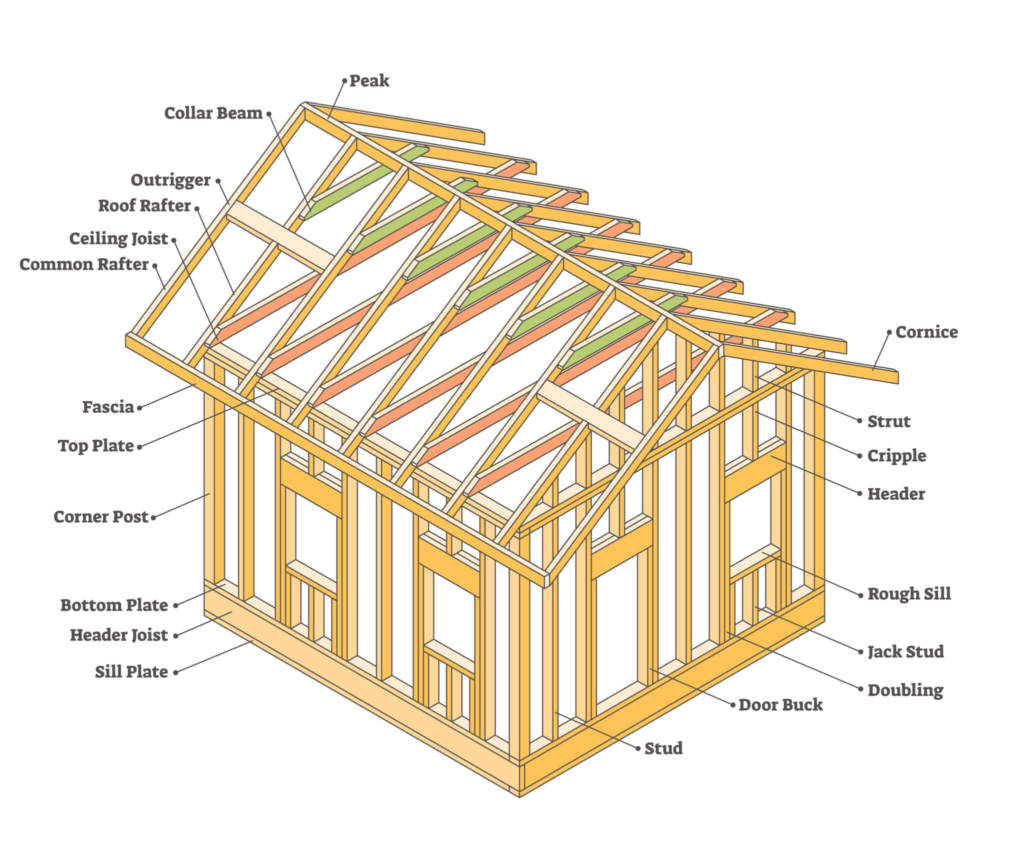
When using the Roof Framing Solutions method, the entire Roof System, no matter the style, type, pitch or any combination can be structurally designed creating a complete and accurate Roof Framing Material List, Roof Framing Material Layout plan, Roof System Rafter Cut List and Roof System Rafter Layout Plan all written and laid out using The Framers Language. This helps with an easy transfer of complicated roof information eliminating guesswork, waste and loss of production. A two-man cut team can cut the entire Roof System and have ready to assemble in 1-2 days, depending on size and difficulty, while the rest of the crew can continue production and preparing for the Roof System.
The Roof Framing Solutions Method eliminates the many time consuming and costly problems associated with Prefab Roof Truss Systems and todays slow outdated Stick Framing methods and creates Structurally Superior, Cost Effective Brace Free Open Attic Roof Systems.
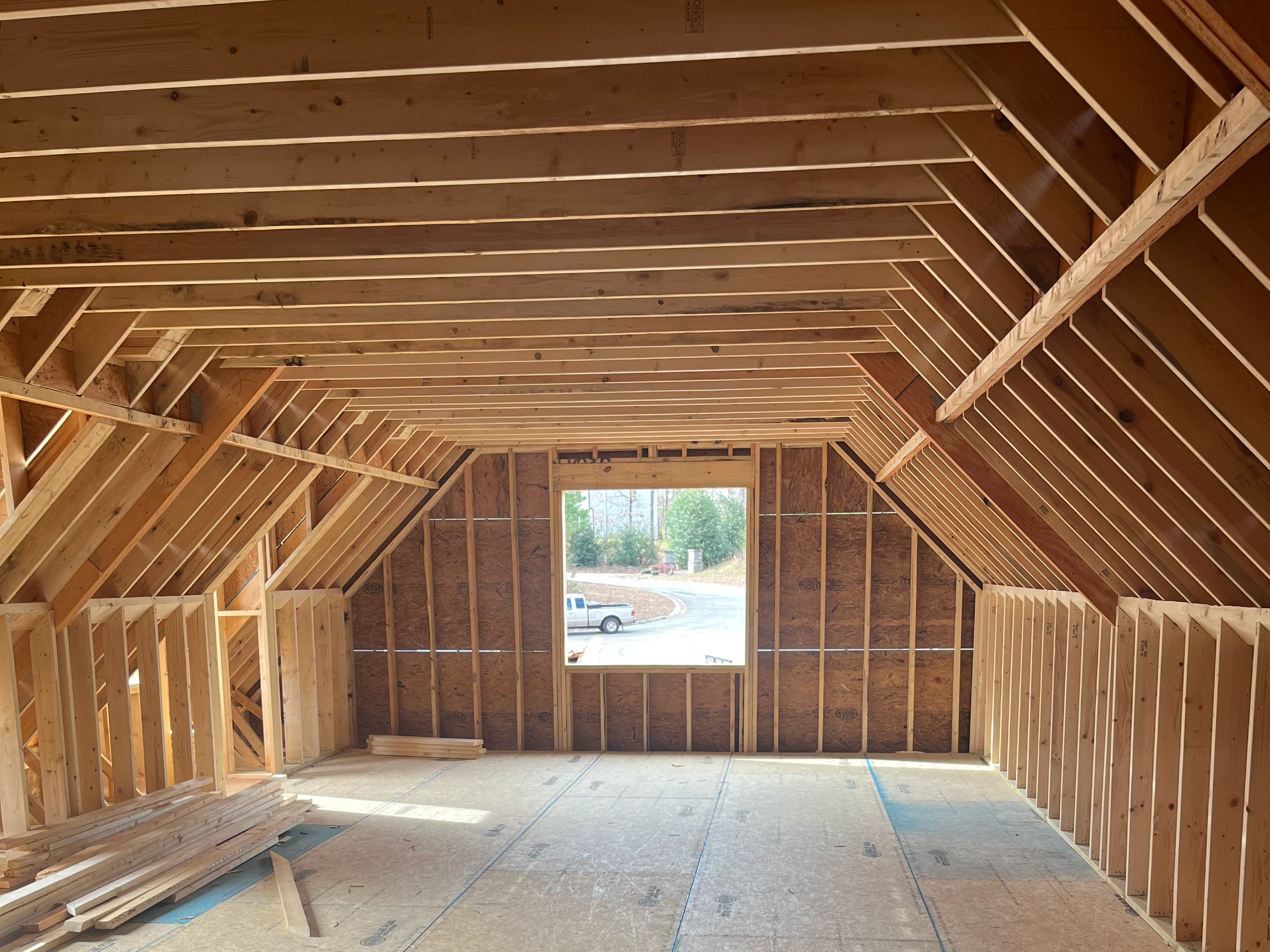
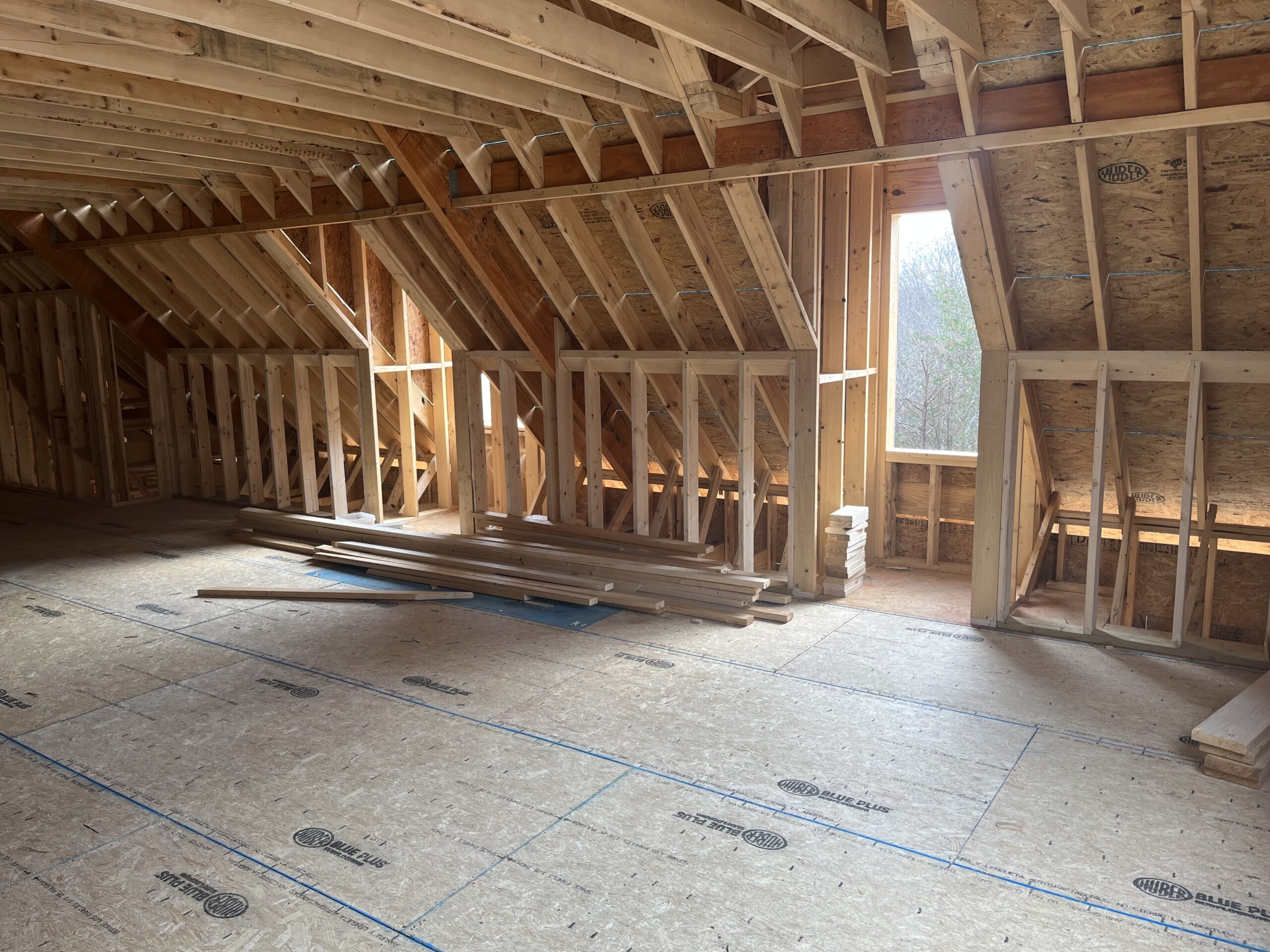
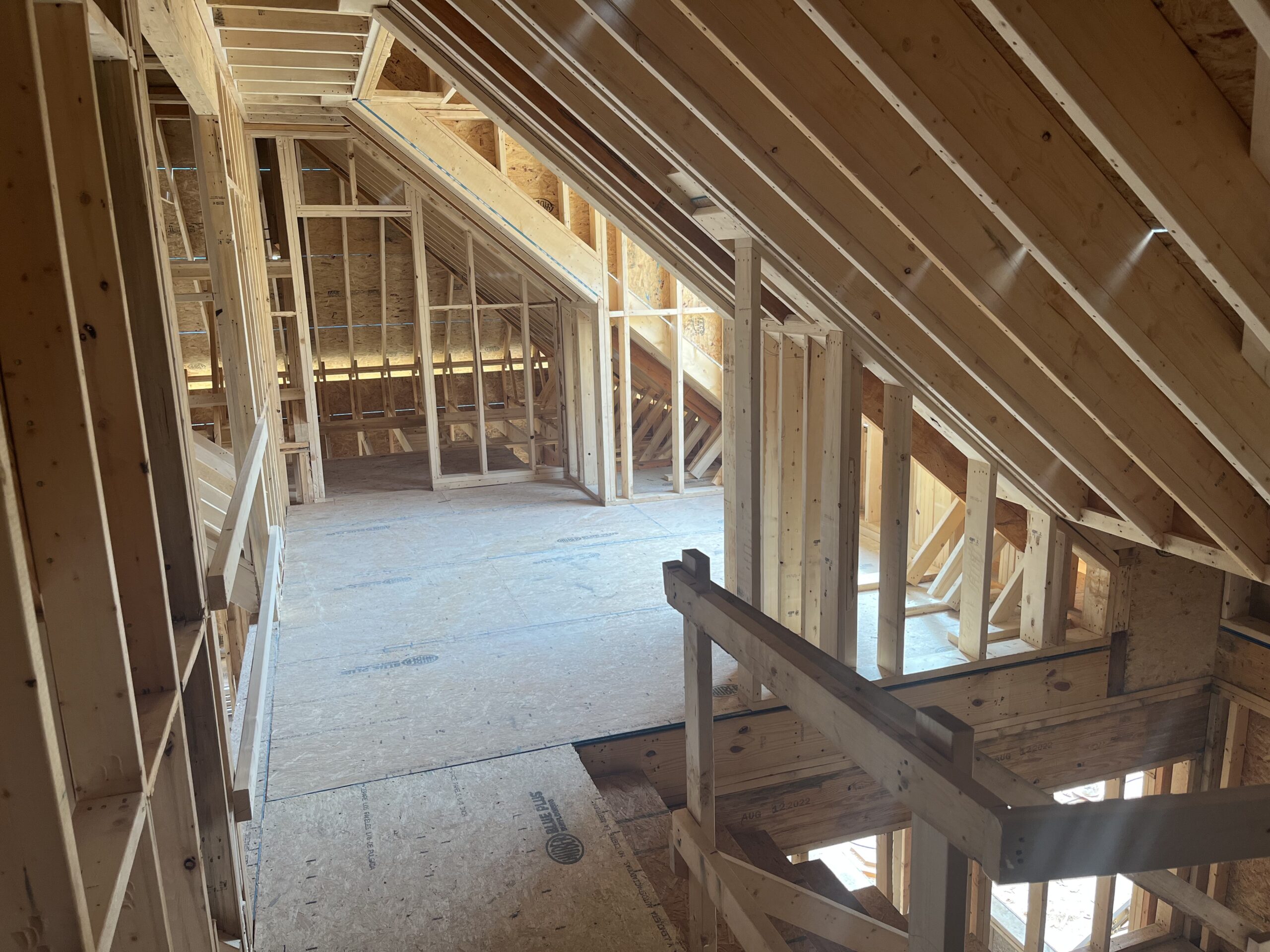
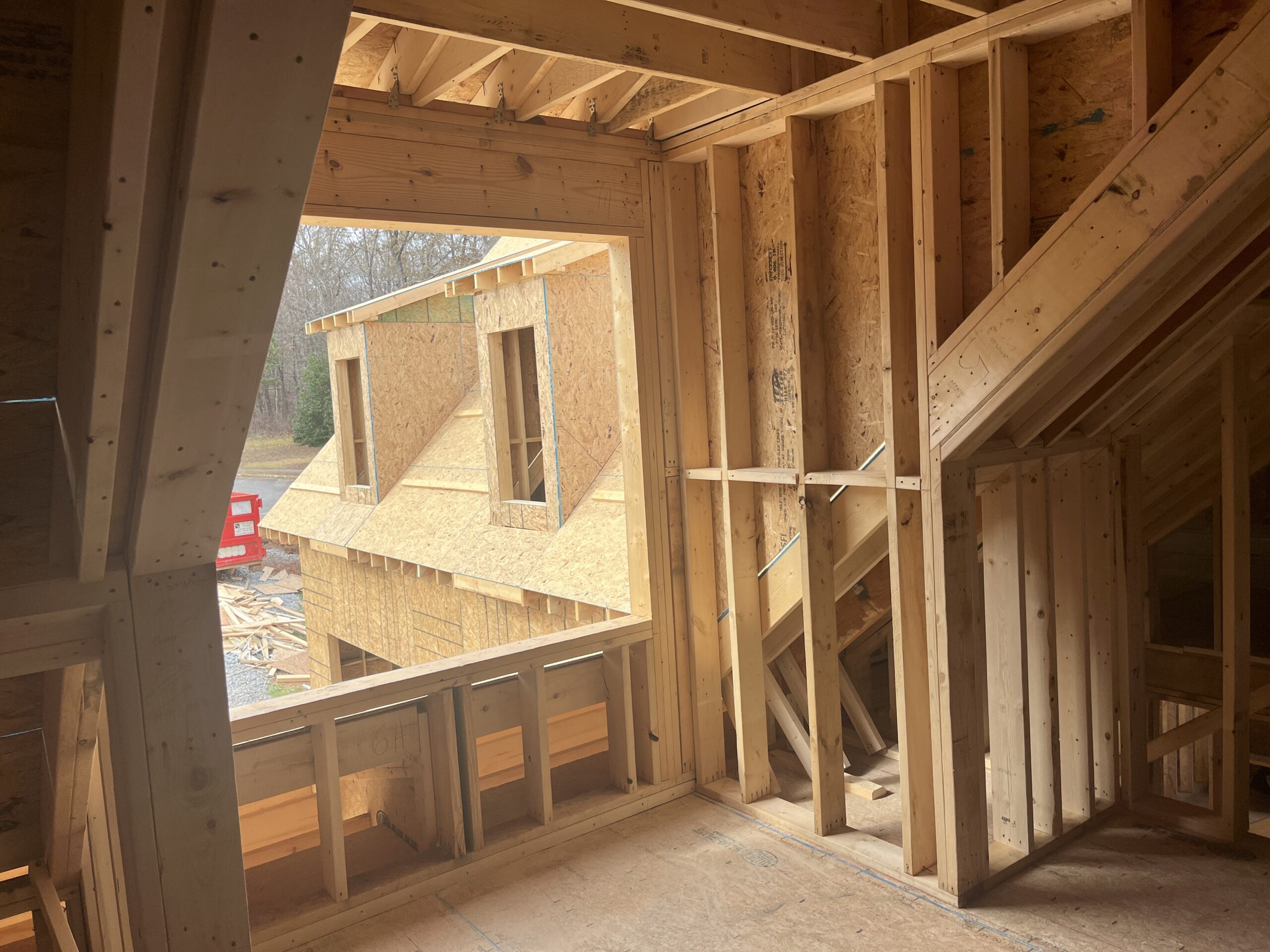
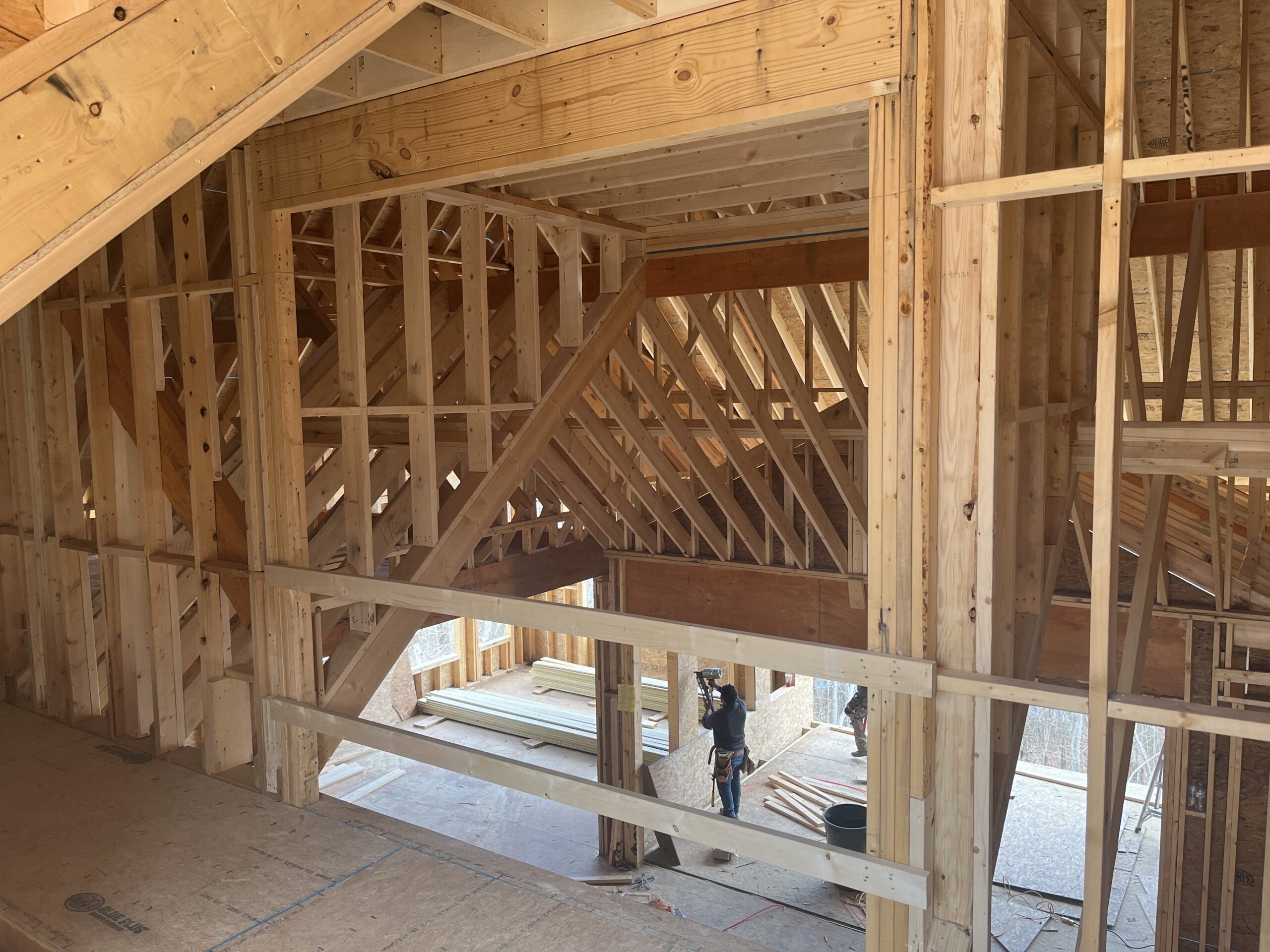
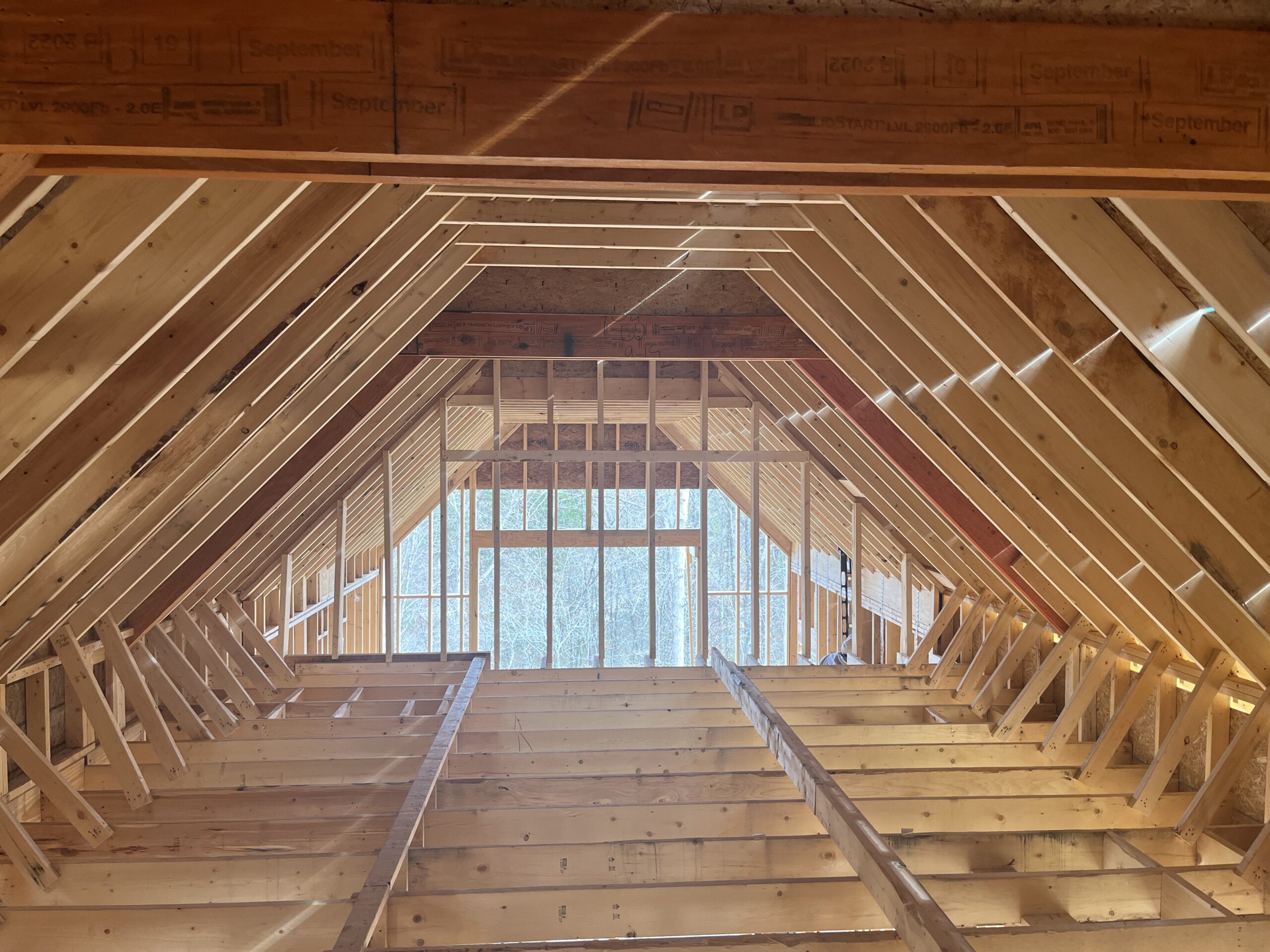
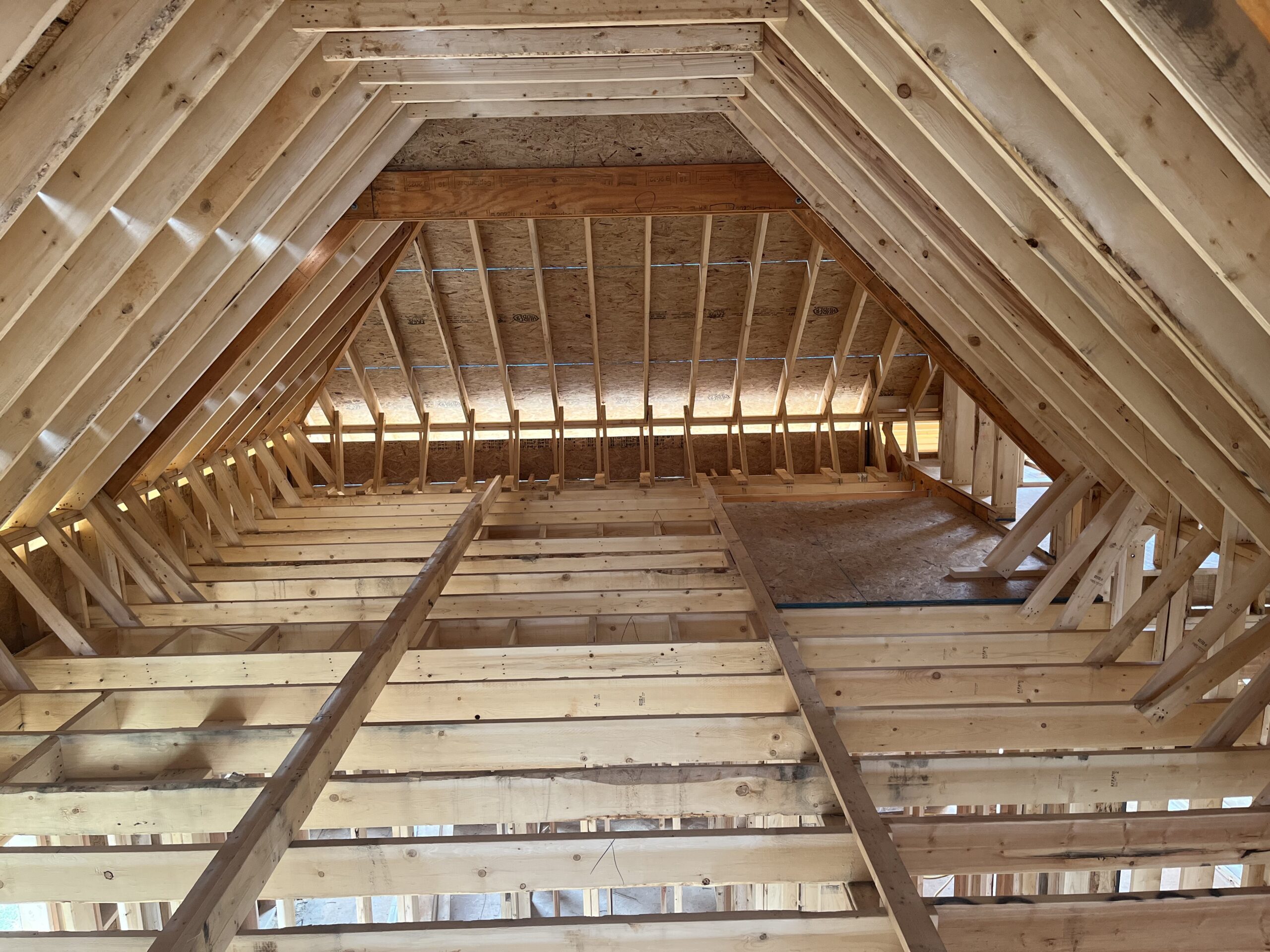
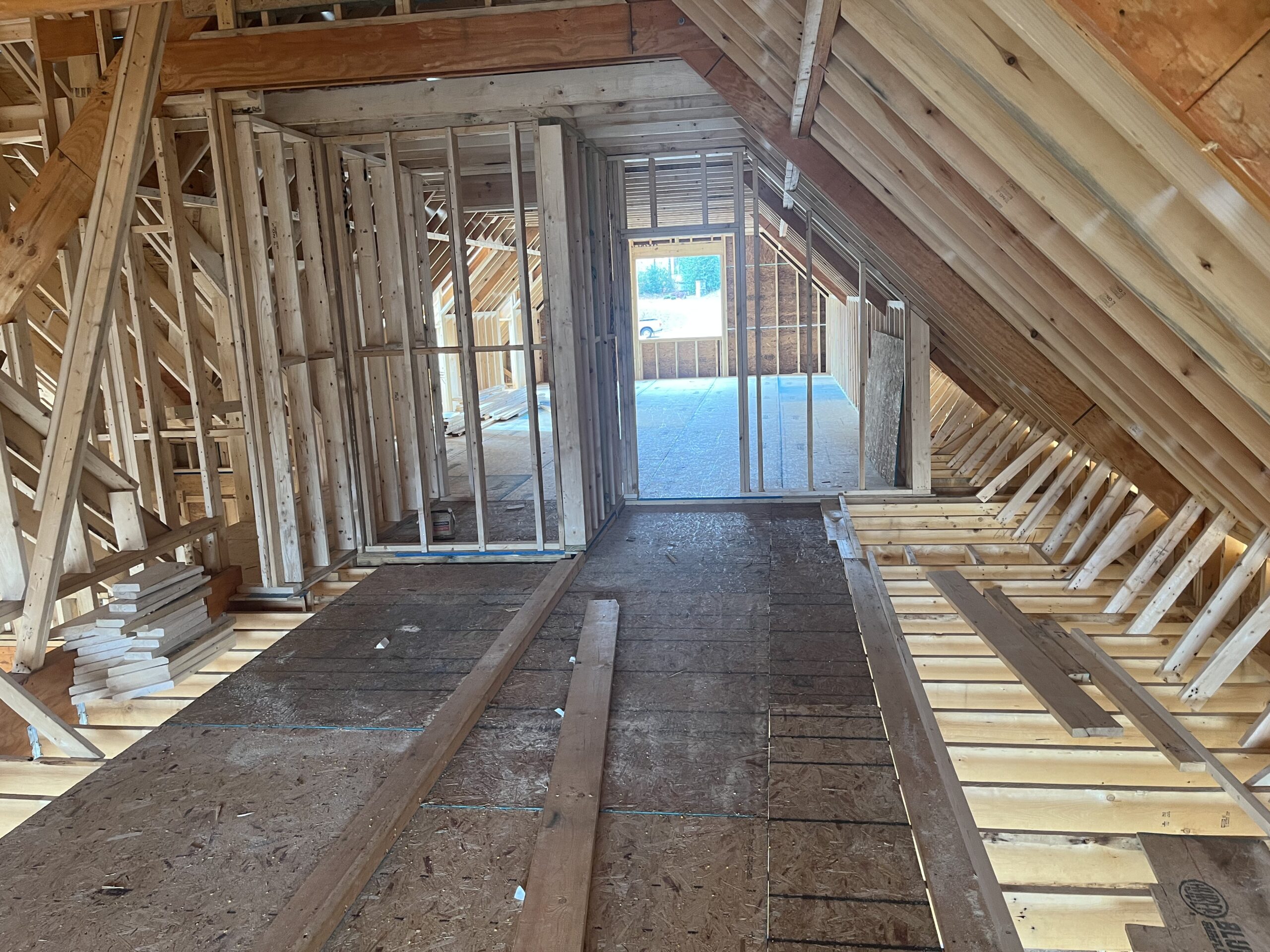
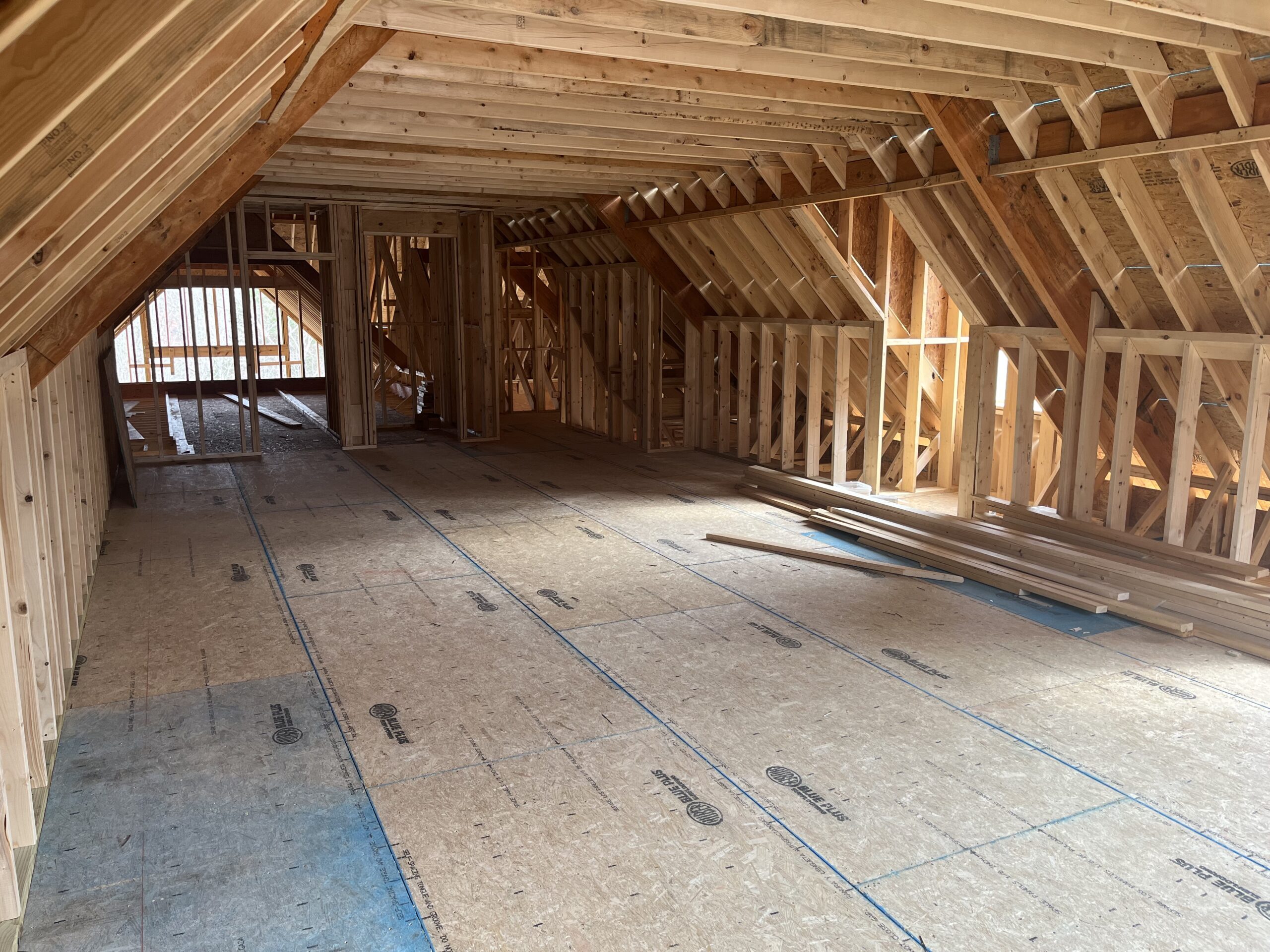
This is an example of a 4,250 square foot ranch-style house with a Brace Free Open Attic Designed by Roof Framing Solutions. With Smarter Control and Material Management the Homeowners re-directed the savings back into the house and were able to add the following:
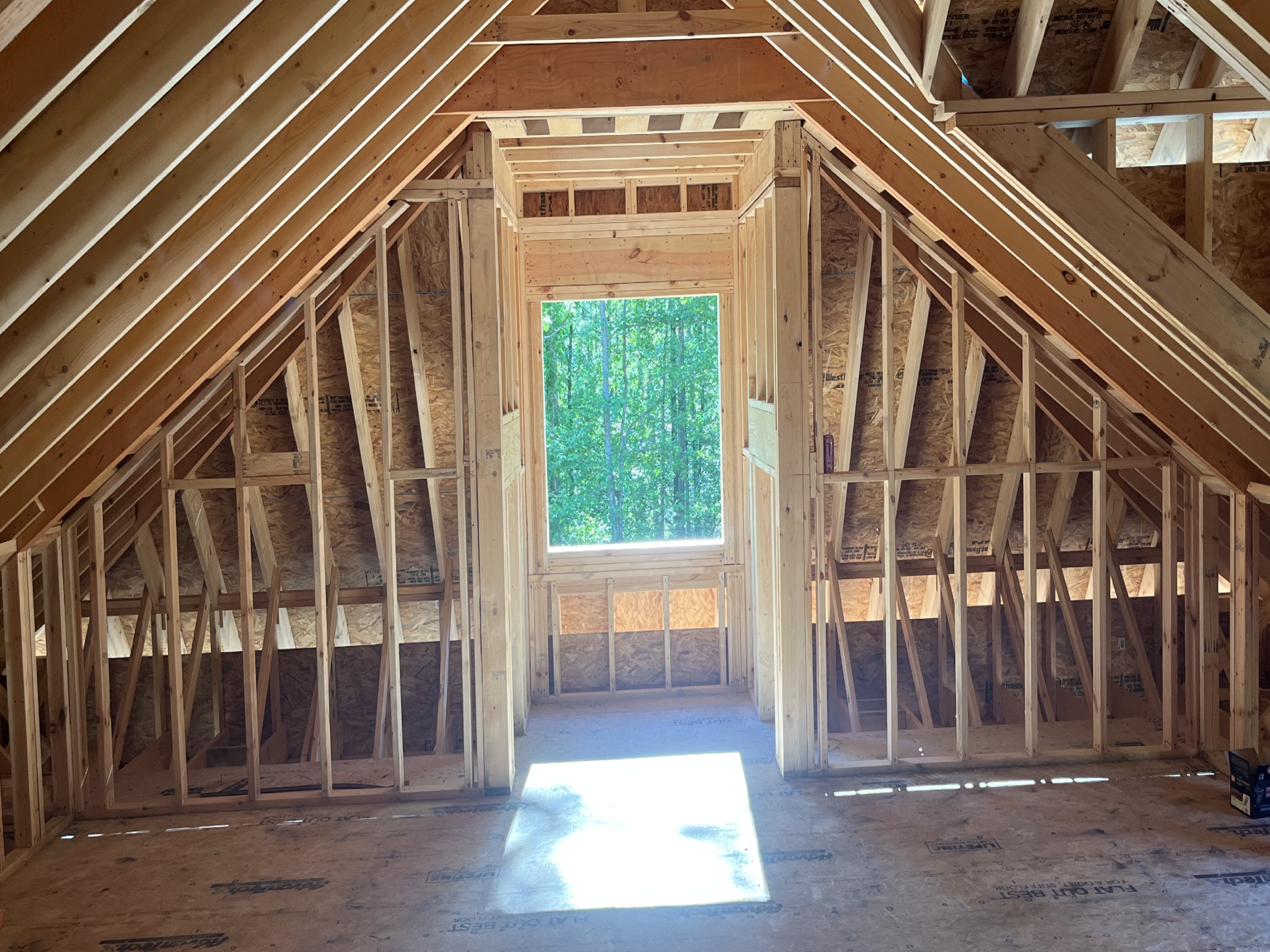
This is an example of a Designated Mechanical Closet in the Finished area of a Brace Free Open Attic Roof System Designed by Roof Framing Solutions. Having this closet allows for easy Installation and Smarter, Straighter Ductwork behind the new Finished walls to protect them from damage or crushing. With the HVAC unit laid out in an organized easily accessible way and the ductwork hanging from the rafters with ductstraps, this area will also be used for Conditioned Storage with access to other areas for unconditioned storage. Note the full-size entry door for easy access for maintenance.
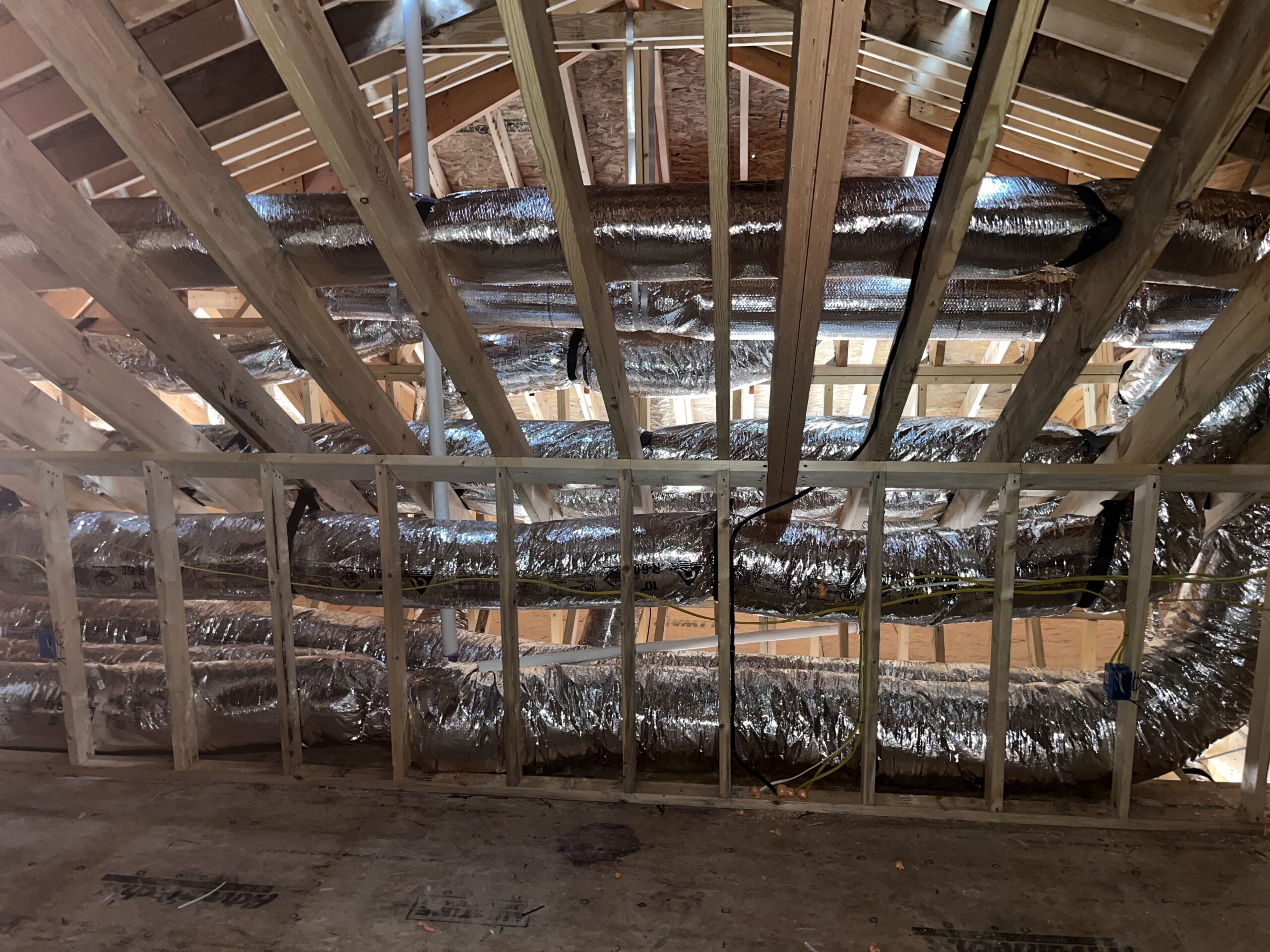
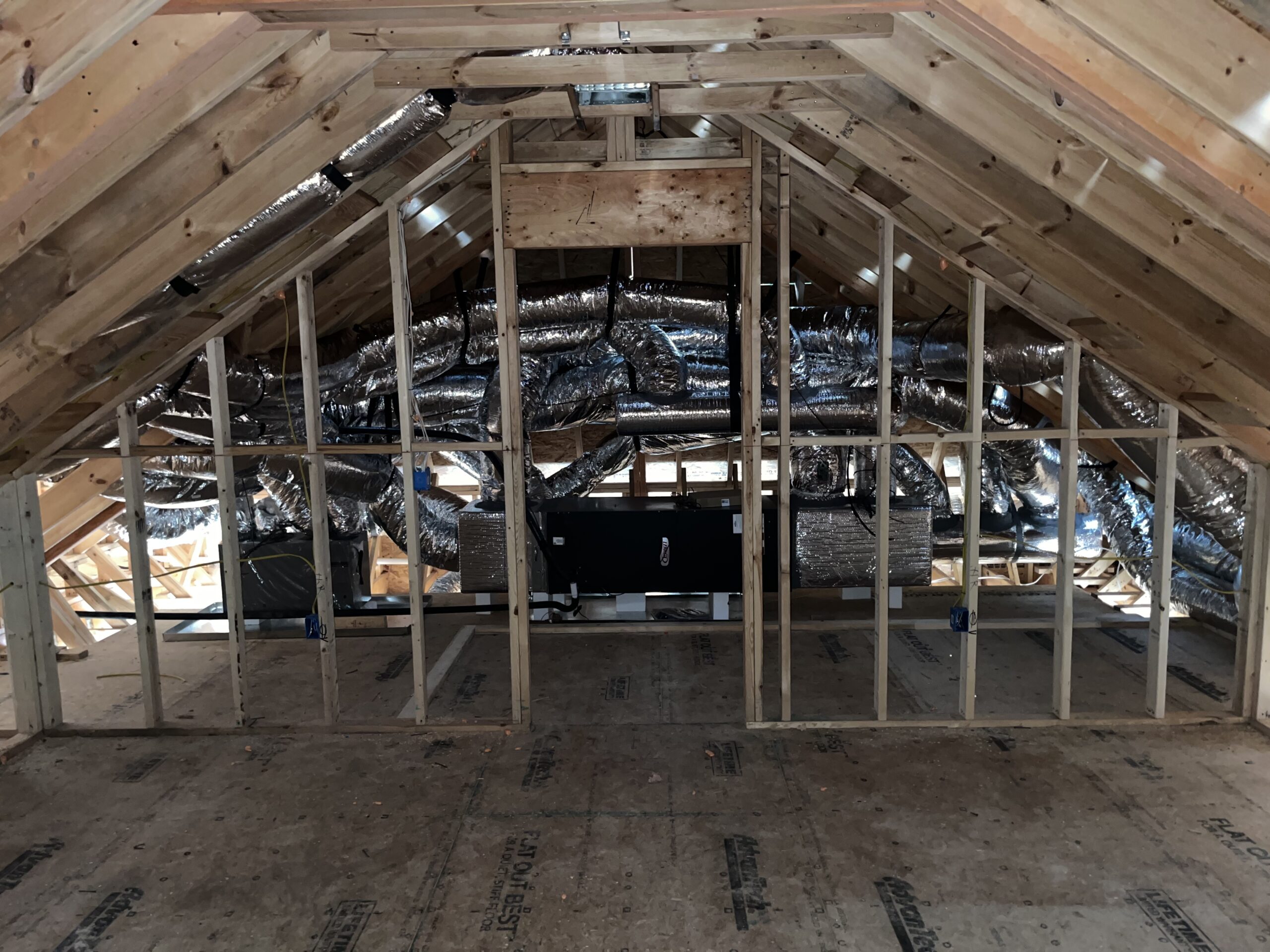
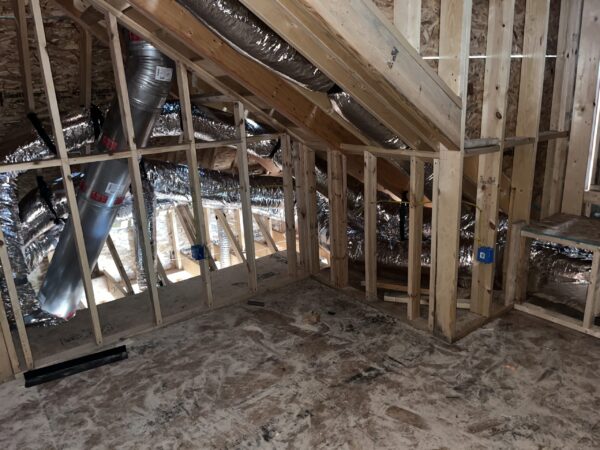
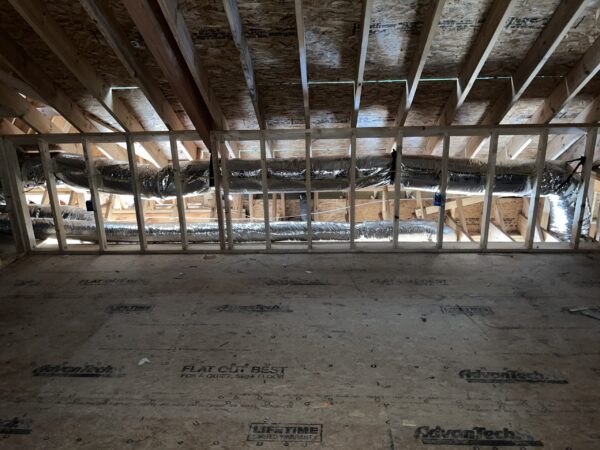
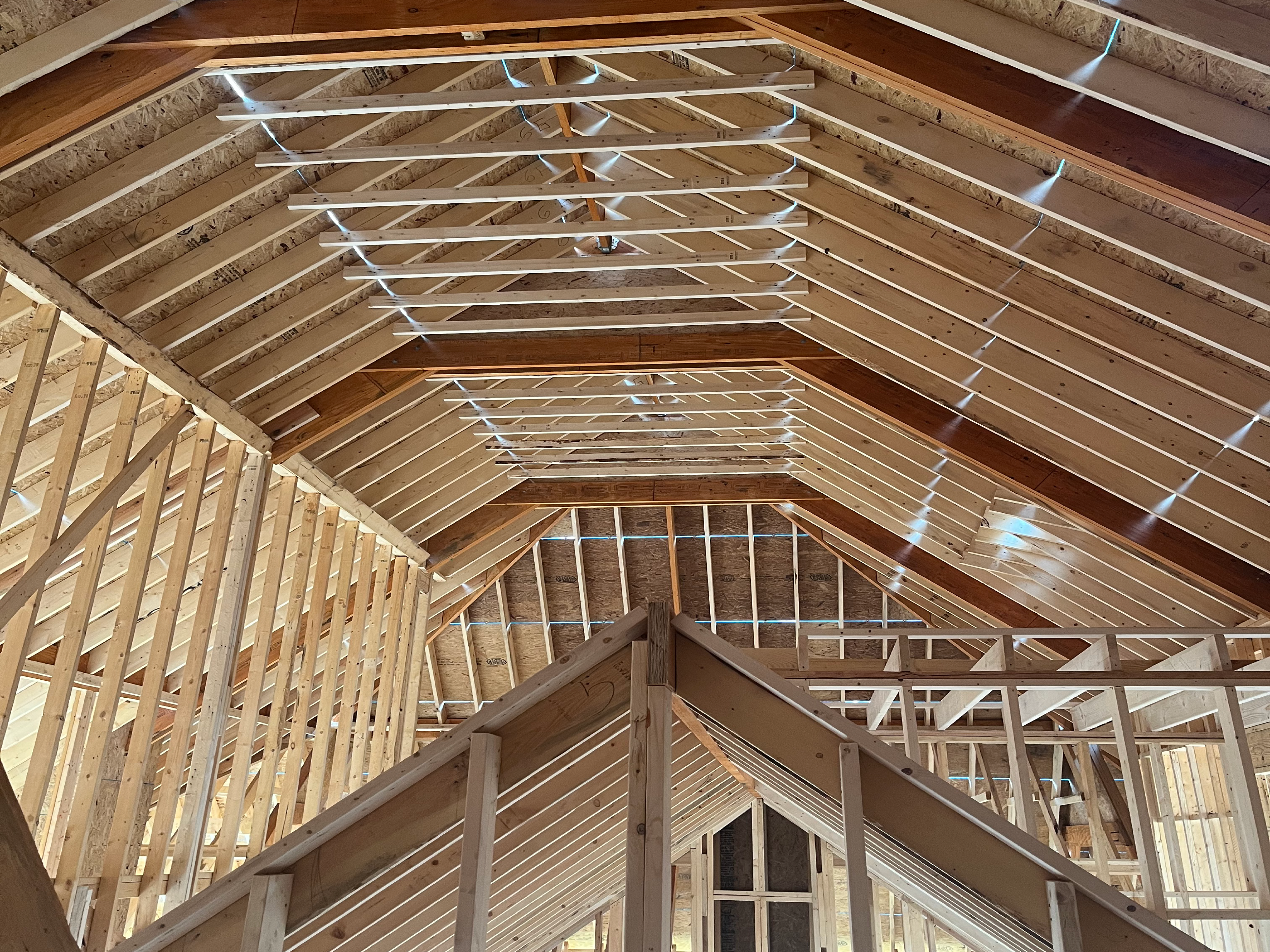
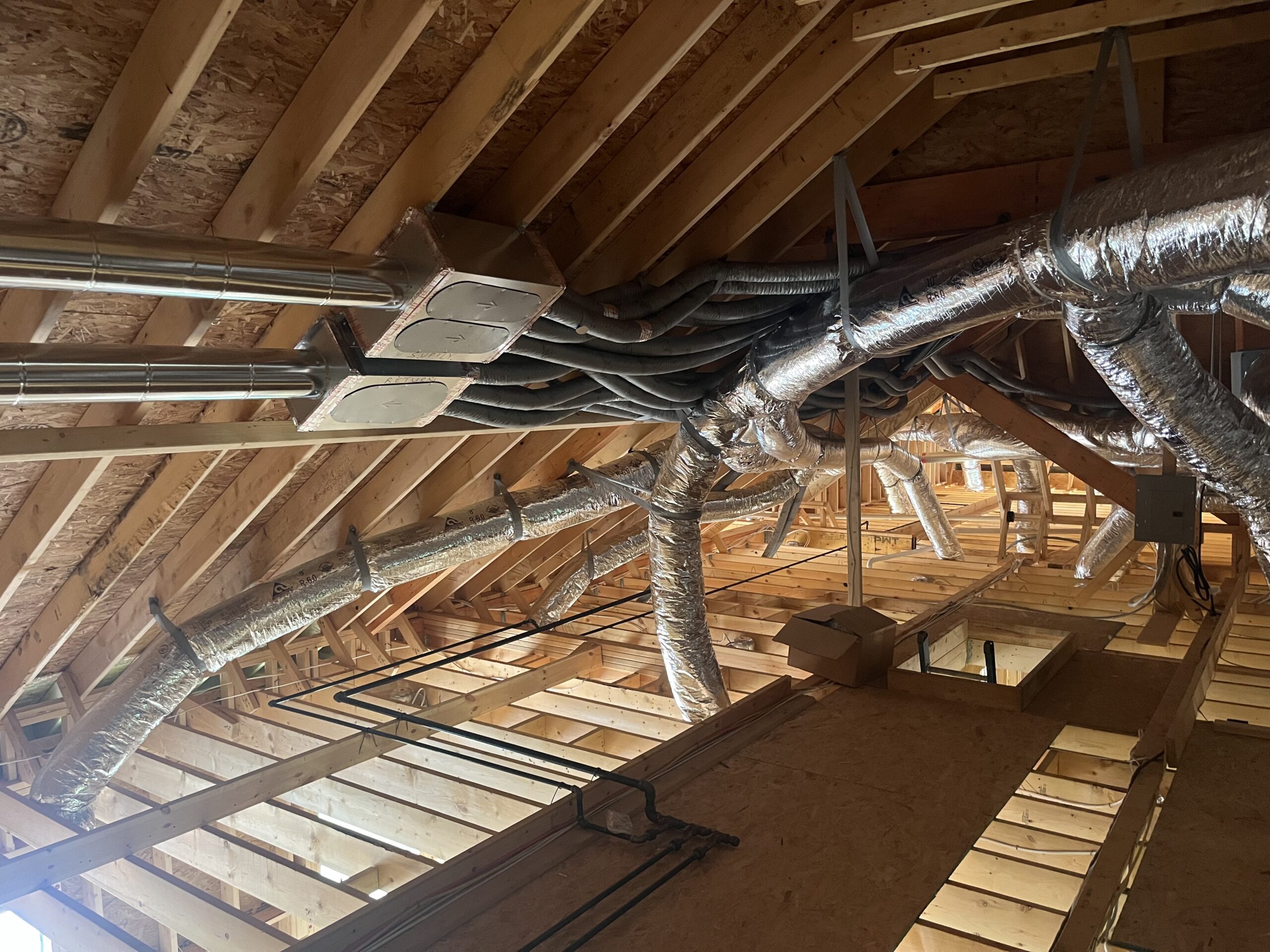
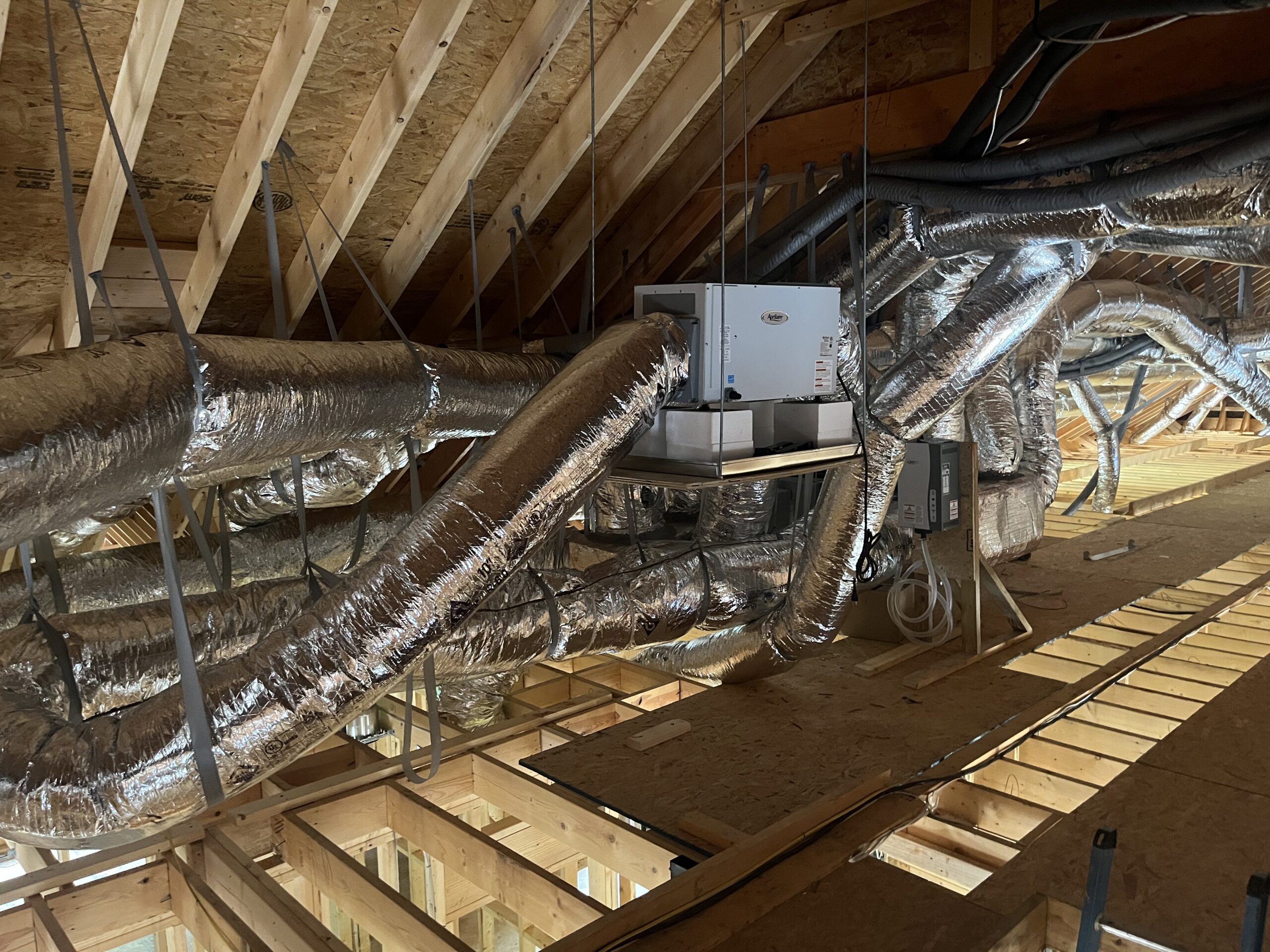
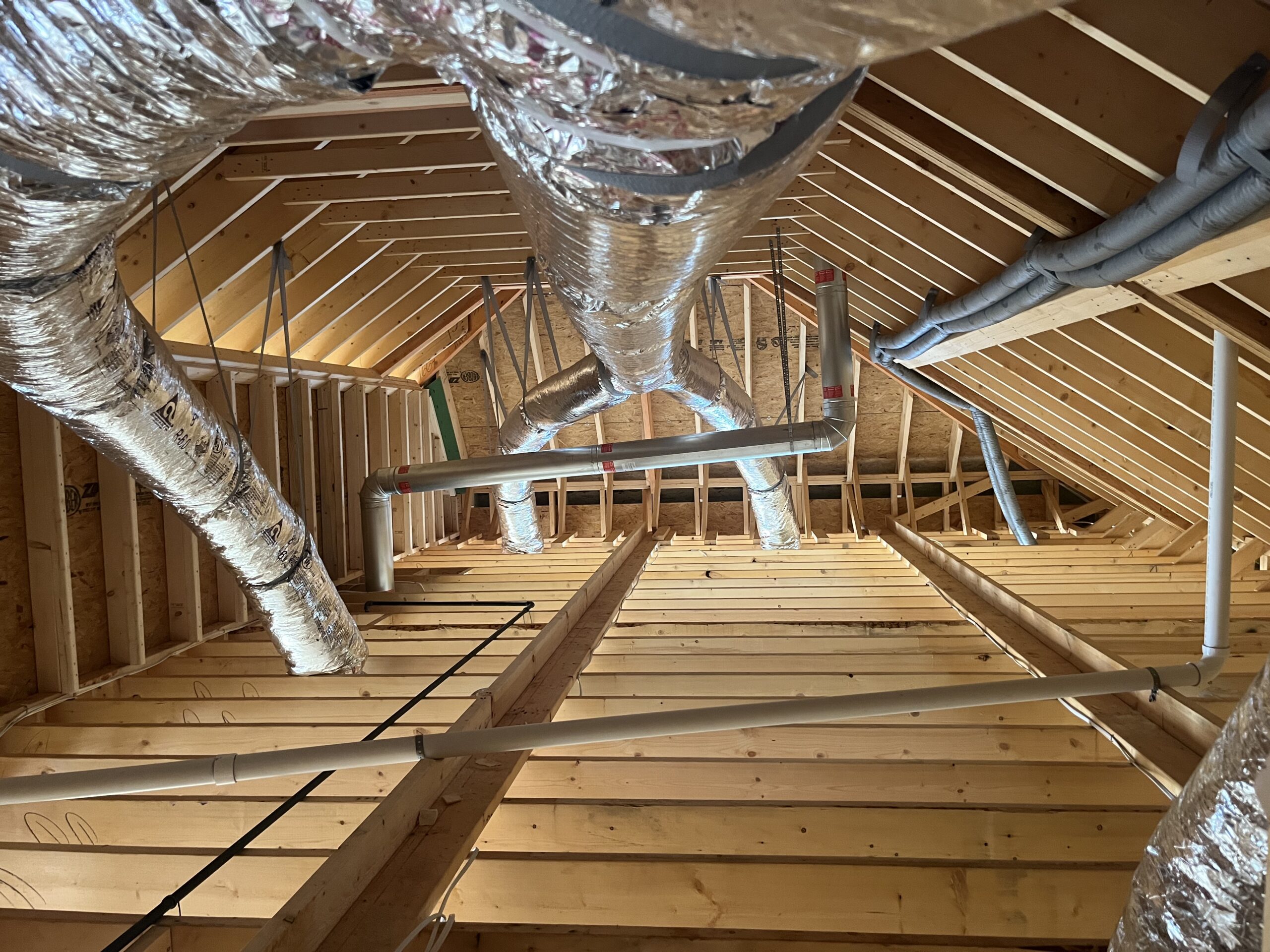
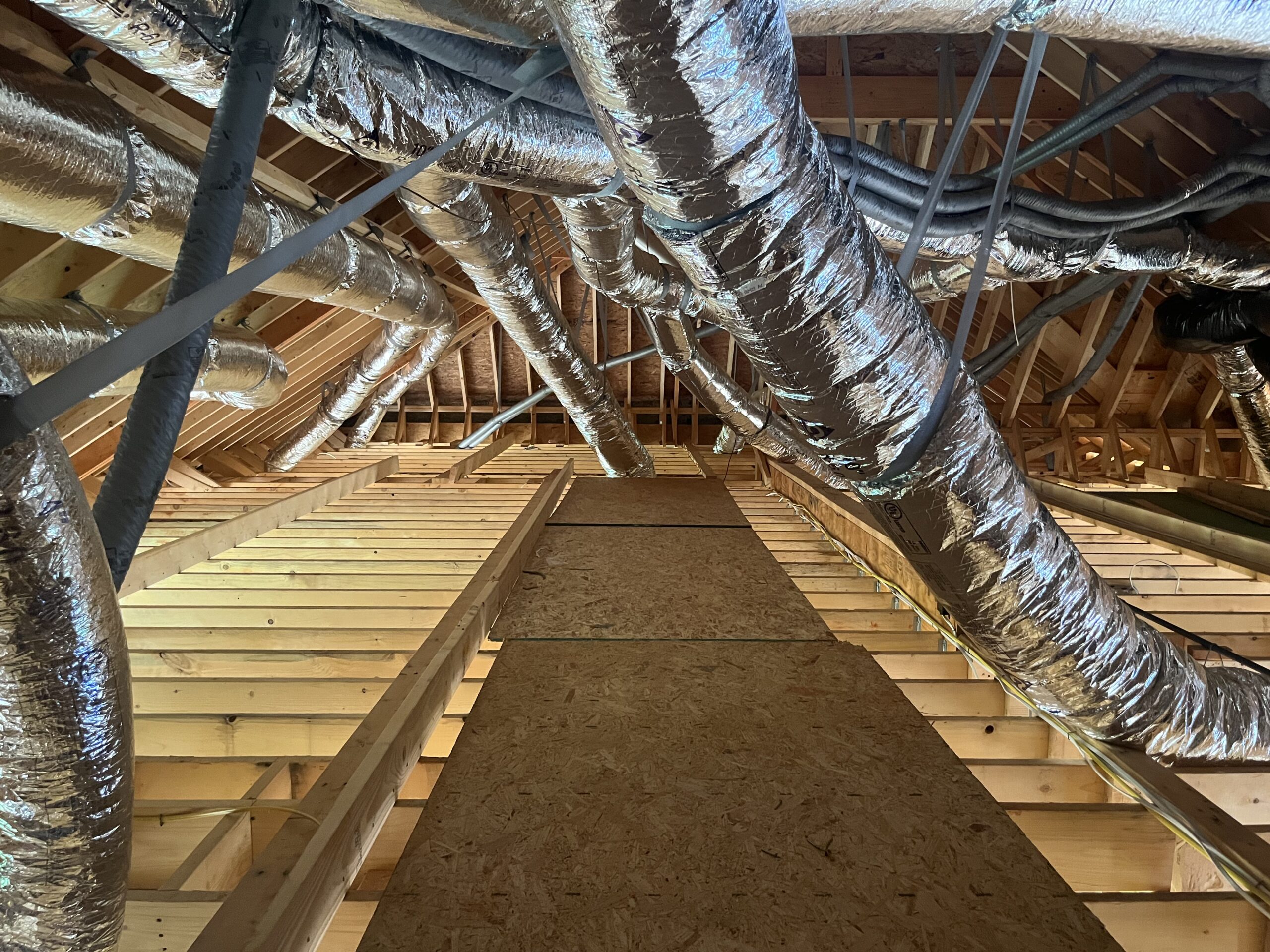
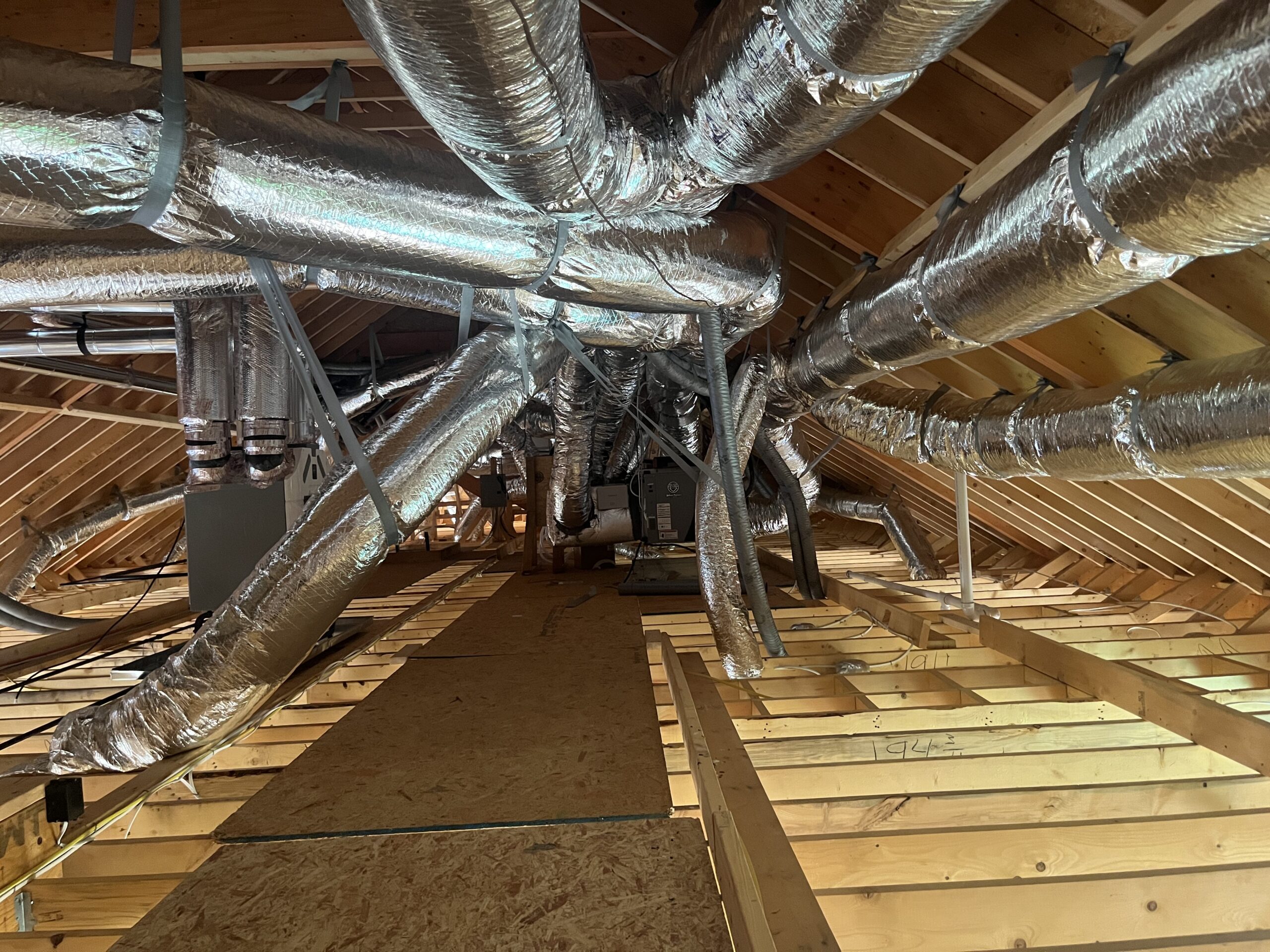
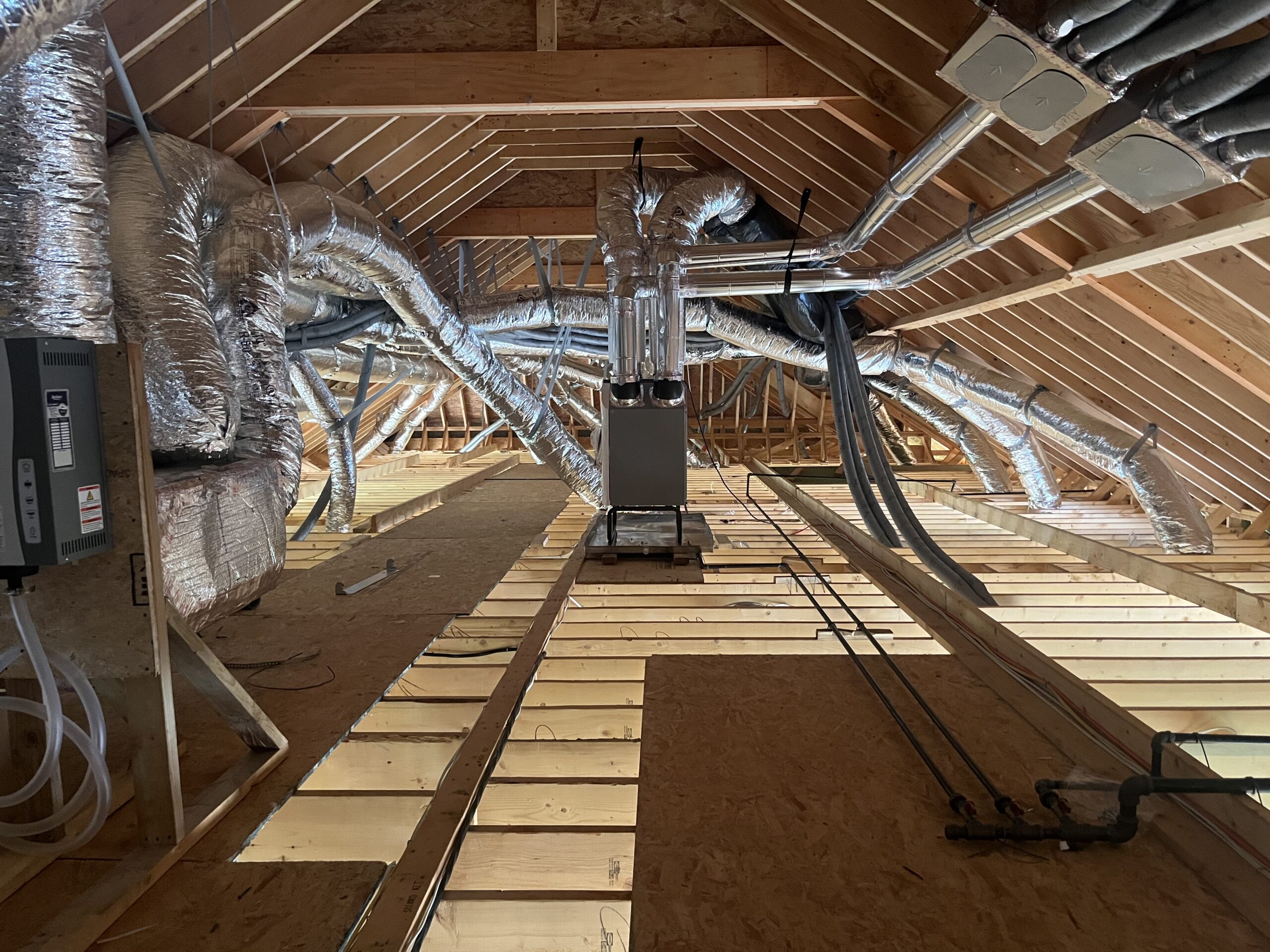
Here is an example of an HVAC unit in a Brace Free Open Attic Roof System Designed by Roof Framing Solutions. With no need for the outdated Roof Bracing methods used currently the attic is clear and open for easy installation and clear access for maintenance. Using Spray Foam Insulation, the ductwork can hang from the rafters with ductstraps to ensure that it is straight and has minimal bends or sags which can restrict airflow and efficiency. It is also easier to check for leaks and protect them from being damaged or crushed in the future storage area. Also note how much space is available for storage.
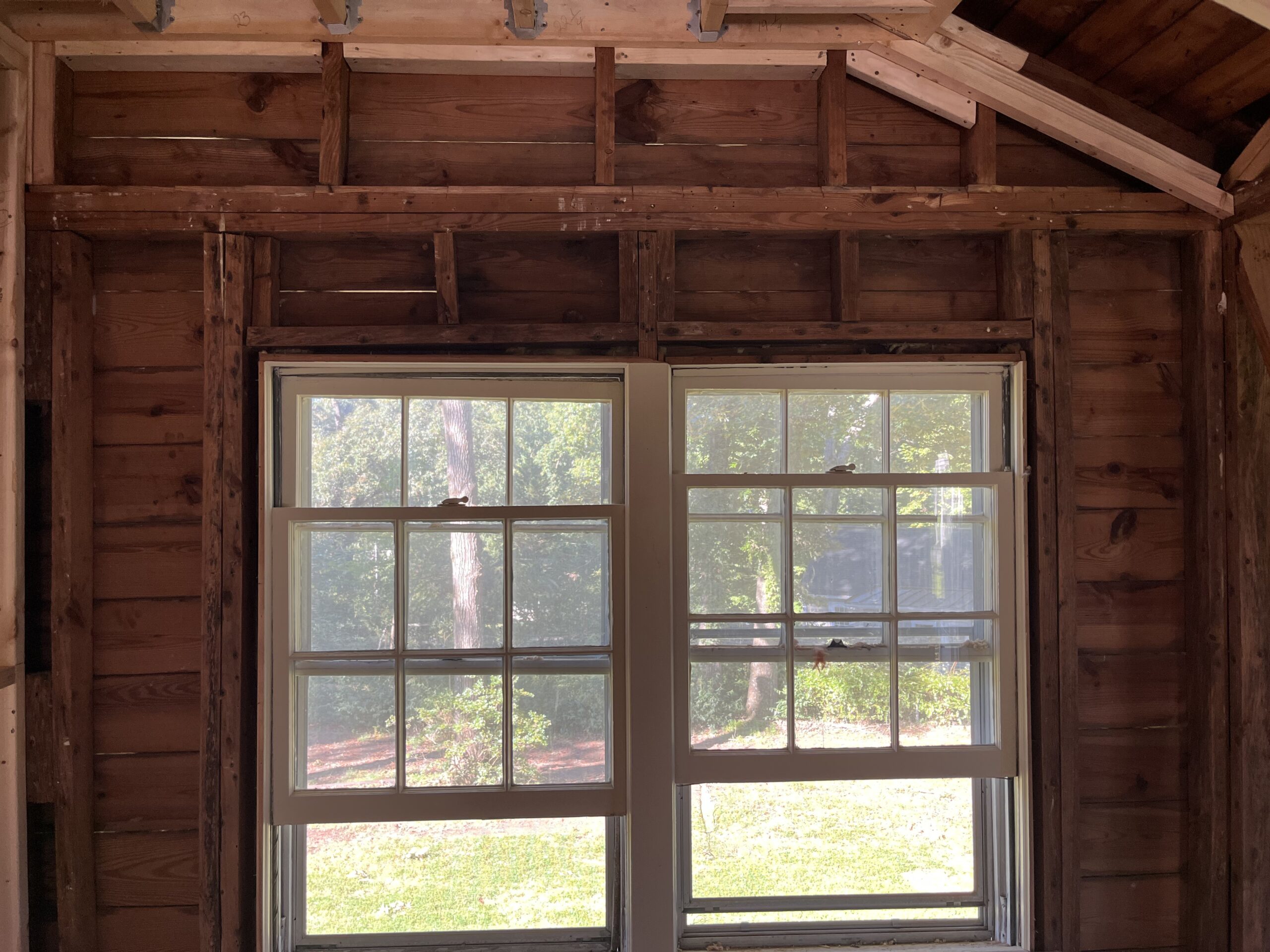
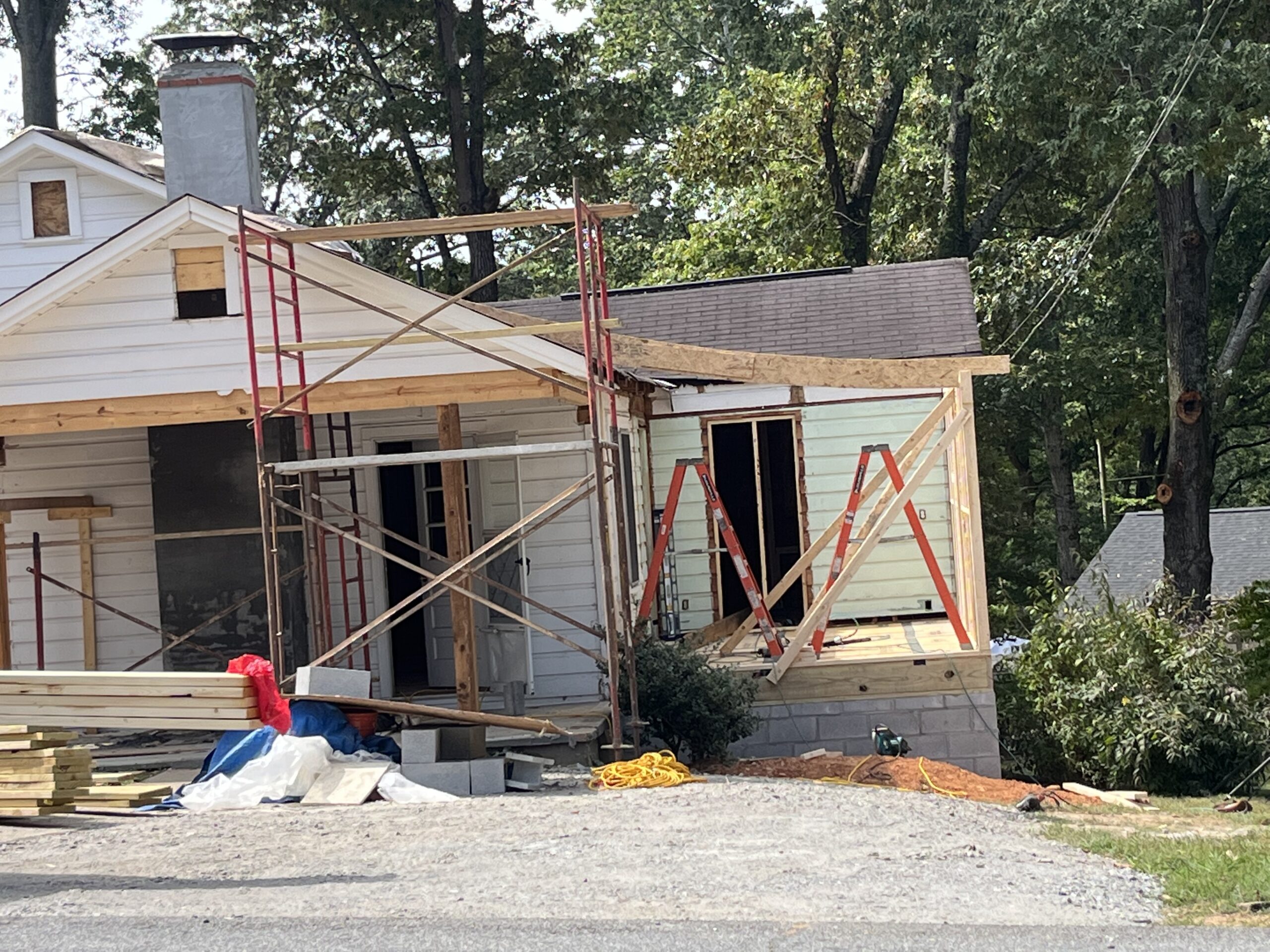
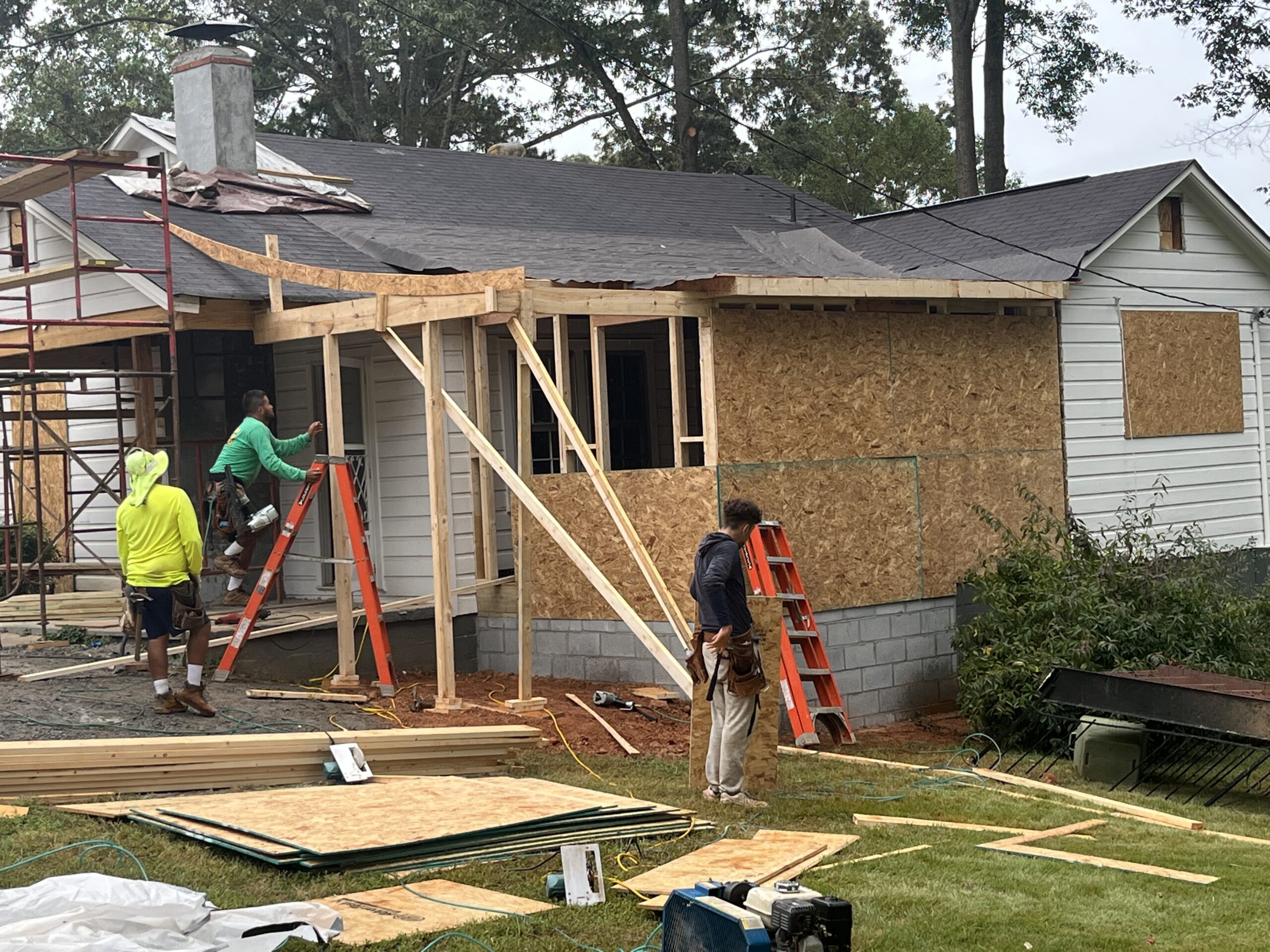
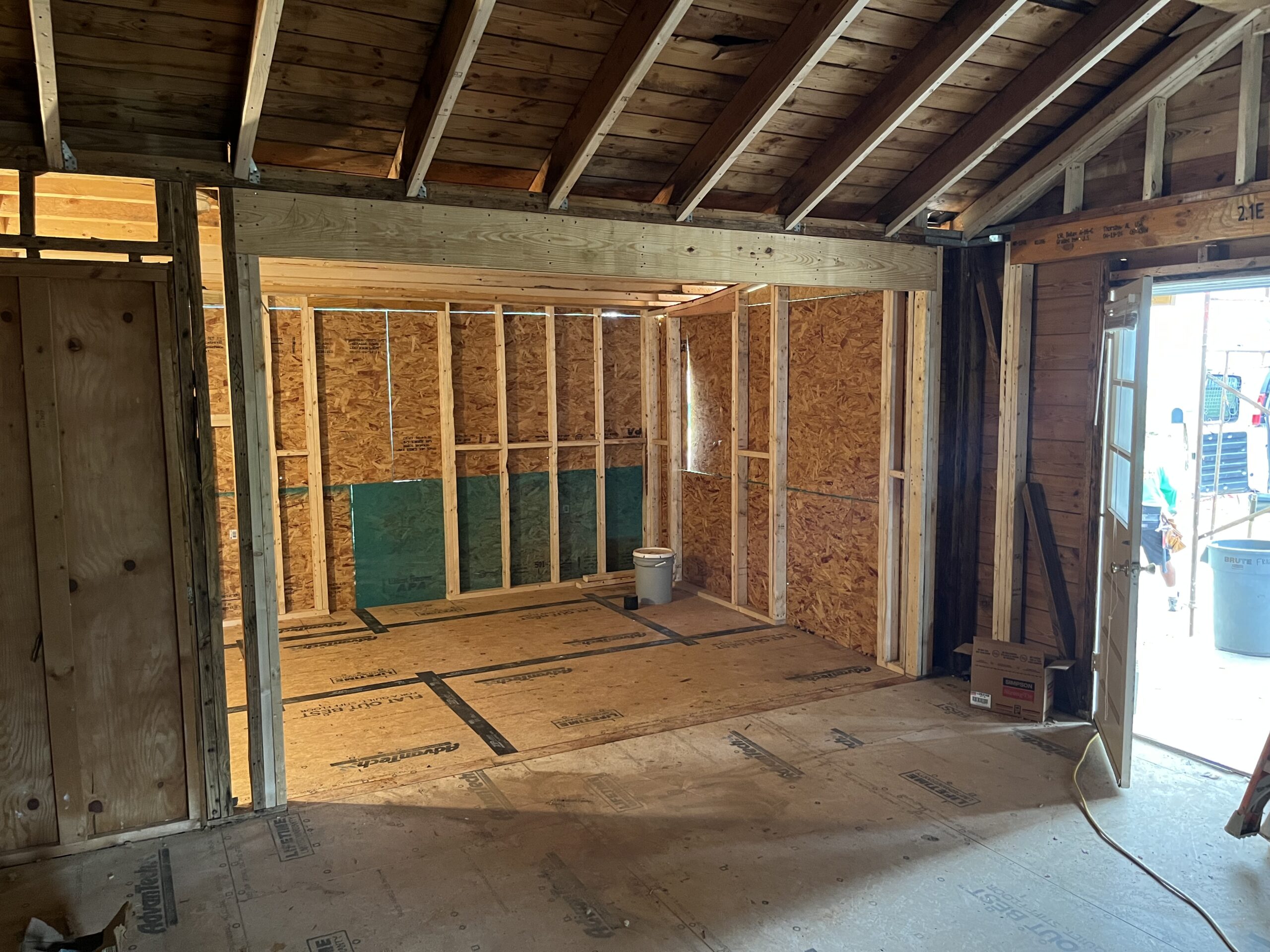
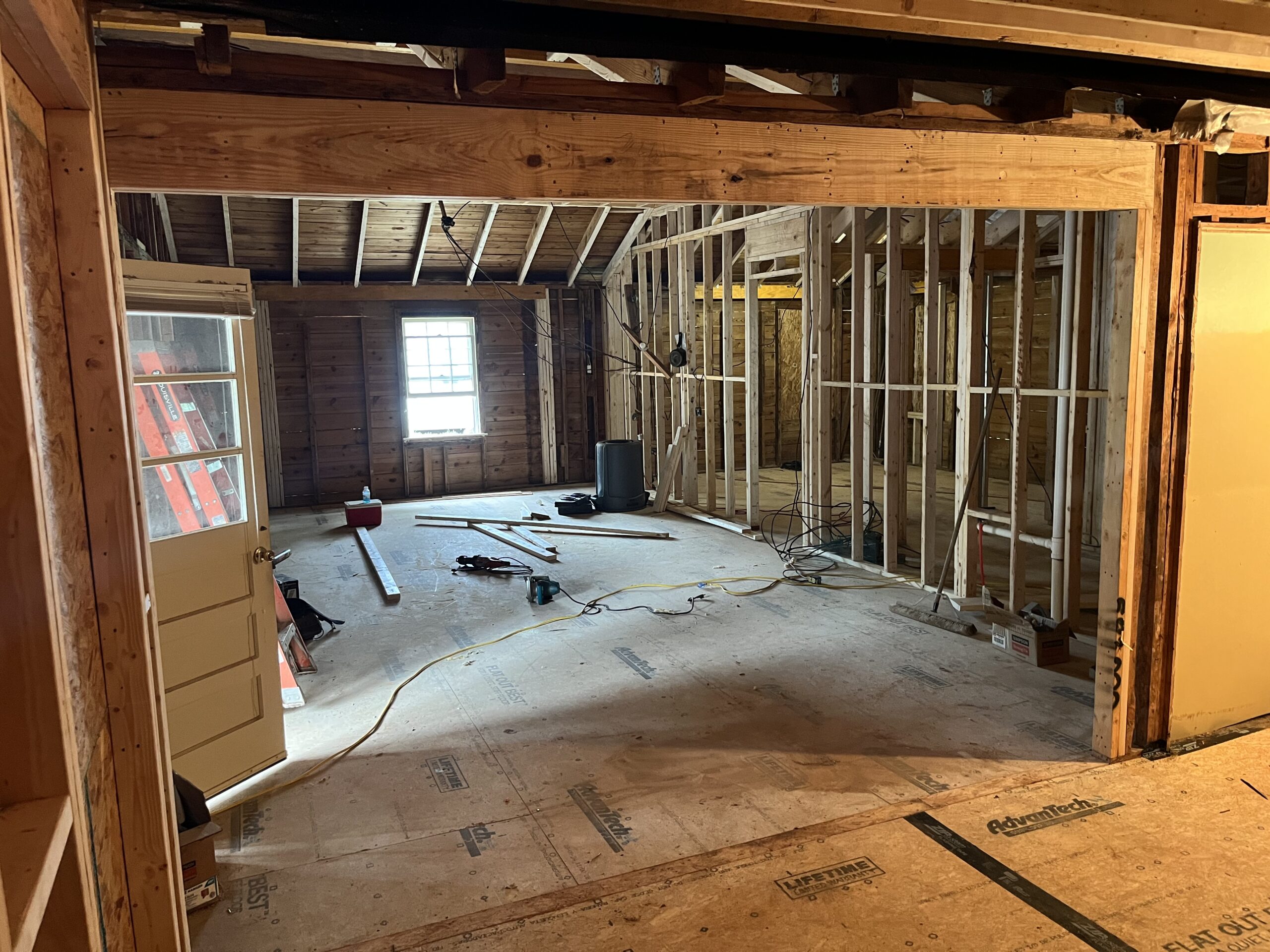
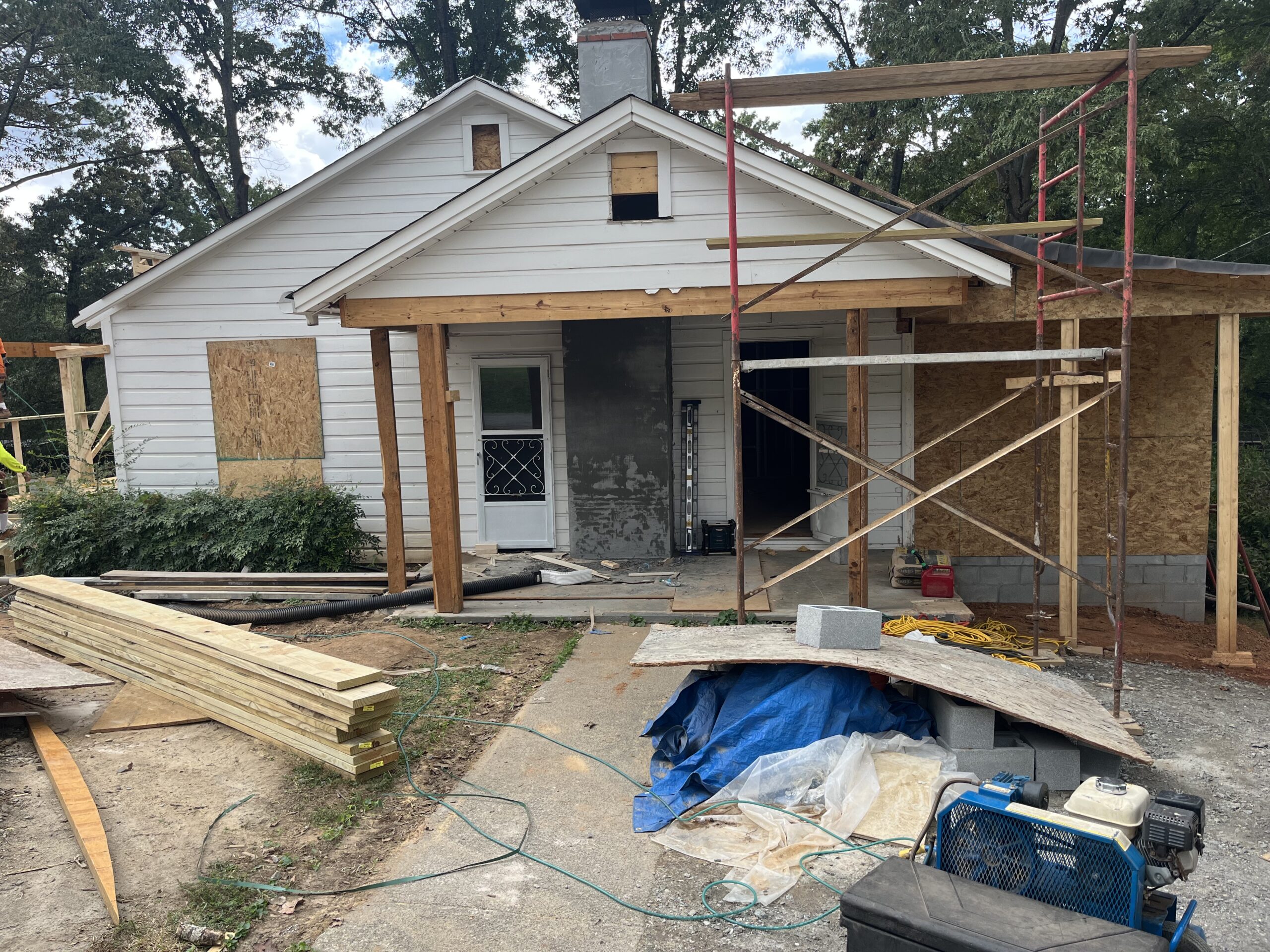
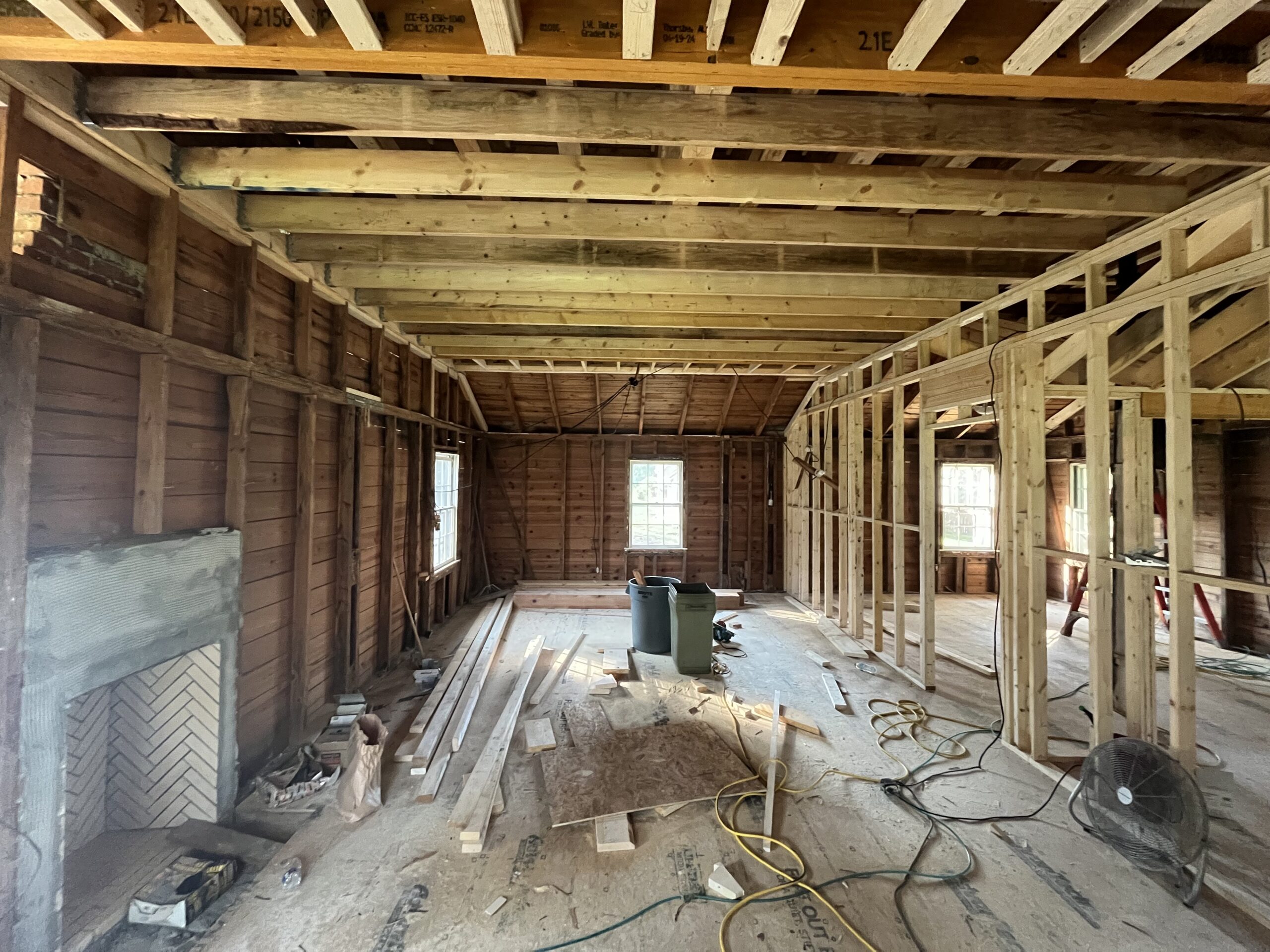
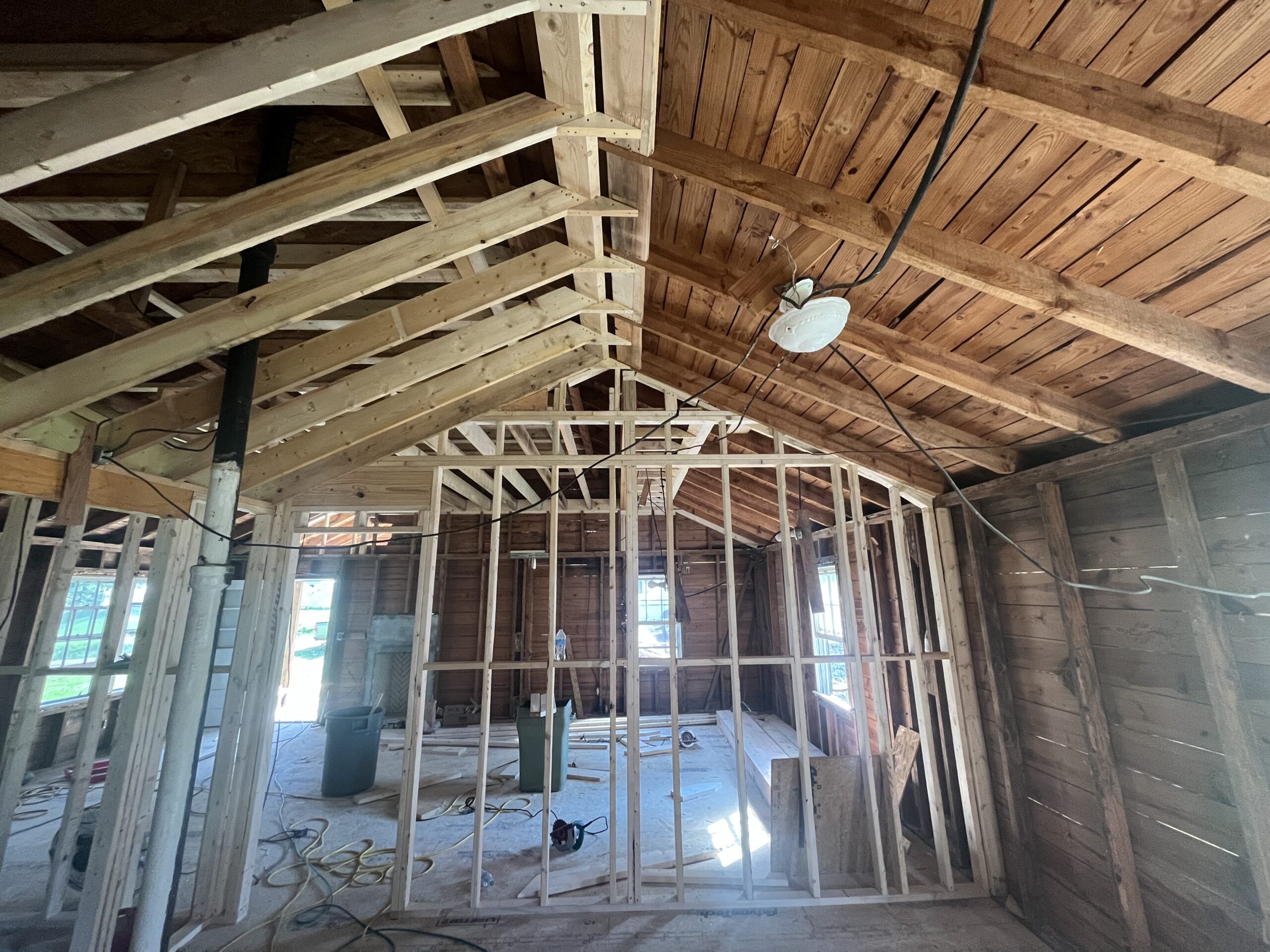
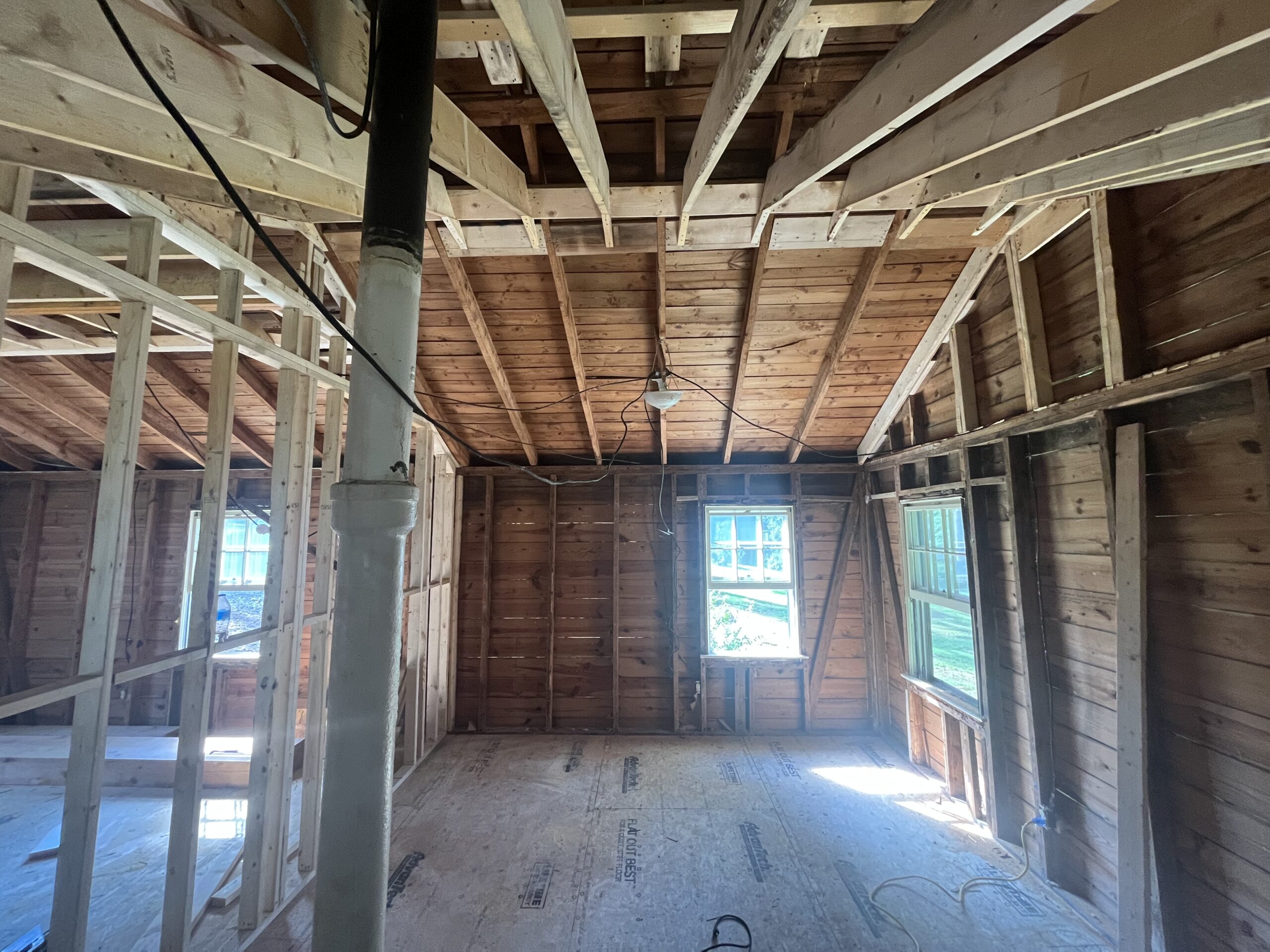
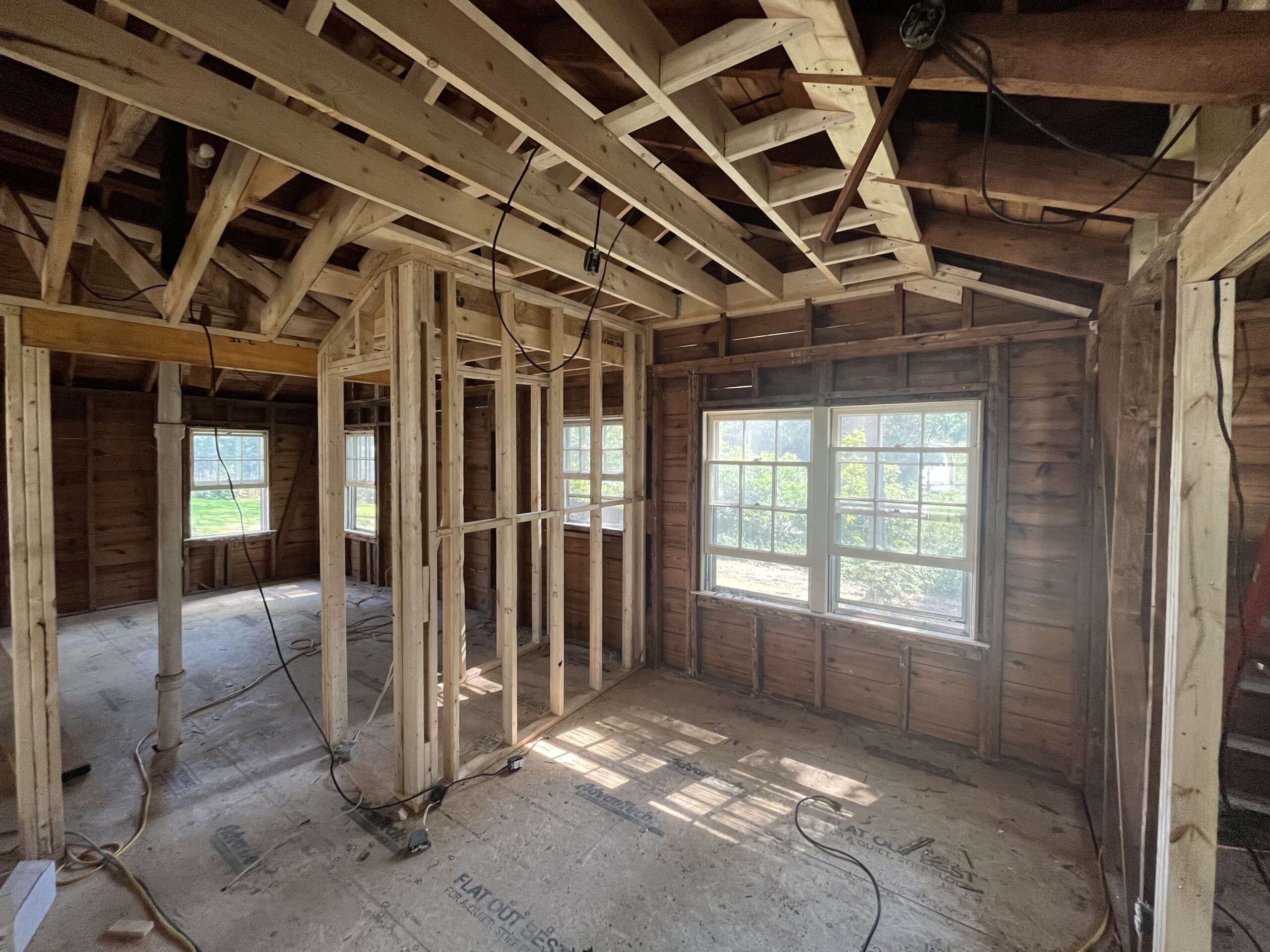
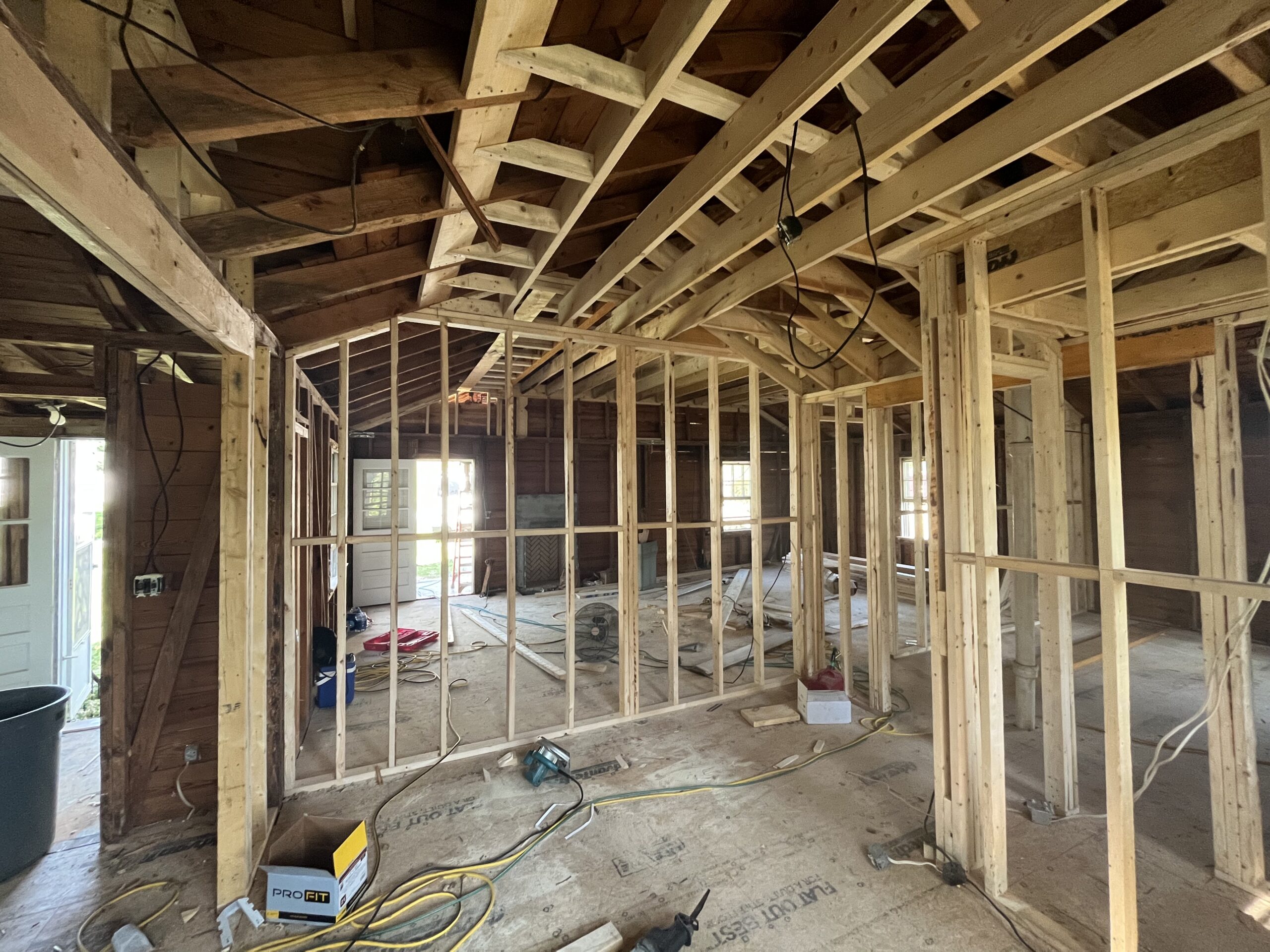
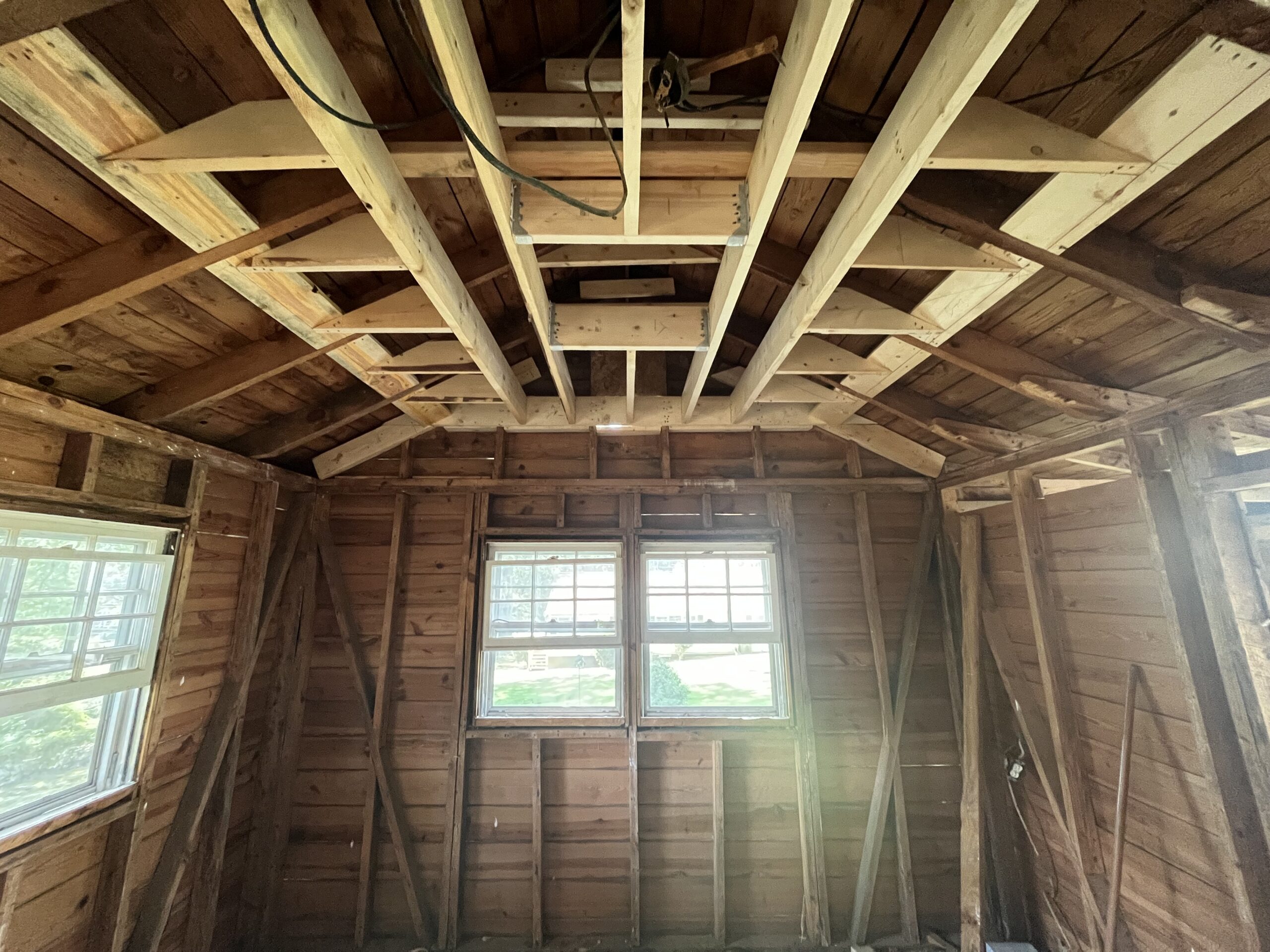
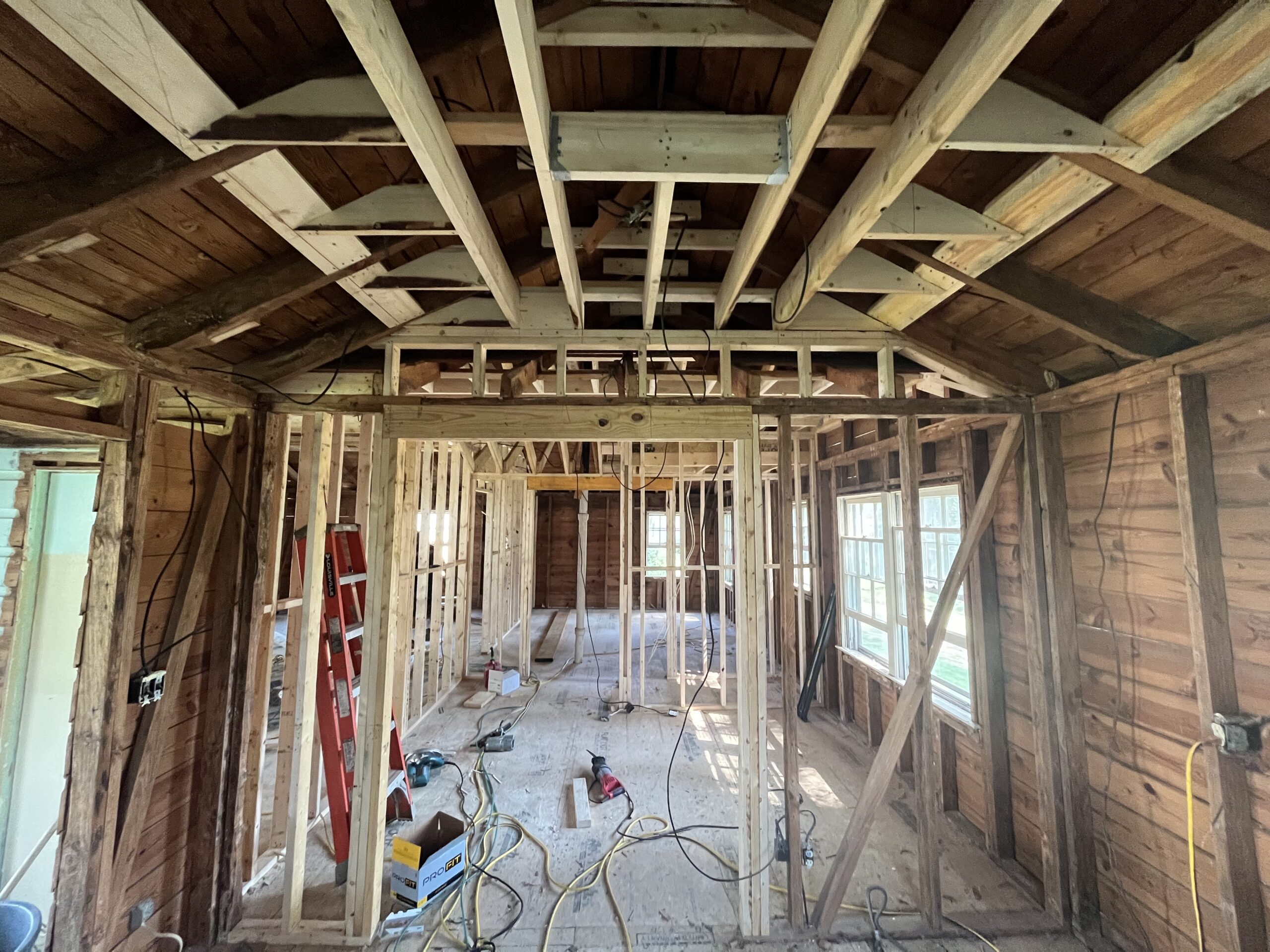
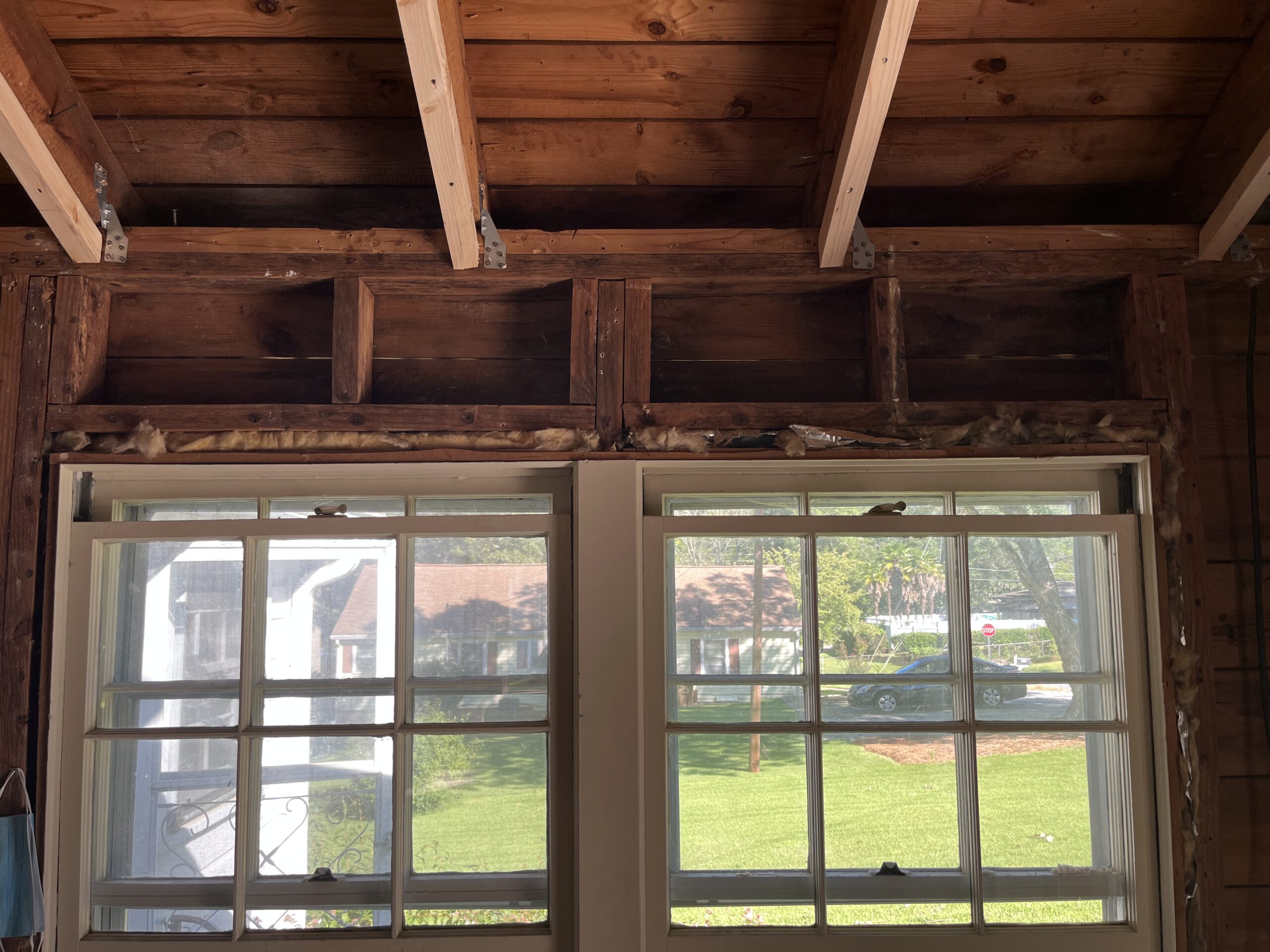
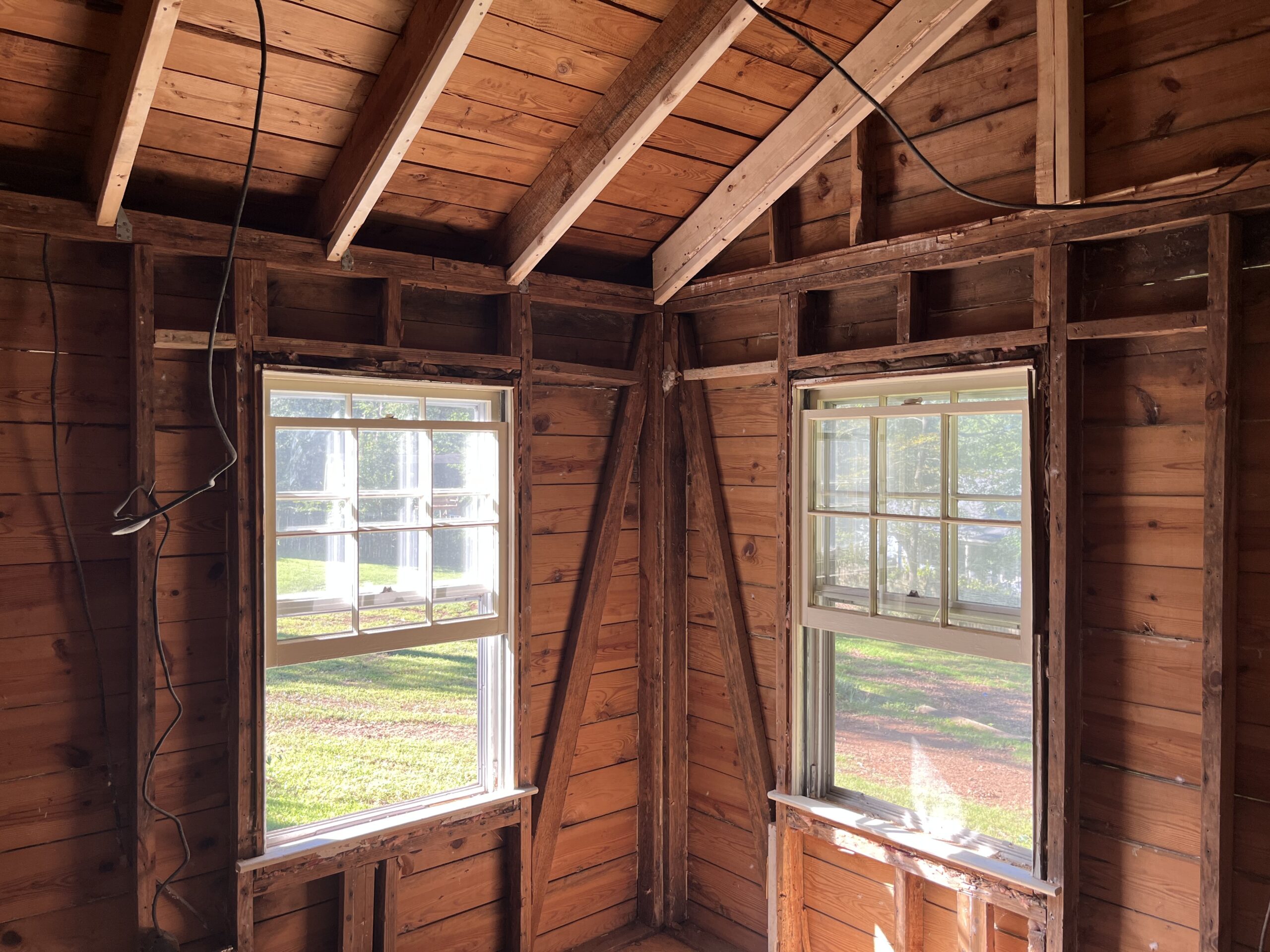
This is an example of a single story 990 square foot 3-bedroom house with 8’ ceilings that was built in 1937. After a Roof Framing Solutions Structural Review, the Roof System was found braced both to non-load bearing walls and to the ceiling joist directly, causing severe floor sags and creating issues with door swings, wall cracks and the ceilings. With Structural recommendations the Homeowner decided to remove the ceilings and all the interior walls, leaving the exterior walls and roof untouched. With unlimited design limits the Homeowner custom designed their own Interior Layout including Vaulted Ceilings, a new small Foyer / Receiving area with a Vaulted Curved Shed Roof and a new Covered Outdoor Living Area. The Roof was braced and a Sub- structure of Girder Rafters and opposing Vaults were designed and built creating new raised 10’ Main ceilings and Vaulted Ceilings in all the rooms. Notice that very little has changed in House Framing in almost 100 years except the on -center spacing from 24” to 16”
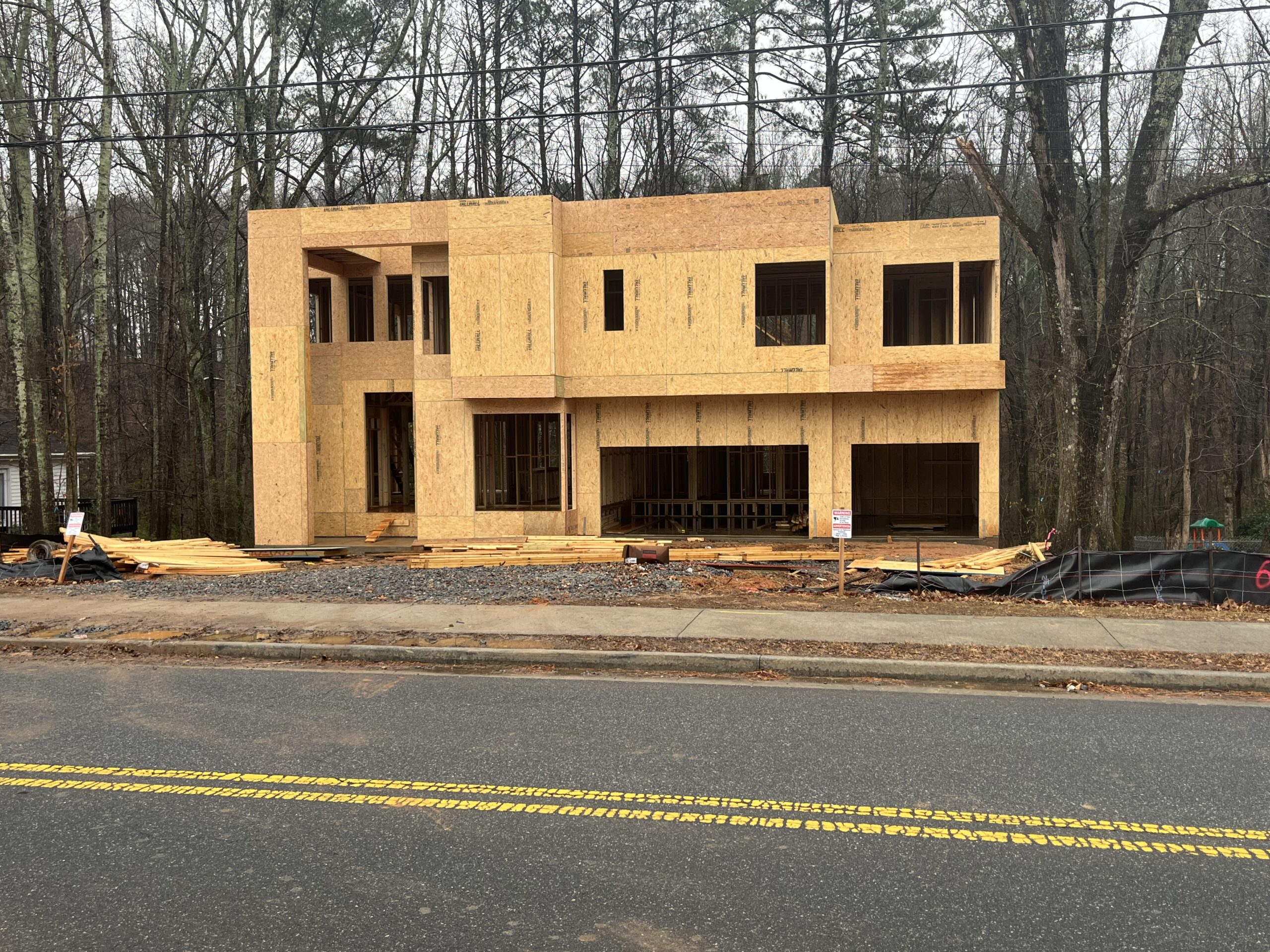
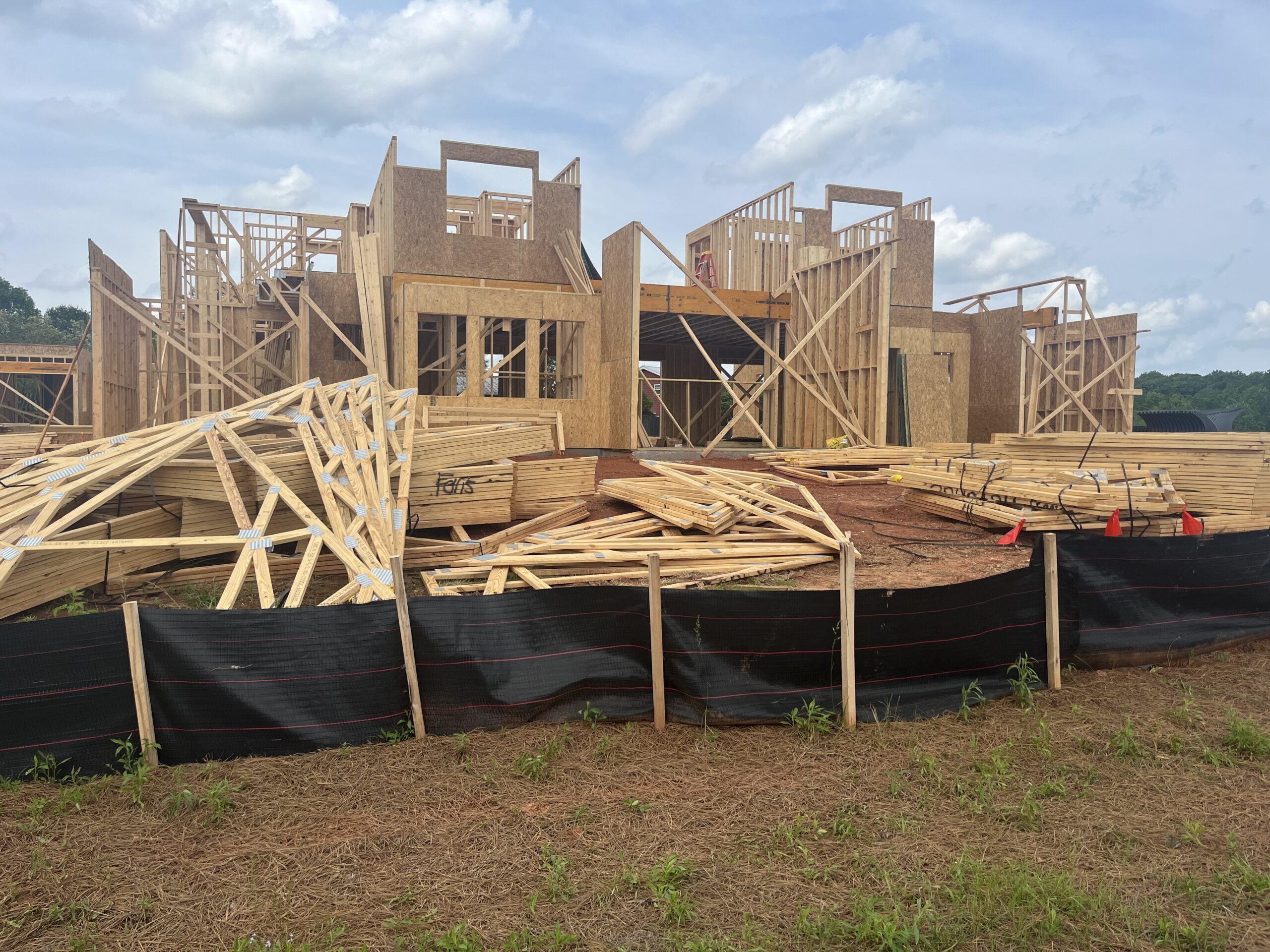
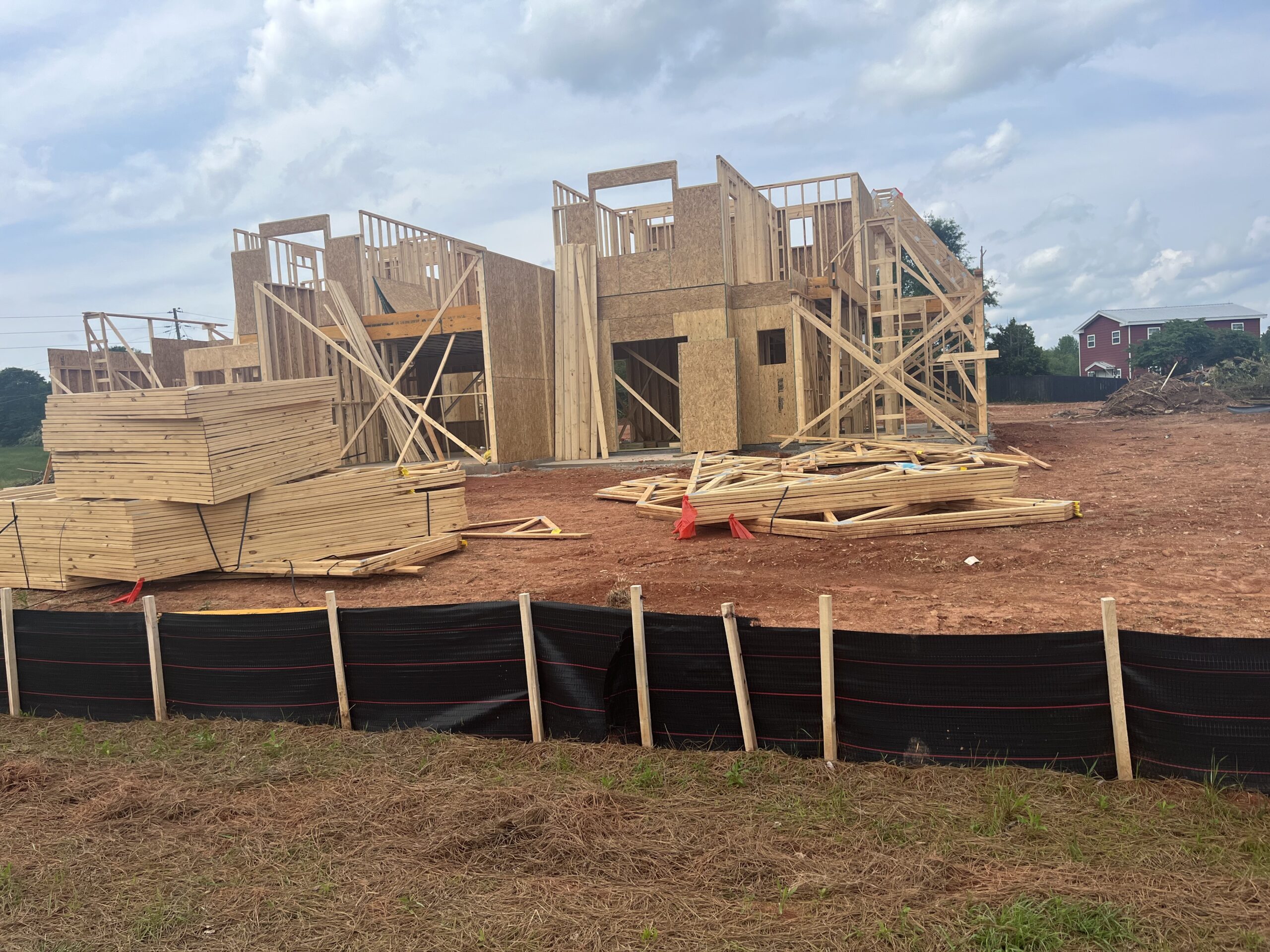
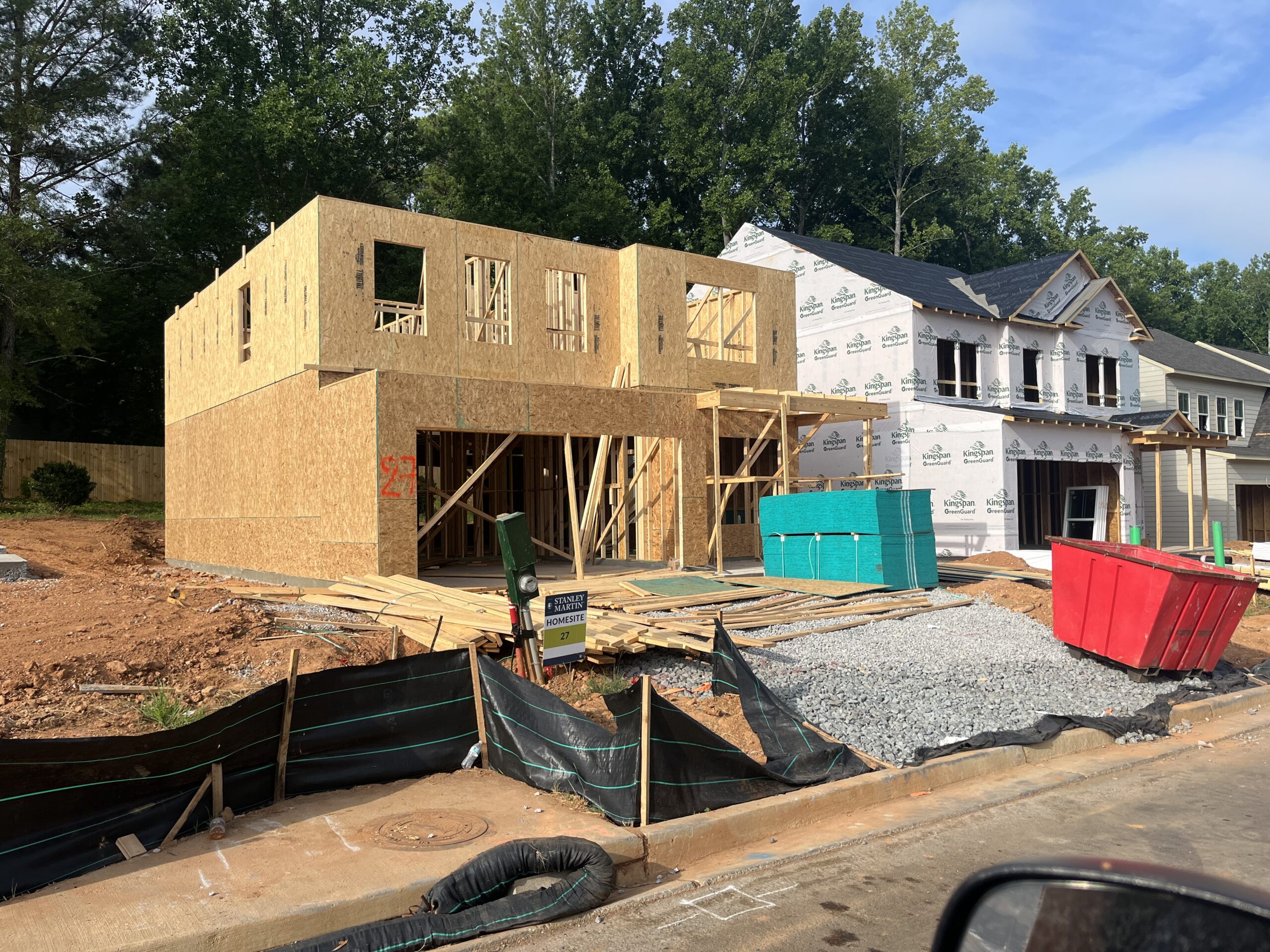
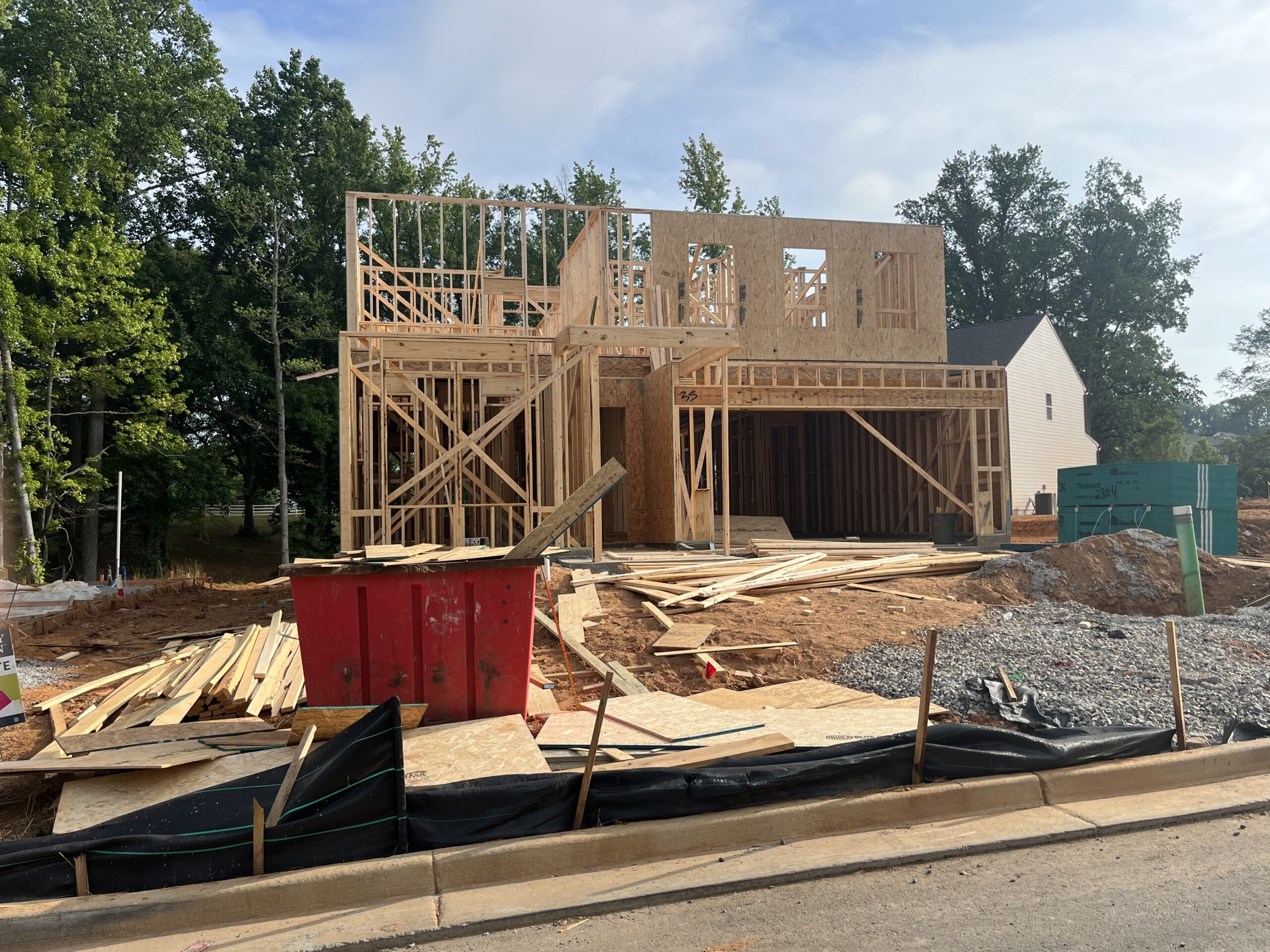
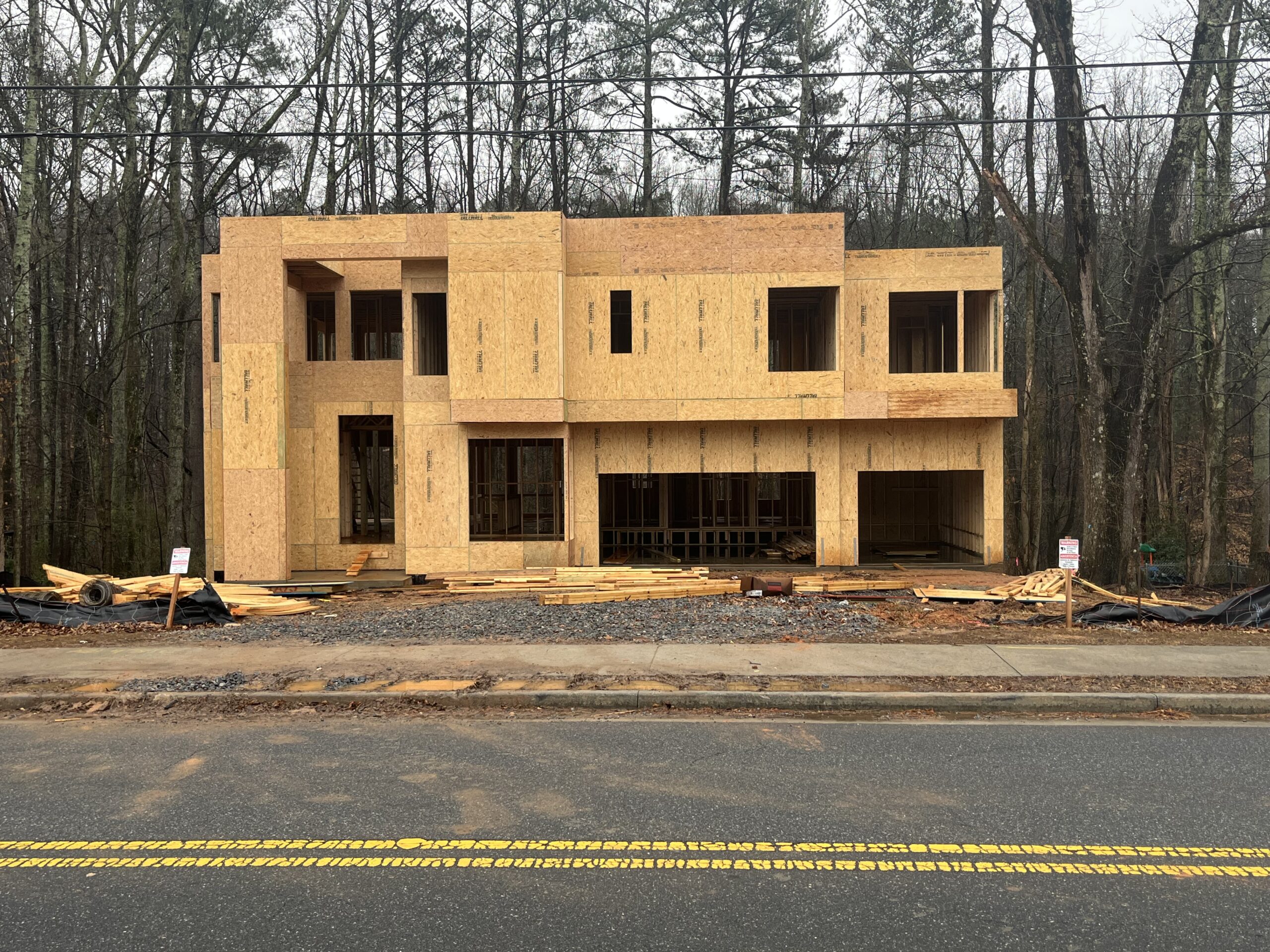
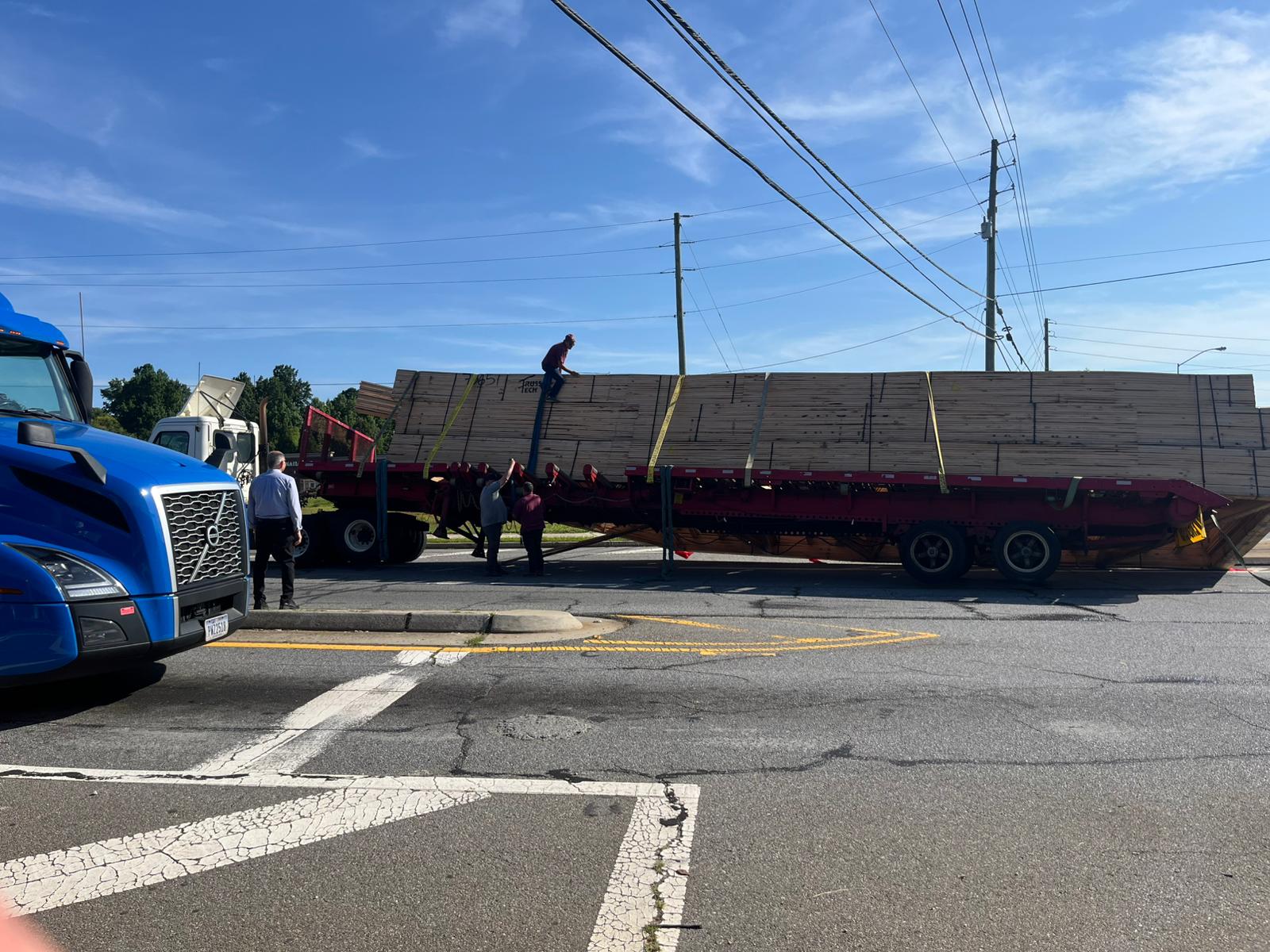
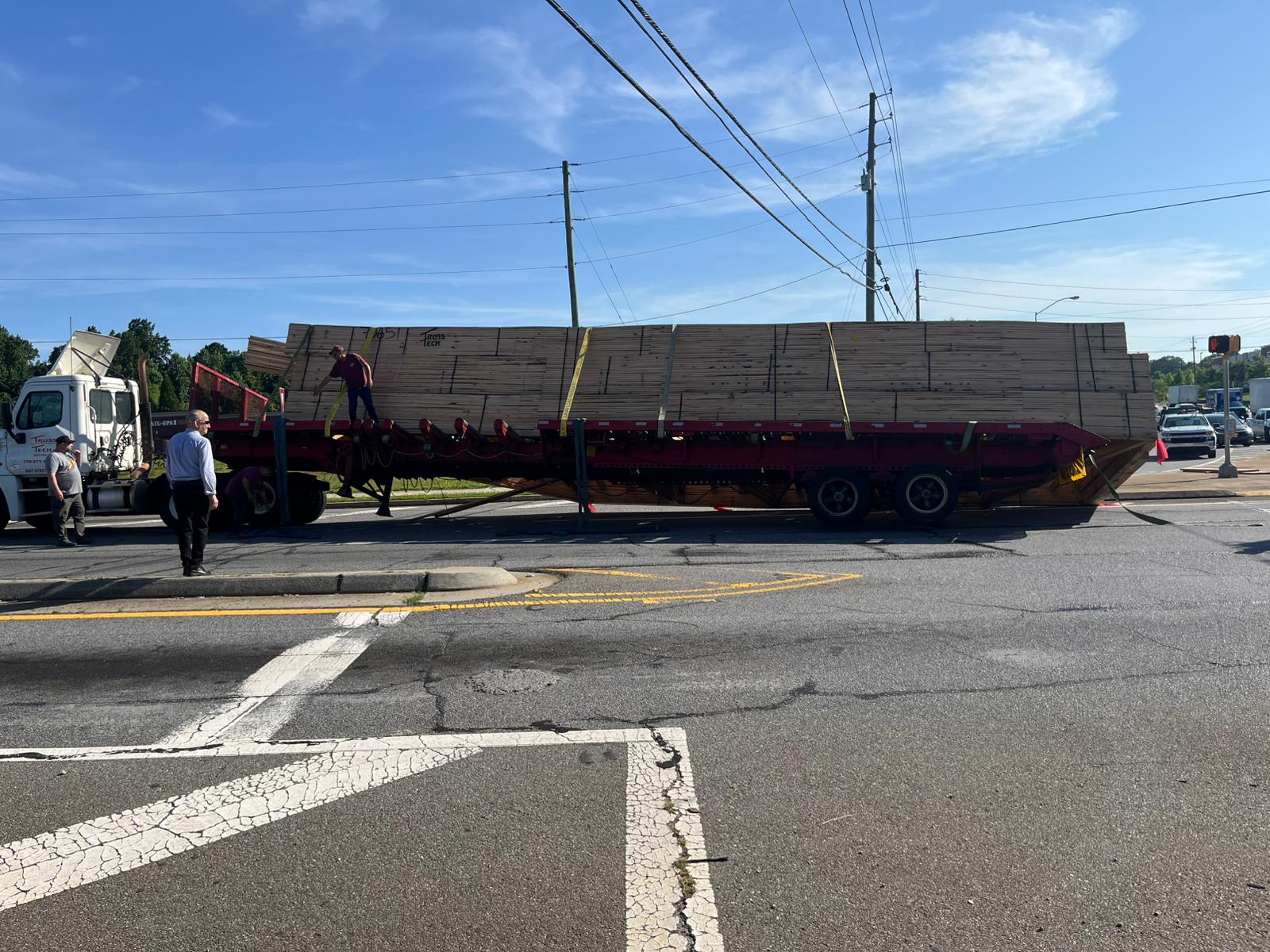
Here are some examples of houses brought to a stop waiting for the Roof Truss package to be delivered and another with the package dumped and scattered all over the jobsite causing damage to several Trusses. The Framing crews had to pull off and start other projects because of the delays. The next phase of Contractors and deliveries had to be cancelled and rescheduled also. When using the Roof Framing Solutions Method there is no loss of production waiting for Trusses, scheduling cranes or repairing the broken Trusses. With the Roof Framing Solutions, the entire Roof System is Structurally Designed, creating a Roof Material List and Layout with a Roof System Rafter Cut List and Layout all done in the pre-construction phase eliminating any loss of production during construction.
Using a Prefab Roof Truss System can cause many costly time-consuming problems such as:
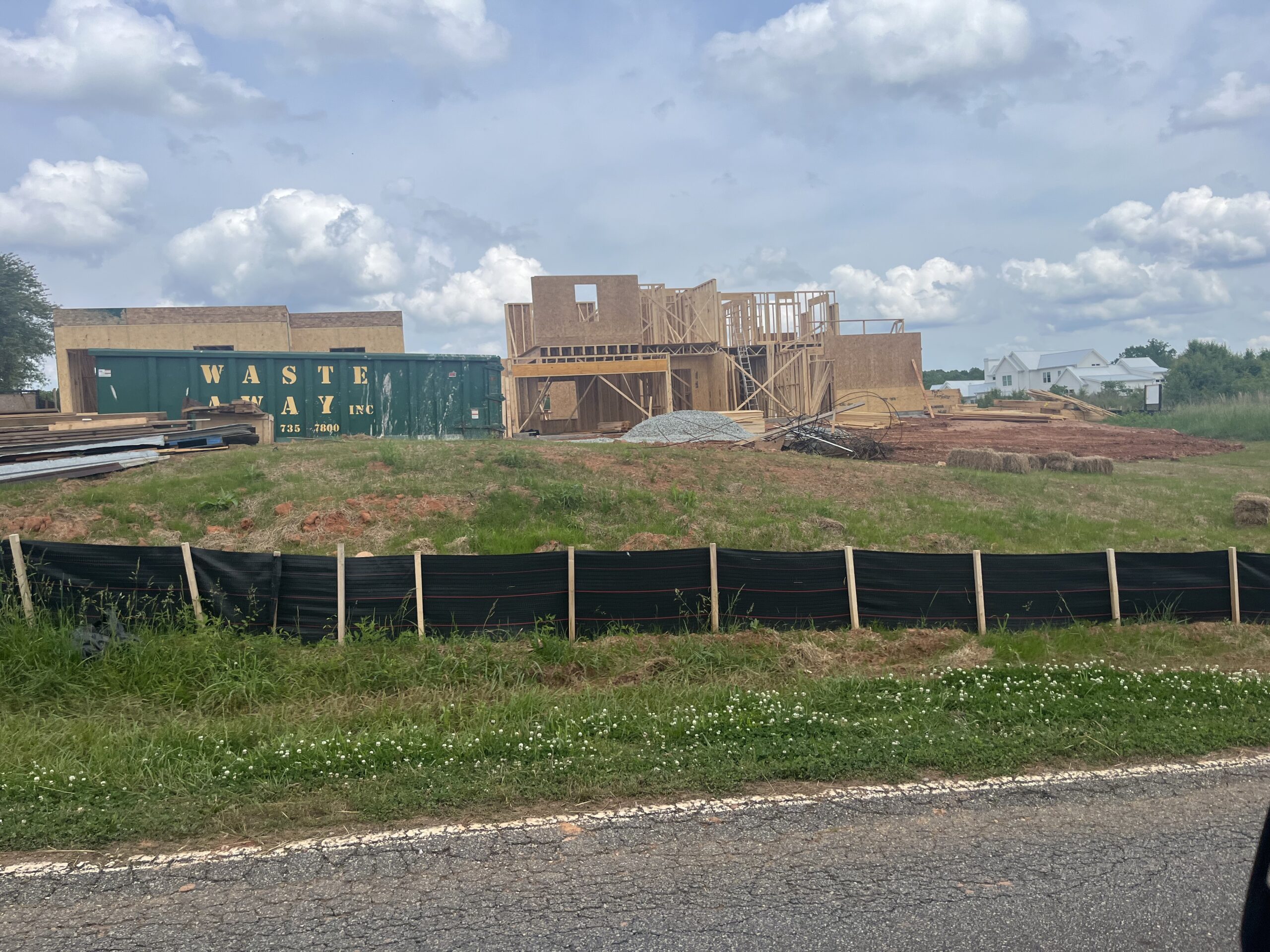
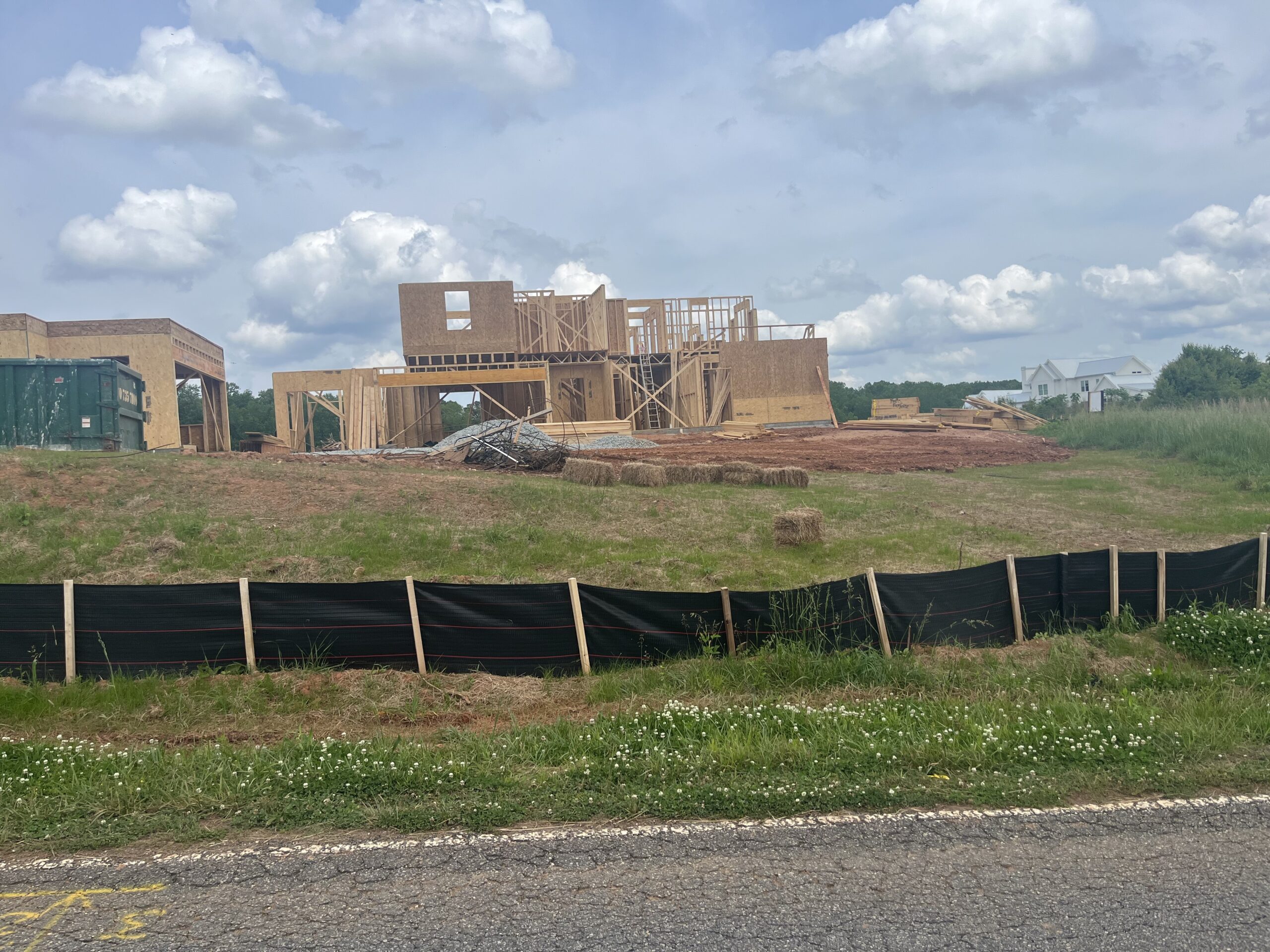
Without a Common or Standard Method of Roof Framing taught or practiced within the industry and the lack of Roof Cutters with the knowledge or experience there are as many ways to cut a Roof as there are Framing Crews. This can lead to many costly time-consuming problems such as:
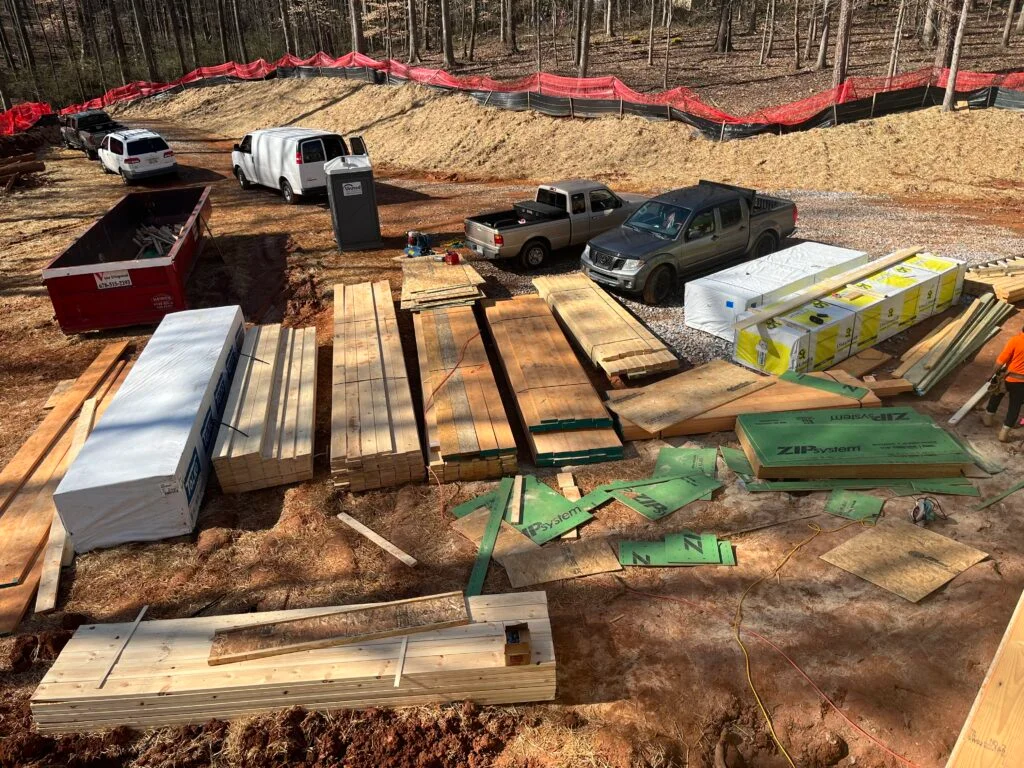
Getting a complete Roof Framing Material List and then framing the Roof is the most complicated, time-consuming, and costly part of framing a house. The last thing a Homeowner wants to see after the Roof is built is huge piles of waste or stacks of expensive over-ordered material covering the lot. Unfortunately, most material lists are done by someone with little to no roof knowledge or building experience, or by the Framer on-site, at the last minute, multiple times. This is called a “Shotgun Takeoff “. Having smarter cost control and material management during roof construction requires an accurate, complete Roof Framing Material List and Layout, with a Roof System Rafter Cut List and Layout.
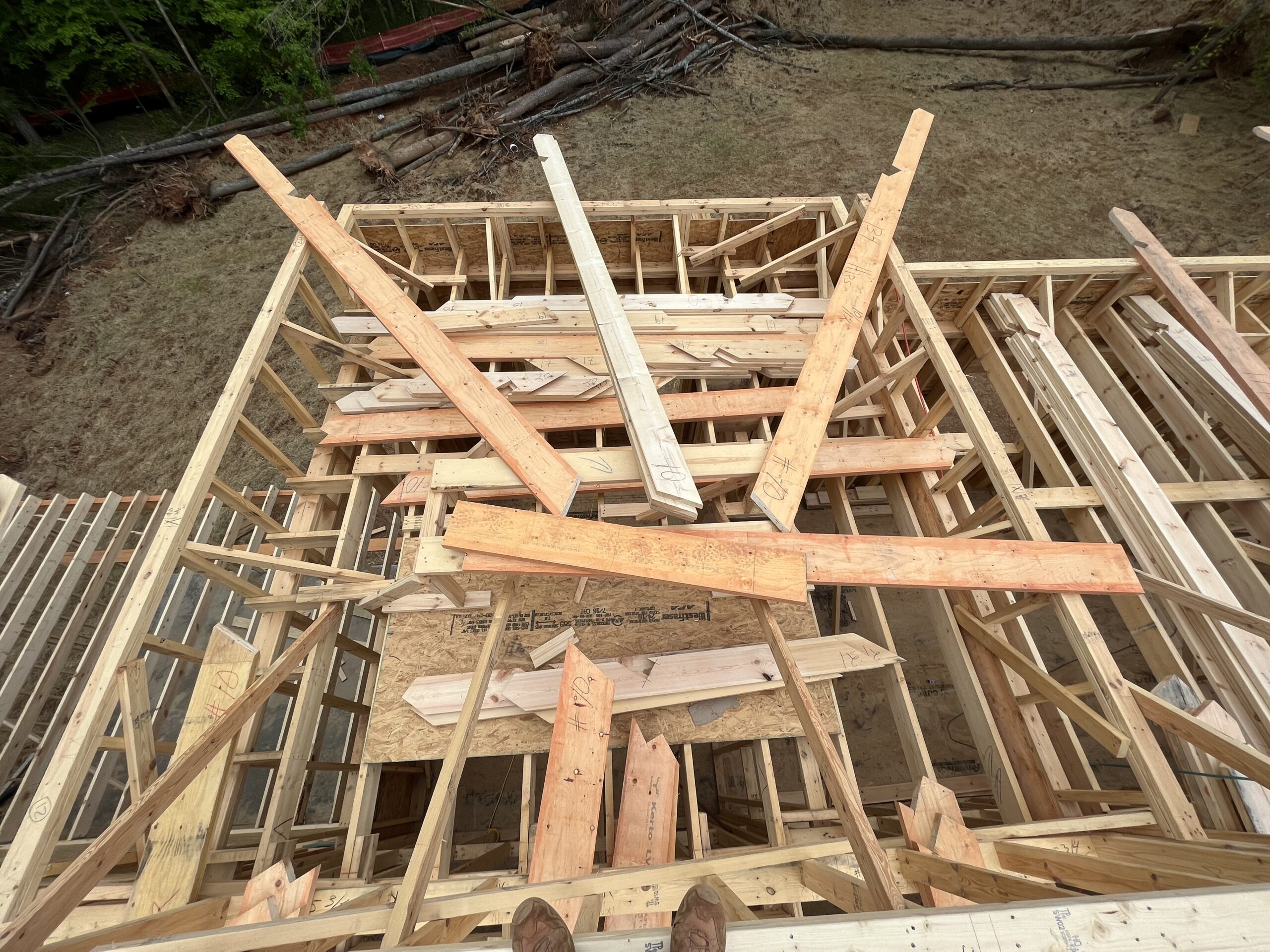
Here are some examples of “Shotgun takeoffs“ and how they can get out of control with waste and overordering. As you look through these pictures of all the material waste and MONEY covering the lot, ask yourself…
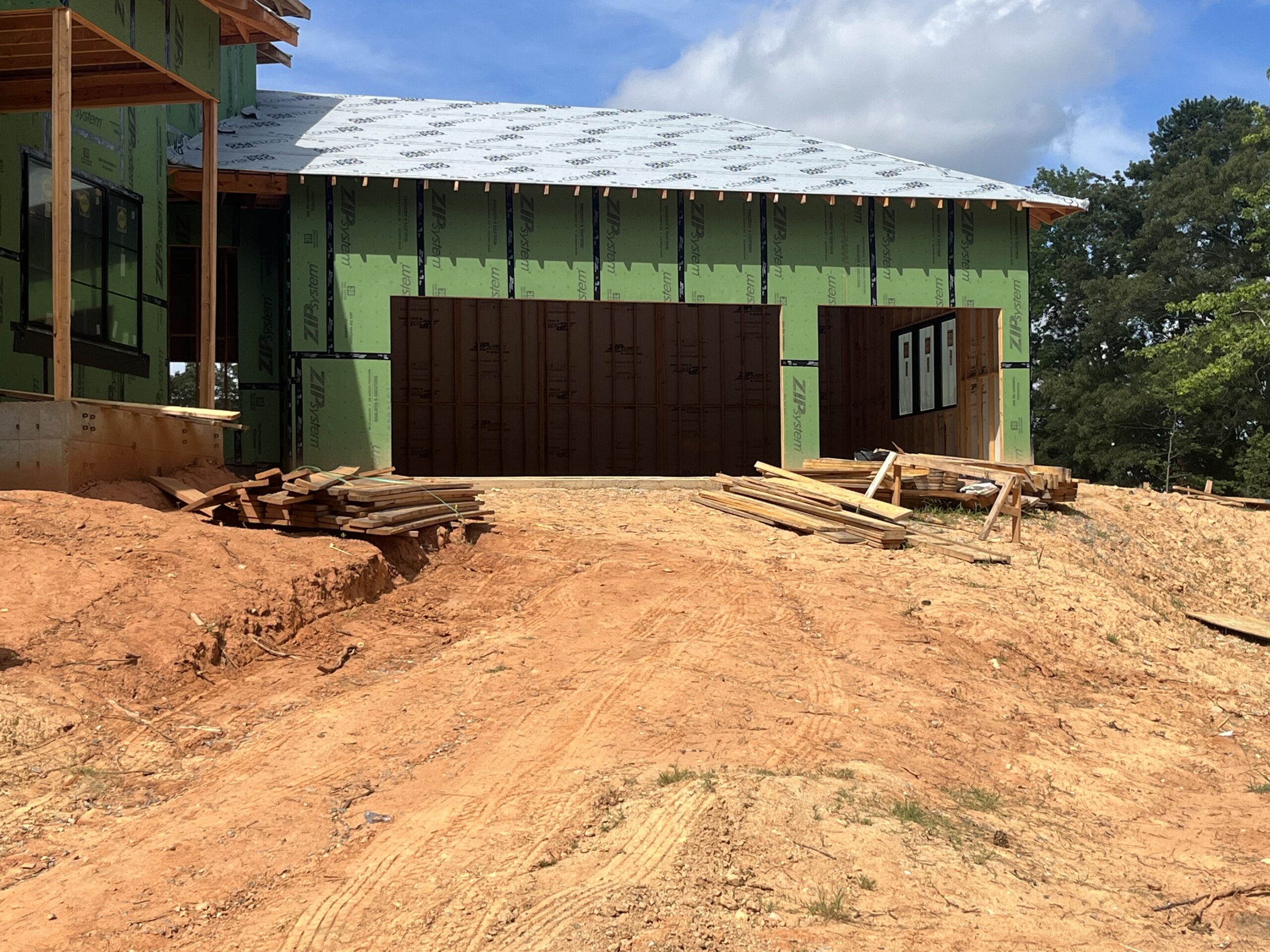
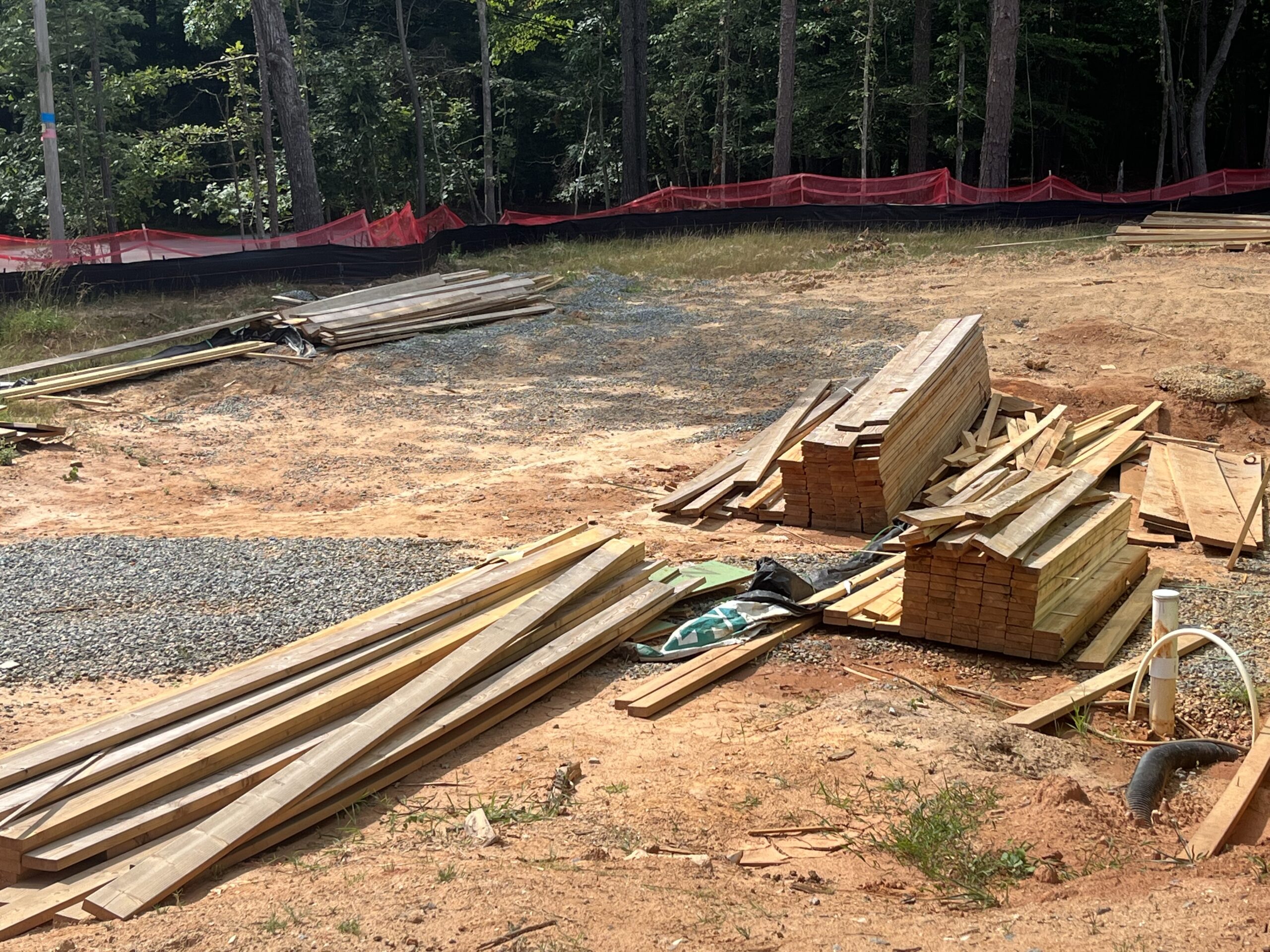
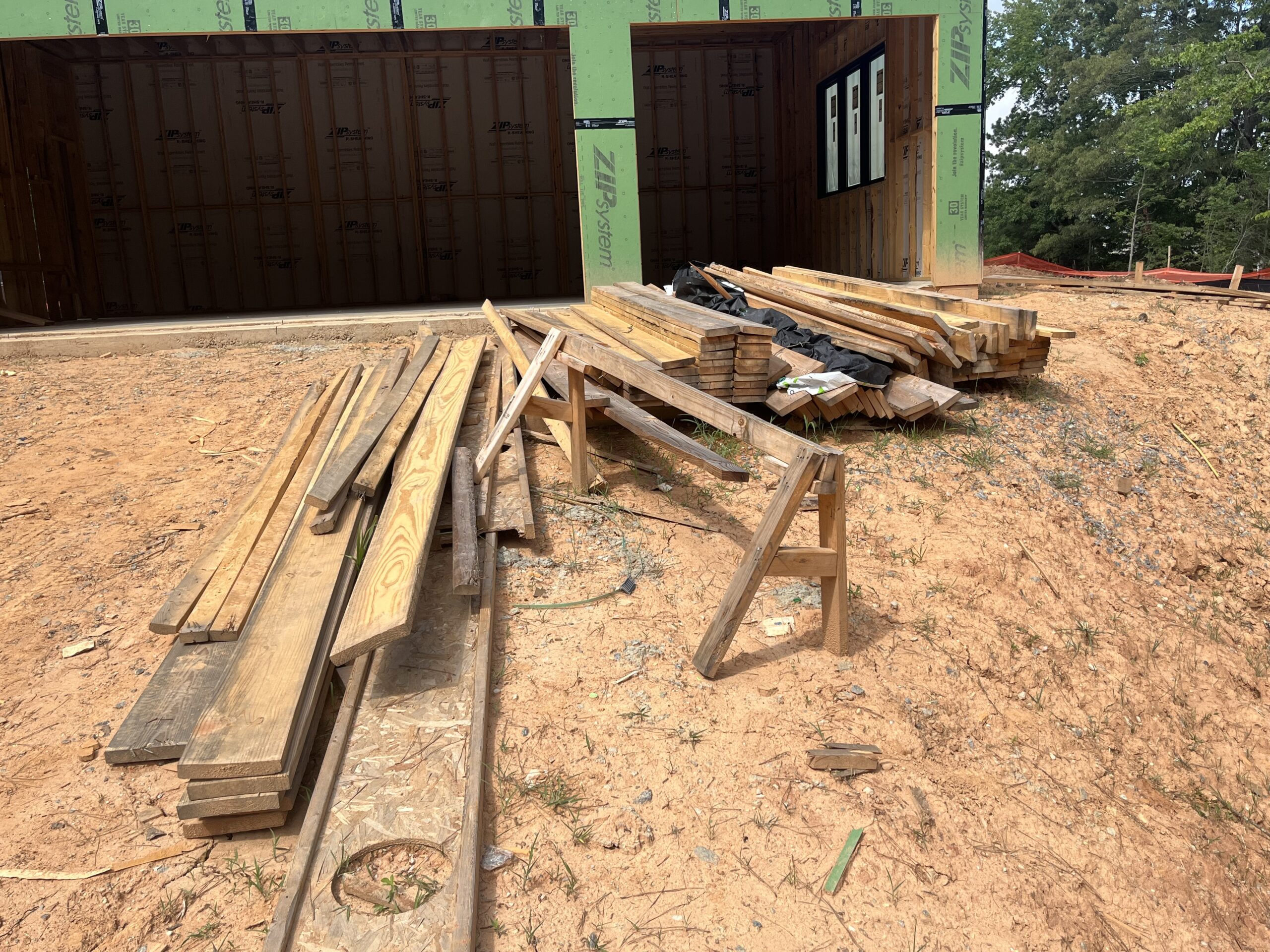
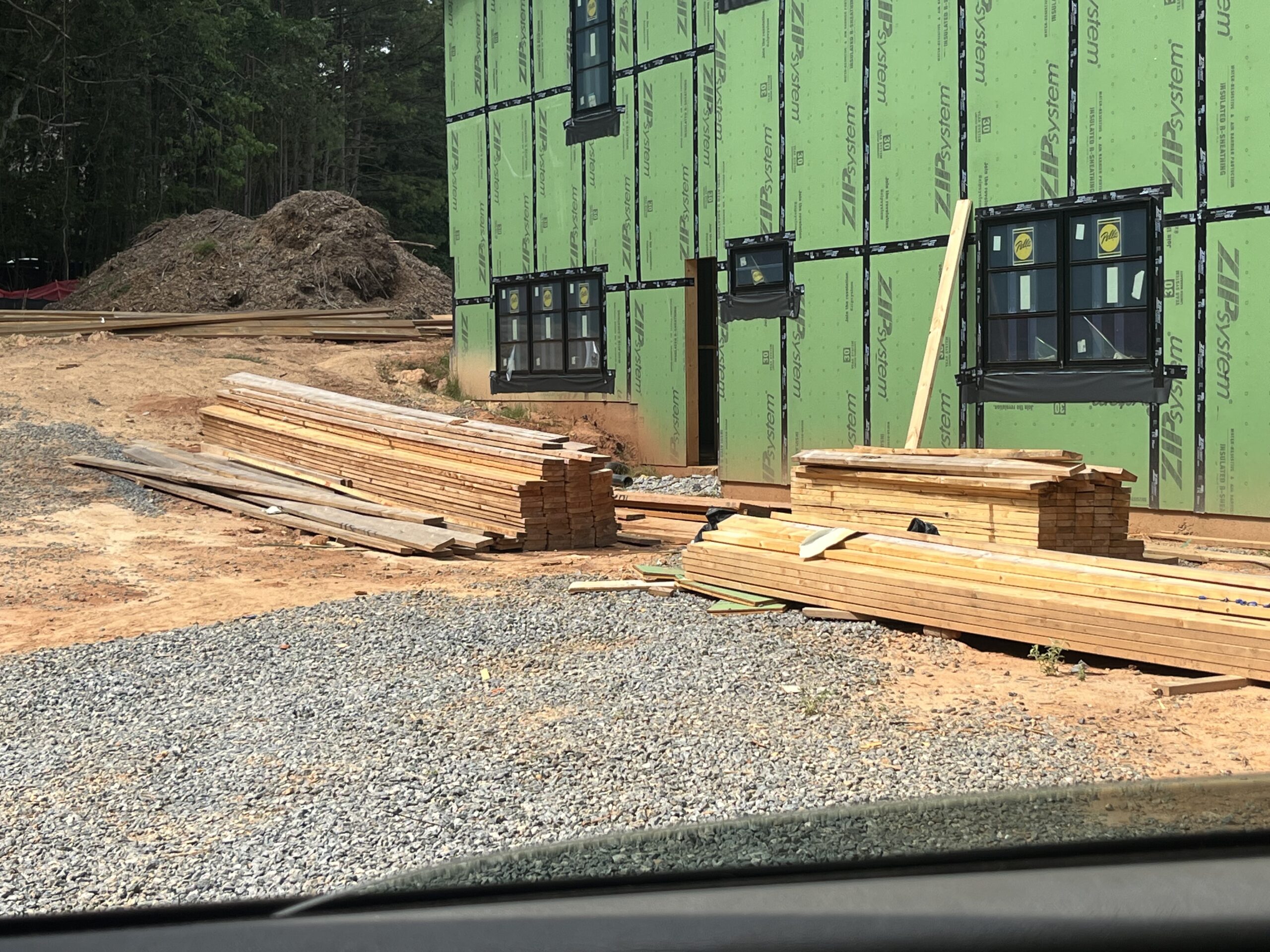
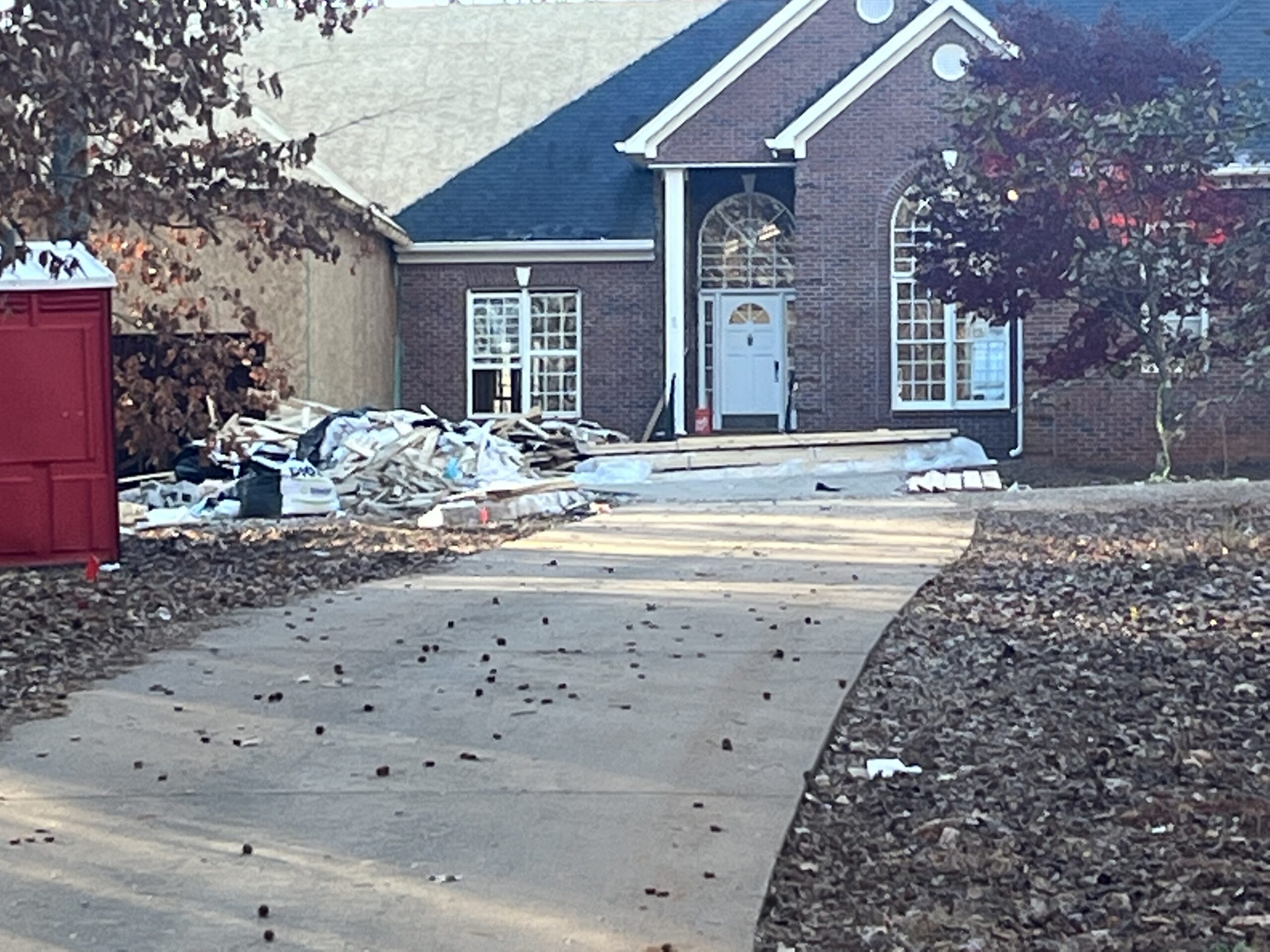
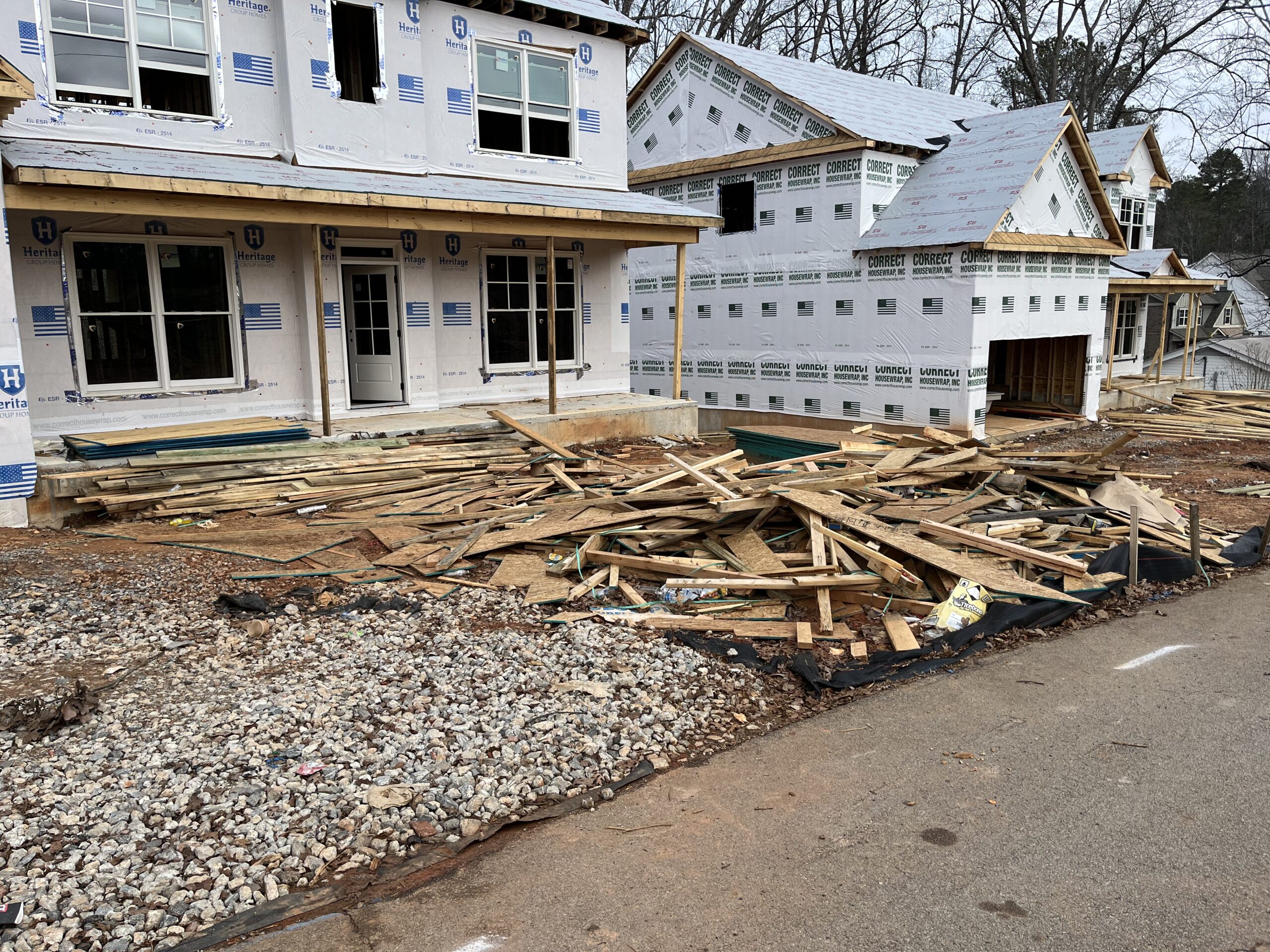
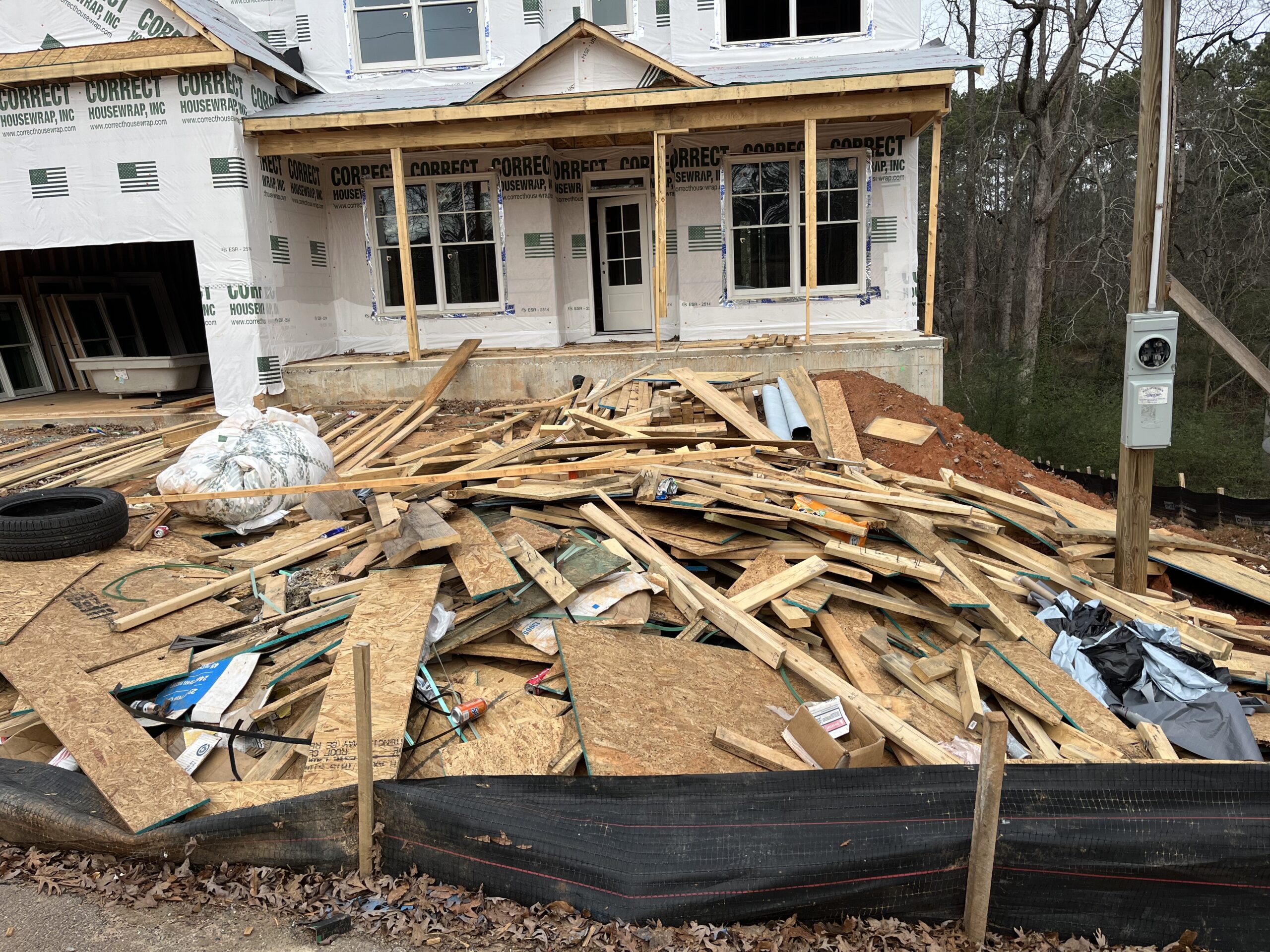
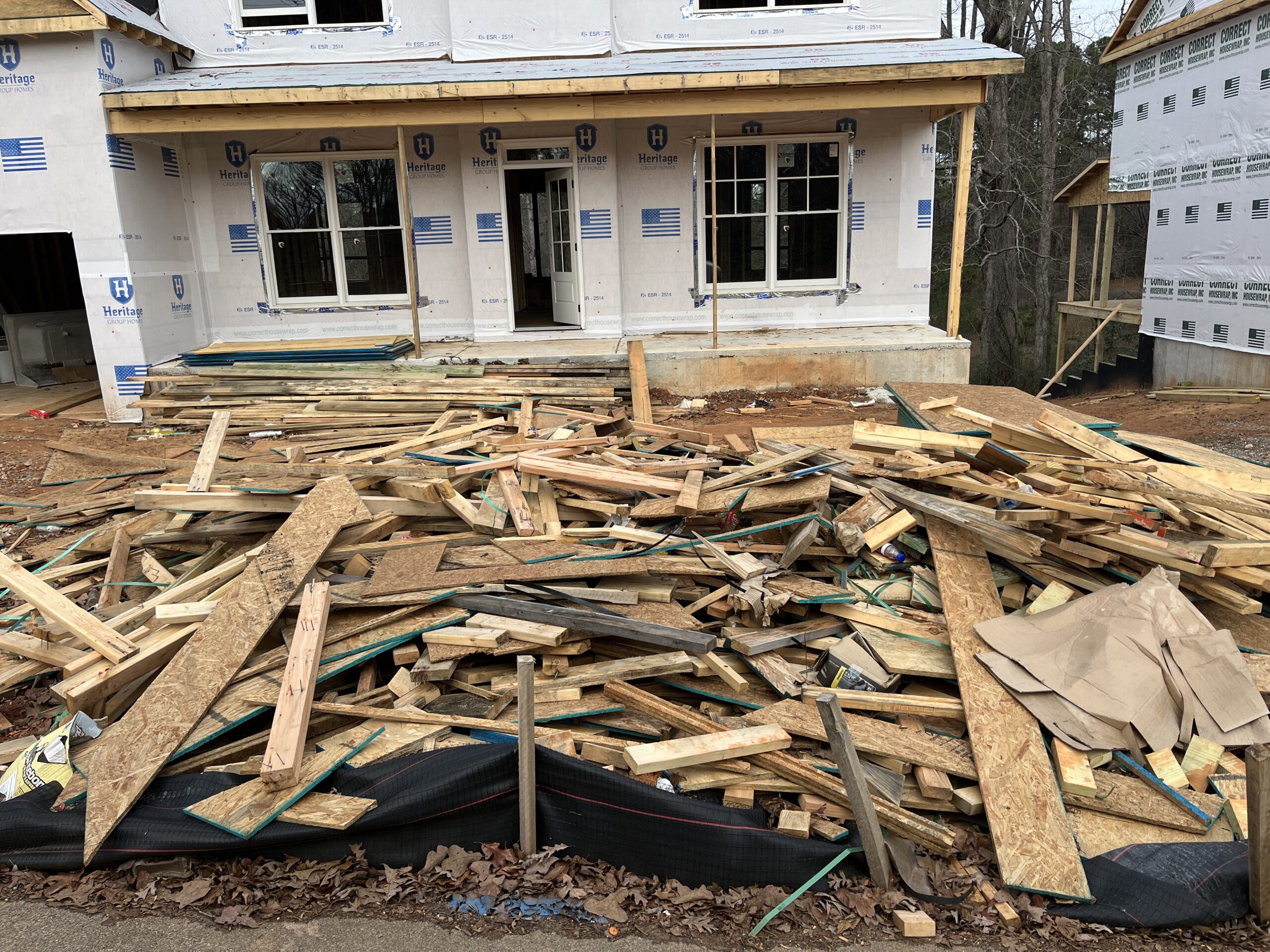
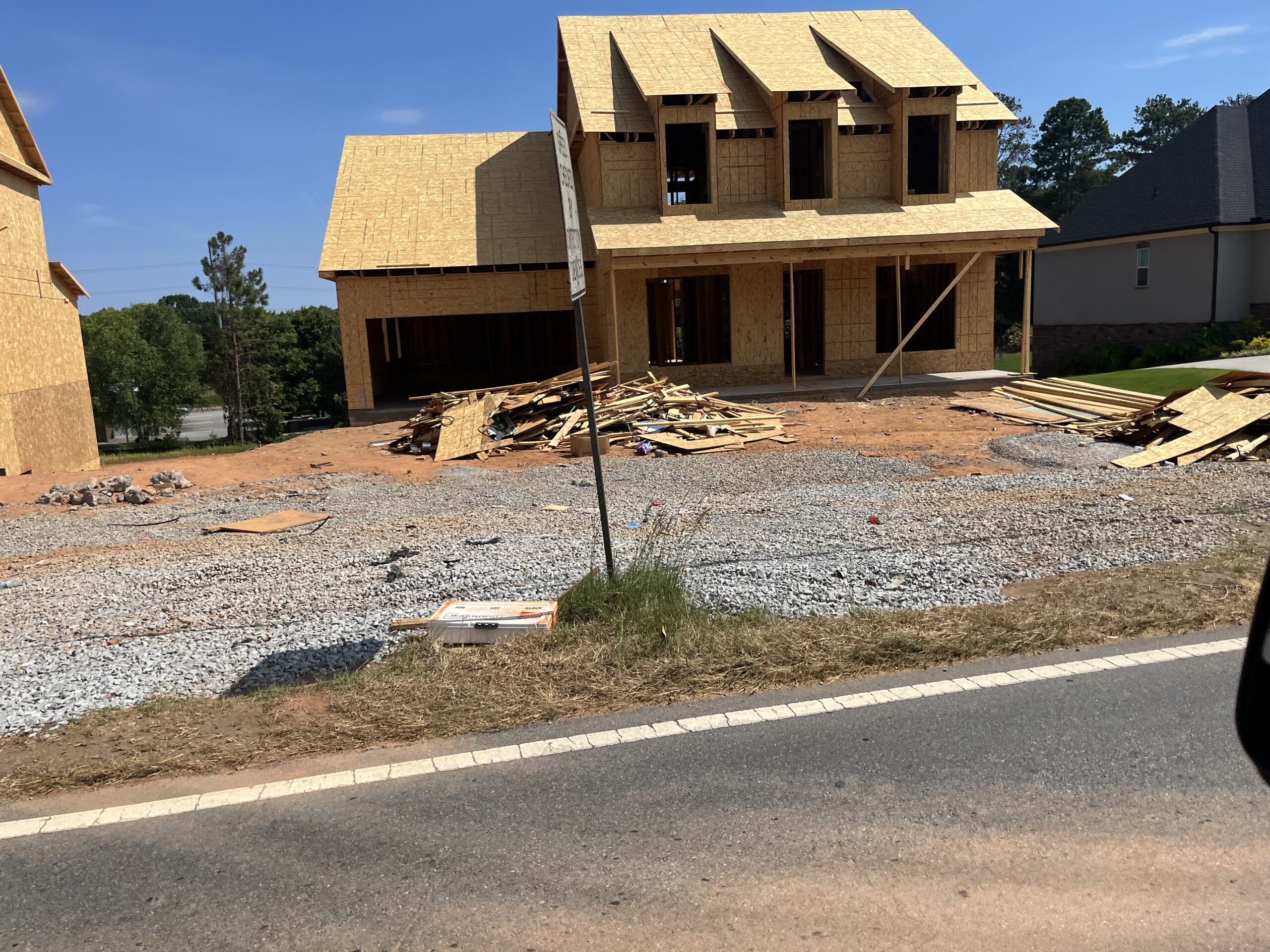
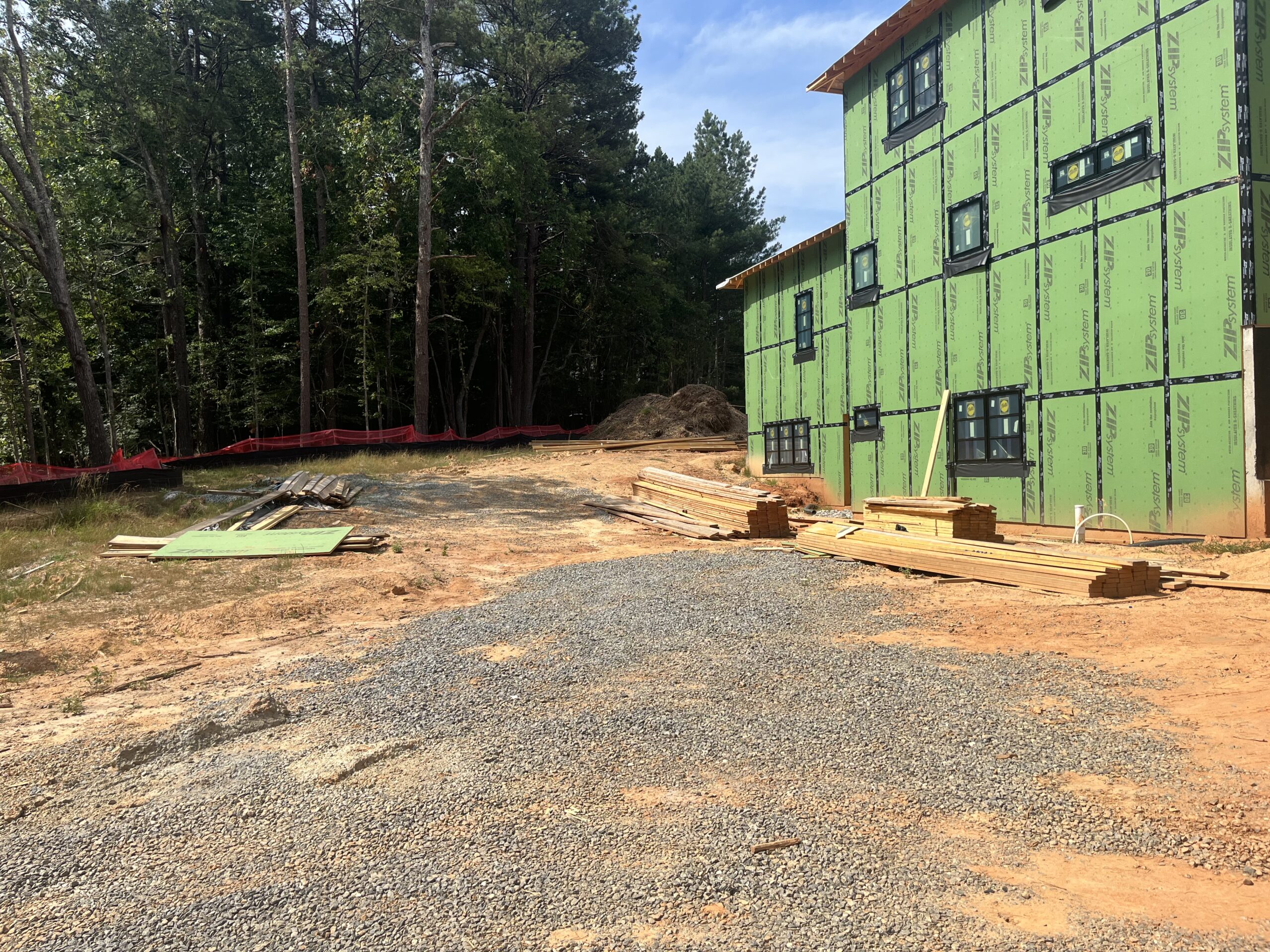
With a Structurally Designed Roof System from Roof Framing Solutions there is Smarter Cost Control and Material Management with Roof Construction. There are no huge waste piles or stacks of lumber consuming valuable jobsite space waiting to be picked up, used by others or stolen
Here is an example of an HVAC unit in a Brace Free Open Attic Roof System Designed by Roof Framing Solutions. With no need for the outdated Roof Bracing methods used currently the attic is clear and open for easy installation and clear access for maintenance. Using Spray Foam Insulation, the ductwork can hang from the rafters with ductstraps to ensure that it is straight and has minimal bends or sags which can restrict airflow and efficiency. It is also easier to check for leaks and protect them from being damaged or crushed in the future storage area. Also note how much space is available for storage.
The Rafter Cut List provided to the Framer are cut sheets with specific detailed information, written in the Framer’s Language, needed to lay out, cut, and number each rafter for the entire Roof System, including the following:
With the Roof Framing Solutions Rafter Cut List the entire Roof System can be pre-cut, organized and stacked, ready to be assembled while the house is being framed, eliminating the loss of production with today’s slow, outdated stick framing methods or the problems with Prefab Roof Truss Systems.
With Roof Systems being as complicated as they are, any information provided needs to be clear and understandable. Not using complicated Architectural or Engineering terminology the Roof Framing Solutions method uses terms and phrases familiar with and used by Framing crews so there is a quick easy transfer and understanding of complicated Roof information. The Roof Framing Material Layout Plan, Roof System Rafter Cut List, and the Roof System Rafter Layout Plan are all written and laid out using the Framers Language. This is a language that Framers understand and use daily so there is no confusion or misunderstandings. With a quick review any Framing crew can read and understand all the information provided. Just straight Roof information we need written and laid out in a language we use.
This is an example of a Designated Mechanical Closet in the Finished area of a Brace Free Open Attic Roof System Designed by Roof Framing Solutions. Having this closet allows for easy Installation and Smarter, Straighter Ductwork behind the new Finished walls to protect them from damage or crushing. With the HVAC unit laid out in an organized easily accessible way and the ductwork hanging from the rafters with ductstraps, this area will also be used for Conditioned Storage with access to other areas for unconditioned storage. Note the full-size entry door for easy access for maintenance.
Here is an example of an HVAC unit in a Brace Free Open Attic Roof System Designed by Roof Framing Solutions. With no need for the outdated Roof Bracing methods used currently the attic is clear and open for easy installation and clear access for maintenance. Using Spray Foam Insulation, the ductwork can hang from the rafters with ductstraps to ensure that it is straight and has minimal bends or sags which can restrict airflow and efficiency. It is also easier to check for leaks and protect them from being damaged or crushed in the future storage area. Also note how much space is available for storage.
A Shotgun Takeoff is NOT a complete or accurate Material List and CAN NOT BE USED to get a firm Pre-construction material cost. It is usually prepared by a Sales rep to ballpark an estimate or by the Framer on-site during construction. This is a quick list of material put together to get started that results in multiple orders and deliveries of material that are usually the wrong lengths and quantities. This slows production and by the time the Roof System has been cut and set, the jobsite has huge piles of waste with multiple dumpster runs or stacks of expensive lumber waiting to be picked up for a credit return. This is not Smart Cost Control or Material Management and can create problems with budgeting in other areas of the project.
This is an example of a Designated Mechanical Closet in the Finished area of a Brace Free Open Attic Roof System Designed by Roof Framing Solutions. Having this closet allows for easy Installation and Smarter, Straighter Ductwork behind the new Finished walls to protect them from damage or crushing. With the HVAC unit laid out in an organized easily accessible way and the ductwork hanging from the rafters with ductstraps, this area will also be used for Conditioned Storage with access to other areas for unconditioned storage. Note the full-size entry door for easy access for maintenance.
Here is an example of an HVAC unit in a Brace Free Open Attic Roof System Designed by Roof Framing Solutions. With no need for the outdated Roof Bracing methods used currently the attic is clear and open for easy installation and clear access for maintenance. Using Spray Foam Insulation, the ductwork can hang from the rafters with ductstraps to ensure that it is straight and has minimal bends or sags which can restrict airflow and efficiency. It is also easier to check for leaks and protect them from being damaged or crushed in the future storage area. Also note how much space is available for storage.
This is an example of a project that with the Cost Savings in Material and a Brace Free Open Attic designed by Roof Framing Solutions the Homeowners added a Truss Floor System and a full set of stairs to the attic to gain an additional 825 square feet of Future Finish and 430 square feet for Storage for a total gain of 1,255 square feet of attic space.
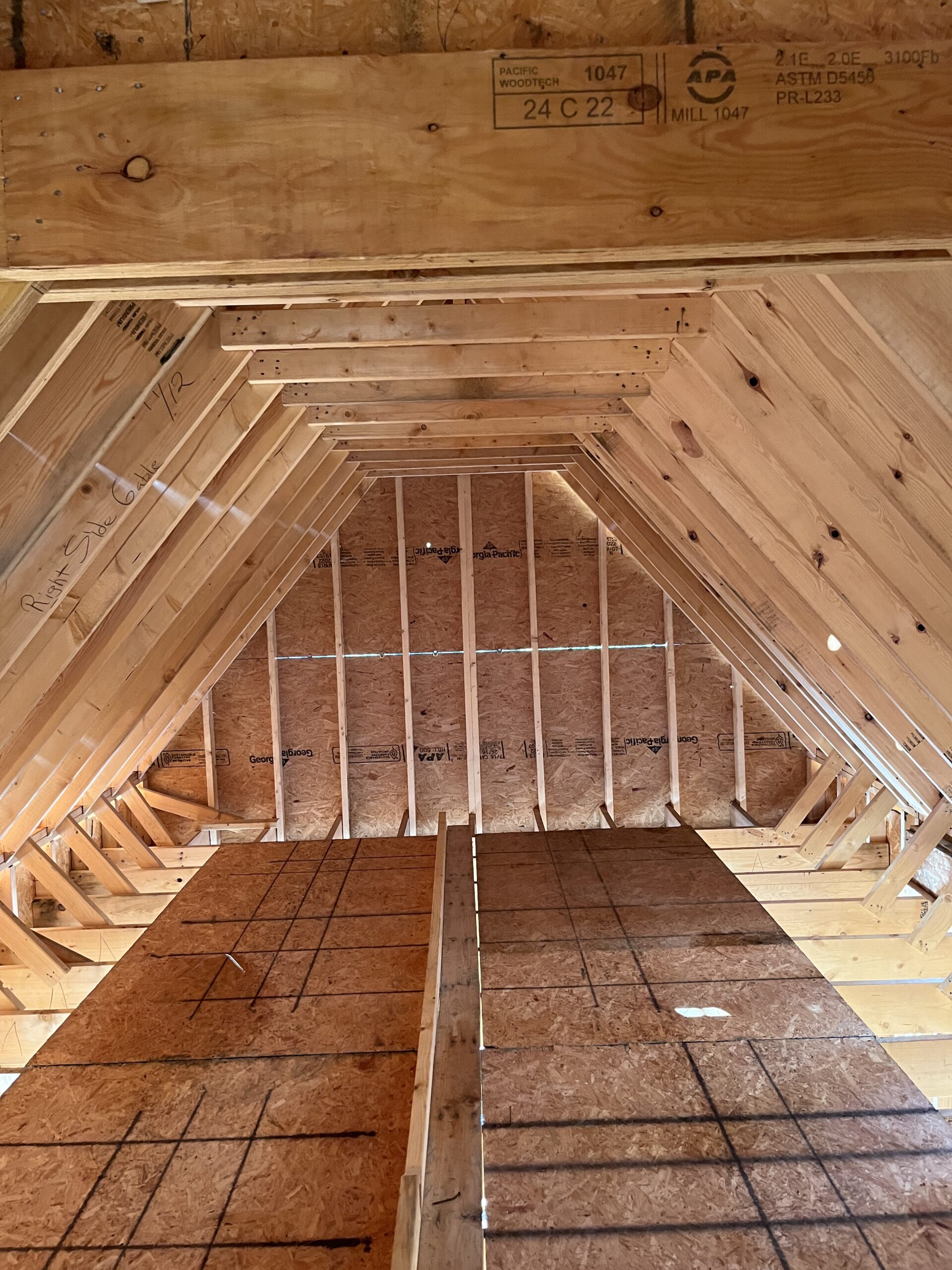
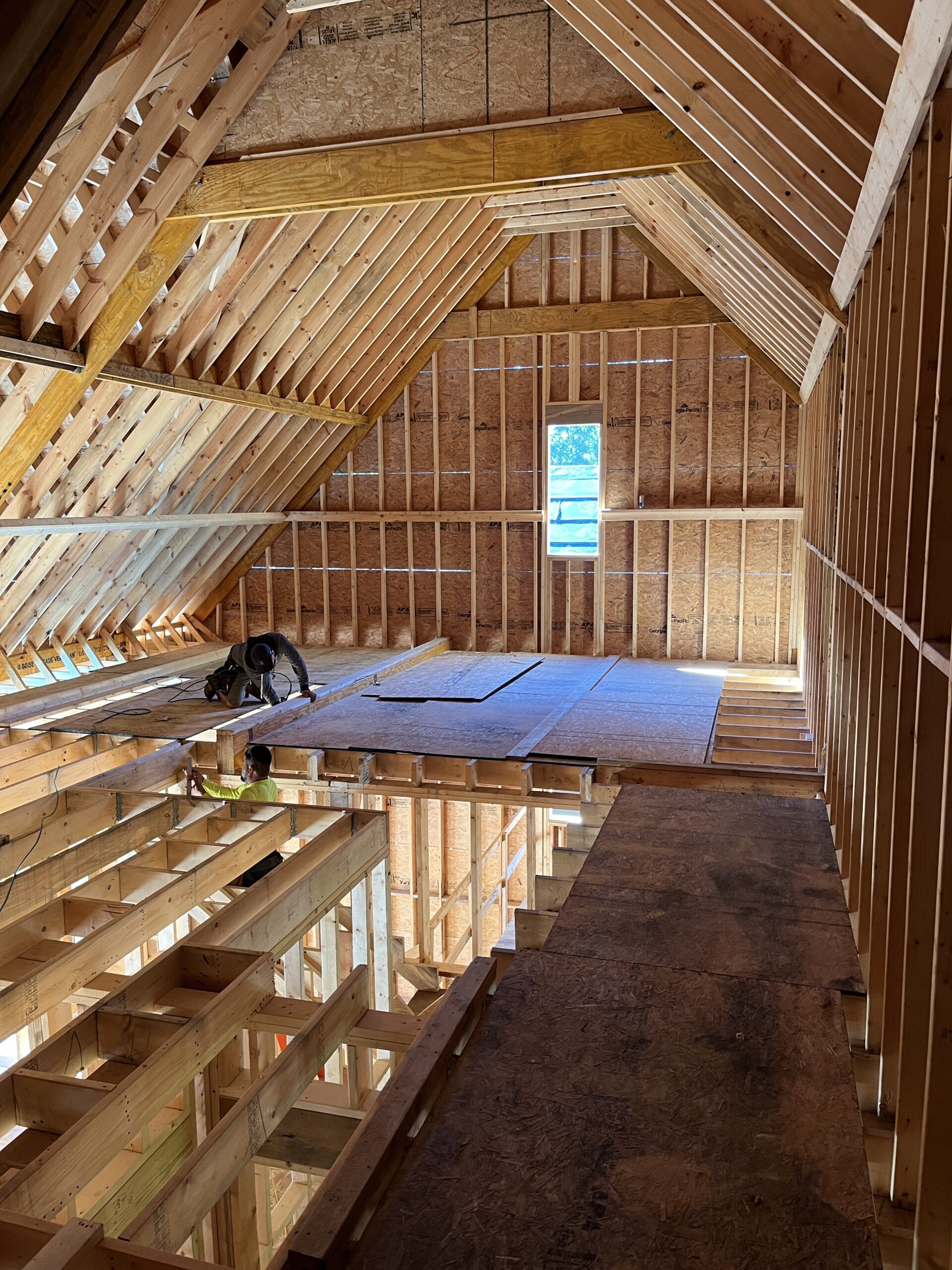
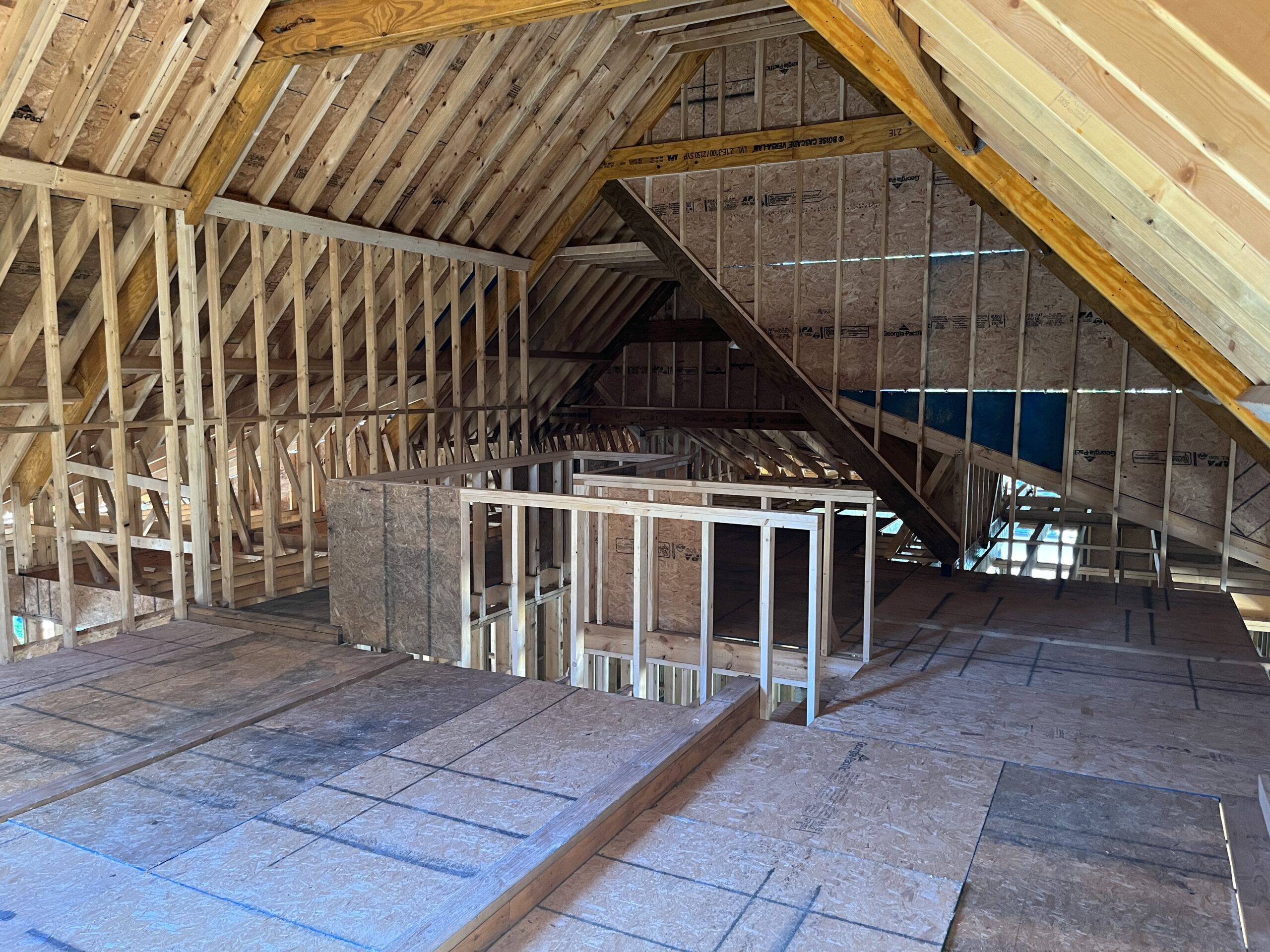
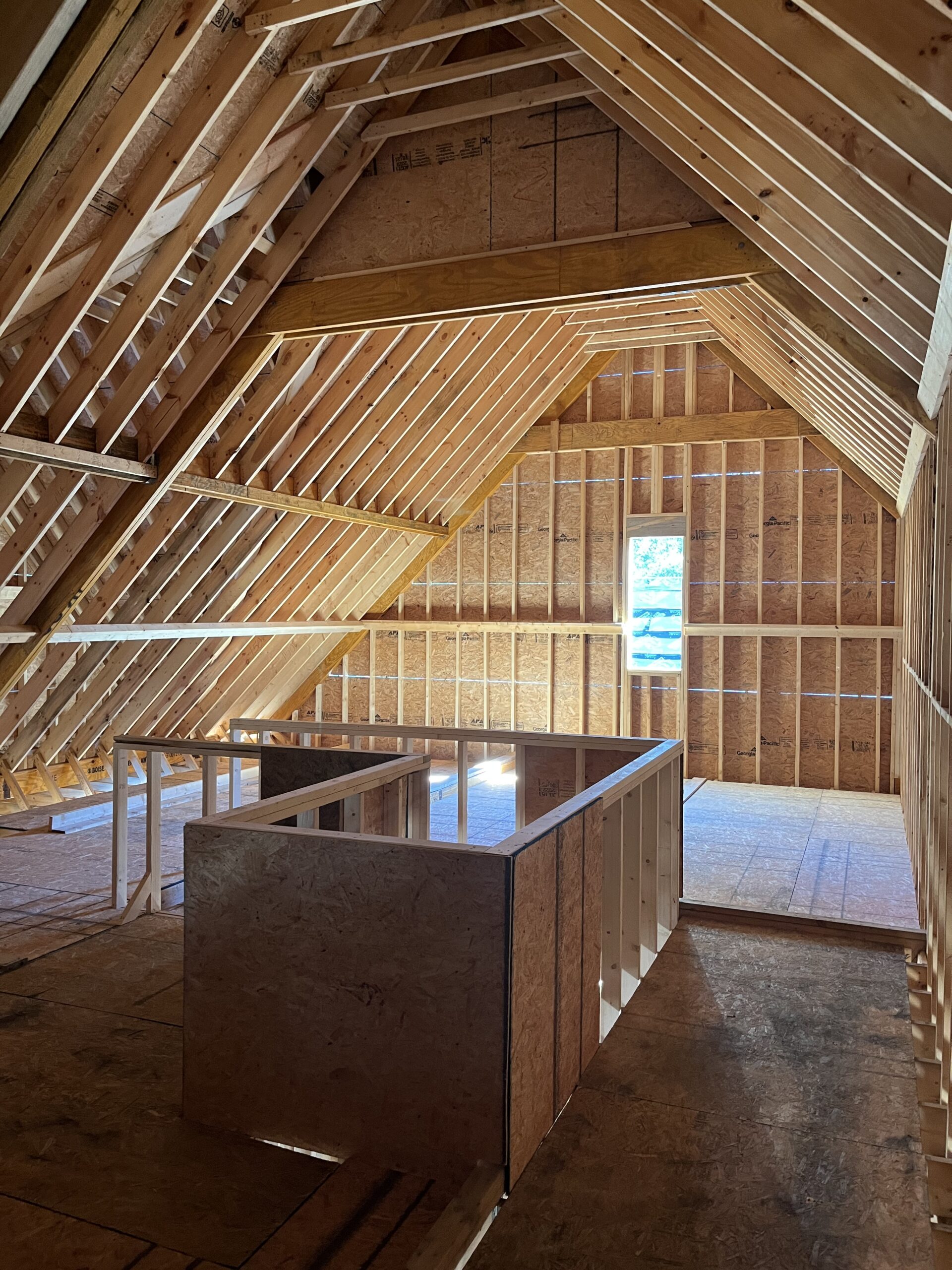
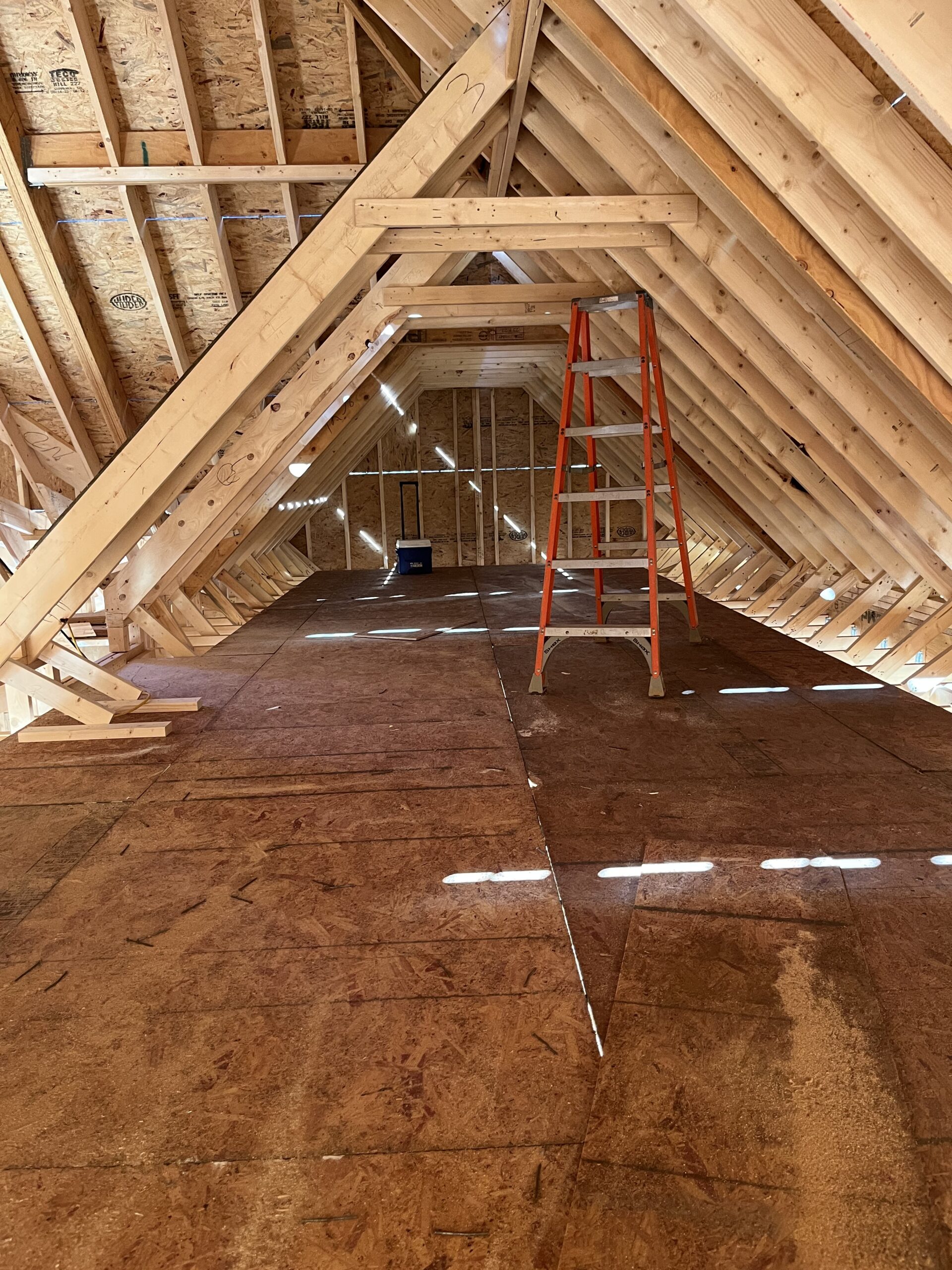
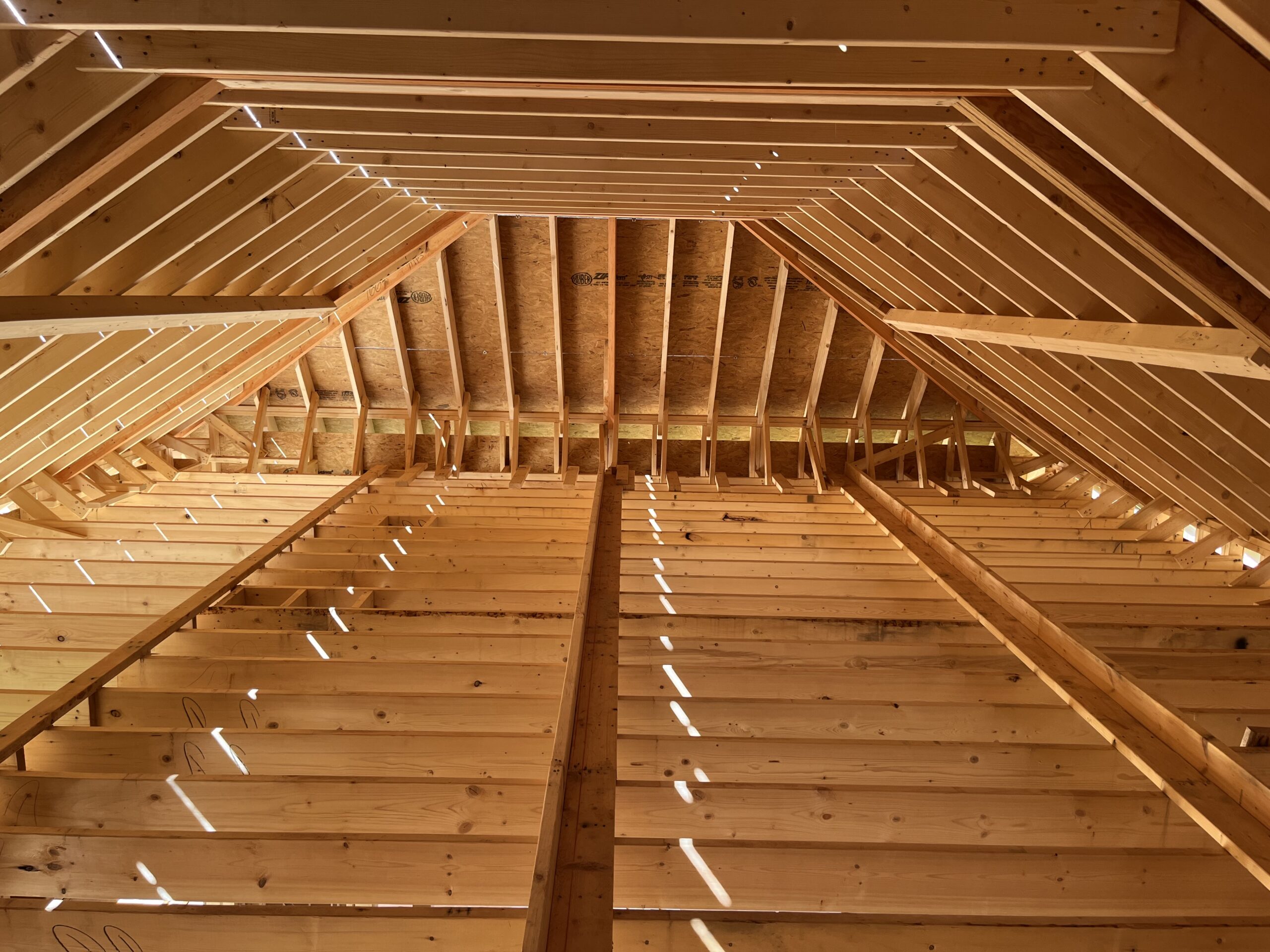
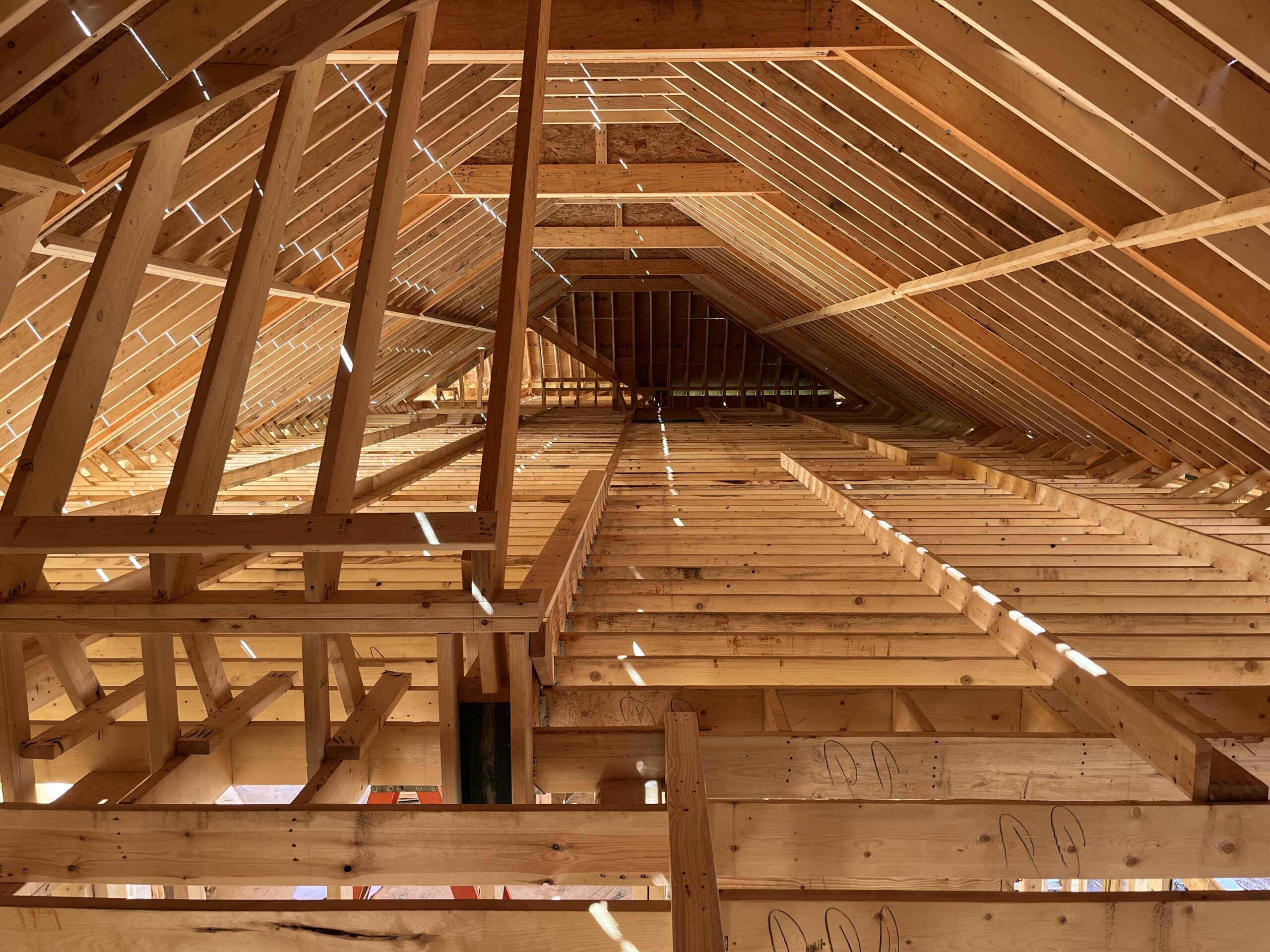
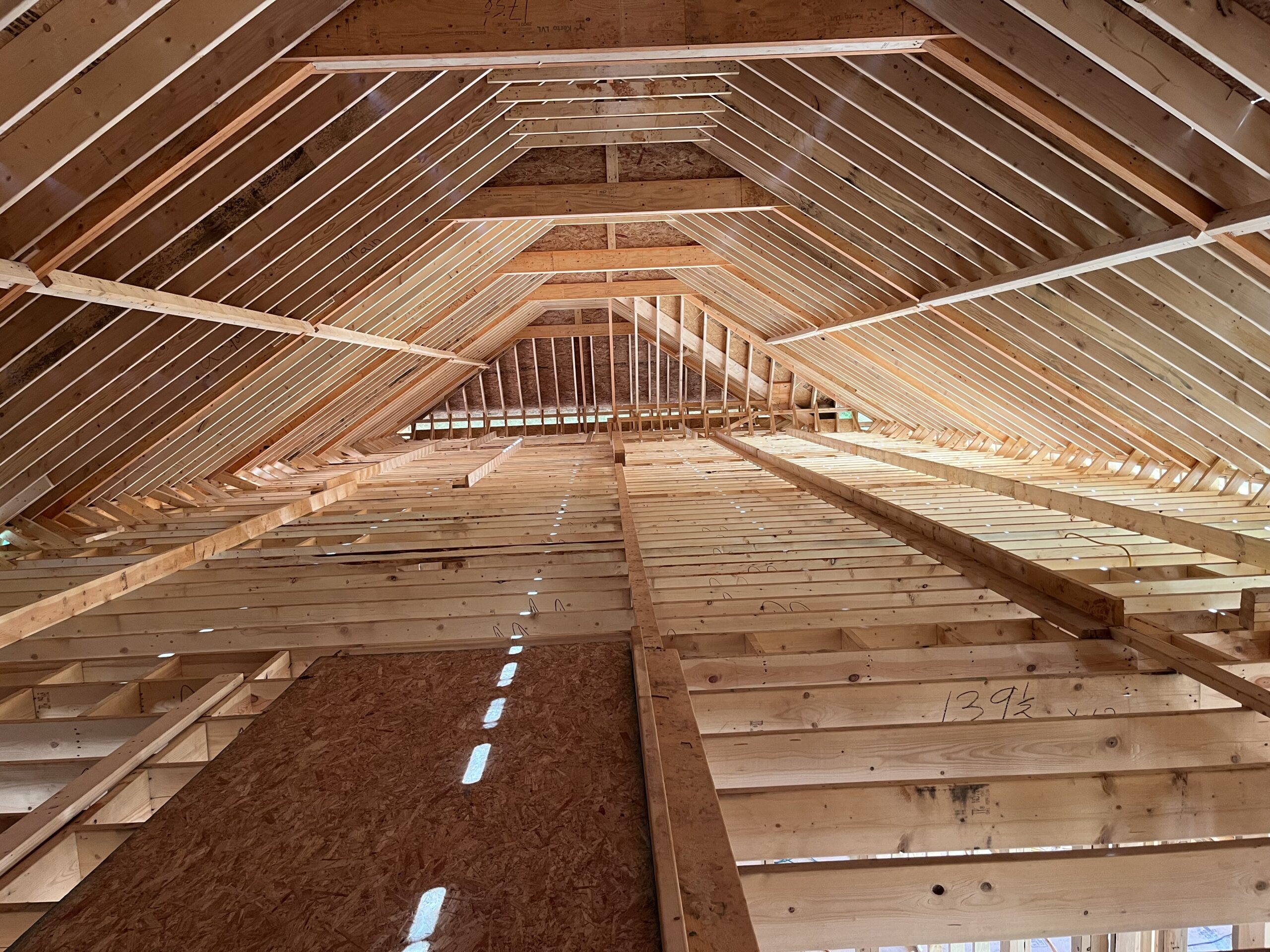
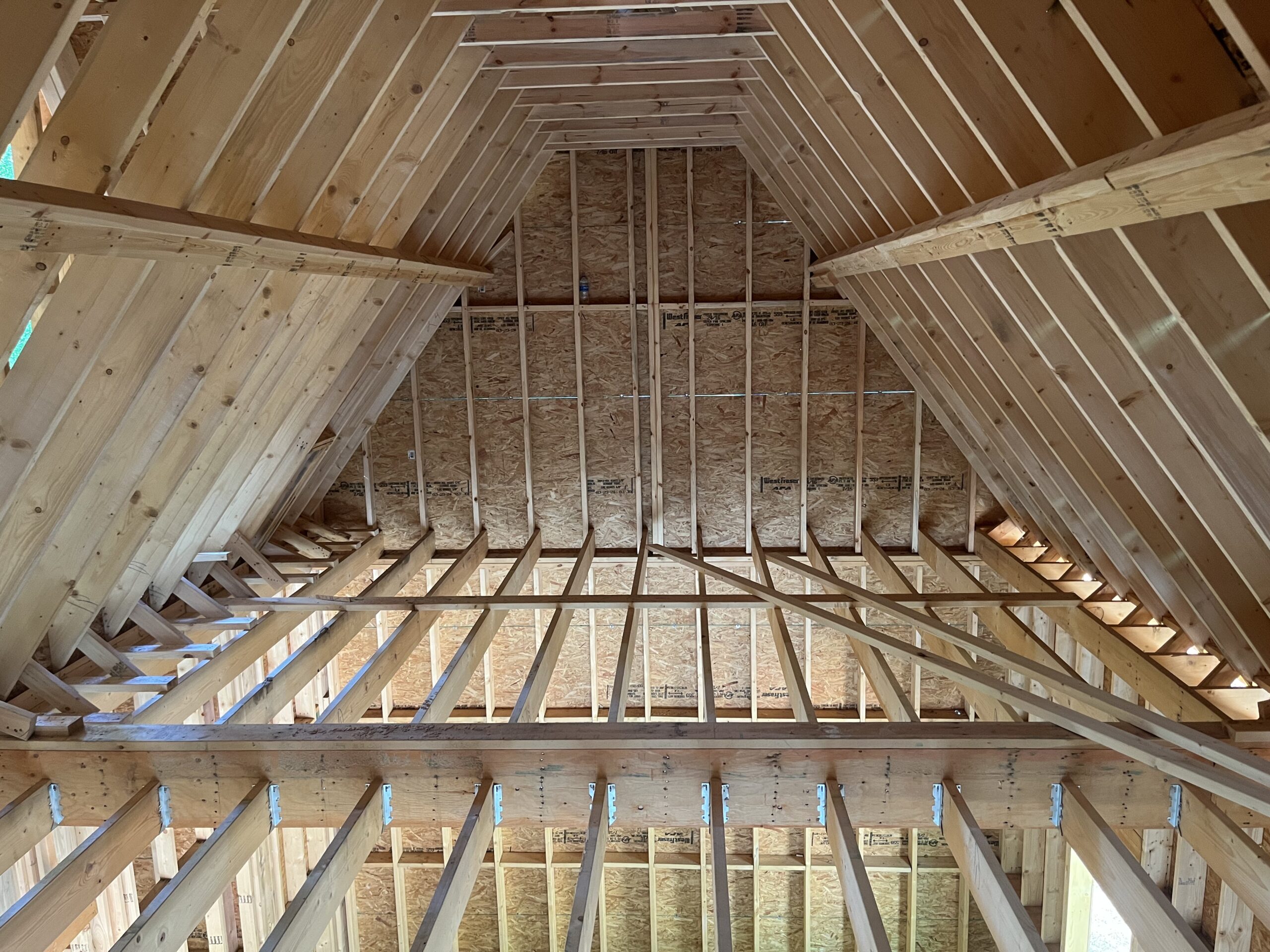
The Roof Framing Solutions Roof System Rafter Layout Plan provided to the Framer is a detailed Layout, written in the Framers Language, of where all the Pre-cut Rafters and Roof Sections are located. The numbering system on the Rafter Layout Plan matches the Rafter Cut List so there is no confusion as to what Rafters goes where. Following the Rafter Layout Plan all the Rafters and Structural components are laid out including:
With the Roof Framing Solutions Roof System Rafter Layout Plan the entire Pre-cut Roof System can be moved into the correct location without any confusion and be ready to be assembled
The Material Layout Plan is a complete detailed Layout for a Brace Free Open Attic Roof System showing the Framer all the information needed to cut and set up the roof. With the Material Layout Plan there is no confusion as to what has been ordered and where it goes. There is no more guesswork on setting up the roof with detailed information such as the following:
When planning your home’s layout or renovation, don’t overlook the importance of dedicated storage space. Whether you choose conditioned (climate-controlled) or unconditioned (non-climate-controlled) storage, both can serve vital roles in organizing your home, protecting your belongings, and improving overall functionality.
Conditioned Storage: This space is insulated, temperature-controlled, and som1. Understand the Difference
etimes humidity-regulated. Ideal for storing sensitive items like electronics, documents, clothing, photographs, or holiday décor that could be damaged by heat, cold, or moisture.
Unconditioned Storage: Typically located in areas like garages, attics, sheds, or unfinished basements. These spaces are suitable for storing durable items such as tools, lawn equipment, seasonal gear, and plastic storage bins.
2. Plan Based on What You Store
Start by identifying what items you need to store now—and in the future. Then decide what kind of environment they require:
Use conditioned spaces for valuables, heirlooms, and items susceptible to mold or warping.
Use unconditioned spaces for less sensitive items that can withstand fluctuations in temperature and humidity.
Whether you’re planning to expand your living area now or laying the groundwork for a future upgrade, creating new or future finished space is a strategic way to add value, comfort, and functionality to your home. From basements and attics to additions and over-garage rooms, smart planning today can lead to stunning results tomorrow.
1. Plan with Purpose
Before construction begins, identify the intended use of the space. Will it be a home office, guest suite, recreation room, or rental unit? Defining the purpose helps guide design, layout, and mechanical needs such as plumbing, electrical, and HVAC.
2. Design with Flexibility in Mind
Even if you’re not ready to finish the space right away, plan for future adaptability. Frame walls, run utilities, and install subflooring with future use in mind. Adding rough-ins for bathrooms or kitchens now can save time and money later.
3. Consider Structural Requirements
Check load-bearing walls, floor joists, and foundation strength—especially for additions or over-garage builds. Ensuring the structure is sound and up to code now will prevent costly fixes down the line.
4. Utilities and Infrastructure
Install wiring, outlets, and plumbing lines during the early construction phase—even if you don’t need them yet. Future-proofing your space with smart HVAC planning and sufficient electrical capacity makes finishing the area easier later.
5. Insulate and Weatherproof Early
Even if you’re not finishing the space right away, insulation and weatherproofing are essential. This protects your investment and helps maintain energy efficiency in the rest of the home.
When planning your home’s layout or renovation, don’t overlook the importance of dedicated storage space. Whether you choose conditioned (climate-controlled) or unconditioned (non-climate-controlled) storage, both can serve vital roles in organizing your home, protecting your belongings, and improving overall functionality.
1. Understand the Difference
Conditioned Storage: This space is insulated, temperature-controlled, and sometimes humidity-regulated. Ideal for storing sensitive items like electronics, documents, clothing, photographs, or holiday décor that could be damaged by heat, cold, or moisture.
2. Plan Based on What You Store
Start by identifying what items you need to store now—and in the future. Then decide what kind of environment they require:
The Brace Free Open Attic Roof System is an innovative structural design that eliminates the need for internal bracing, providing a clean, unobstructed attic space. This approach is especially valuable for homeowners or builders looking to maximize usable square footage without compromising on strength or stability. By removing cross-bracing, the attic becomes more accessible and flexible for future modifications such as loft conversions, storage, or HVAC system installations. The system is engineered with precision to ensure load distribution is maintained, even in high wind or snow-load areas.
Another key advantage is the improved air circulation it offers, which contributes to a healthier roofing environment and reduces the risk of mold or moisture damage. It also enhances energy efficiency by allowing insulation and ventilation systems to perform more effectively. The minimalist framing also means quicker installation times and lower labor costs compared to traditional trussed systems. Architects and designers appreciate the open-span aesthetics, which offer creative freedom in interior planning. The system is compatible with a range of roofing materials and styles, making it a versatile option for various project types. Overall, the Brace Free Open Attic Roof System combines durability, functionality, and modern design to deliver a smart roofing solution for today’s construction needs.
